
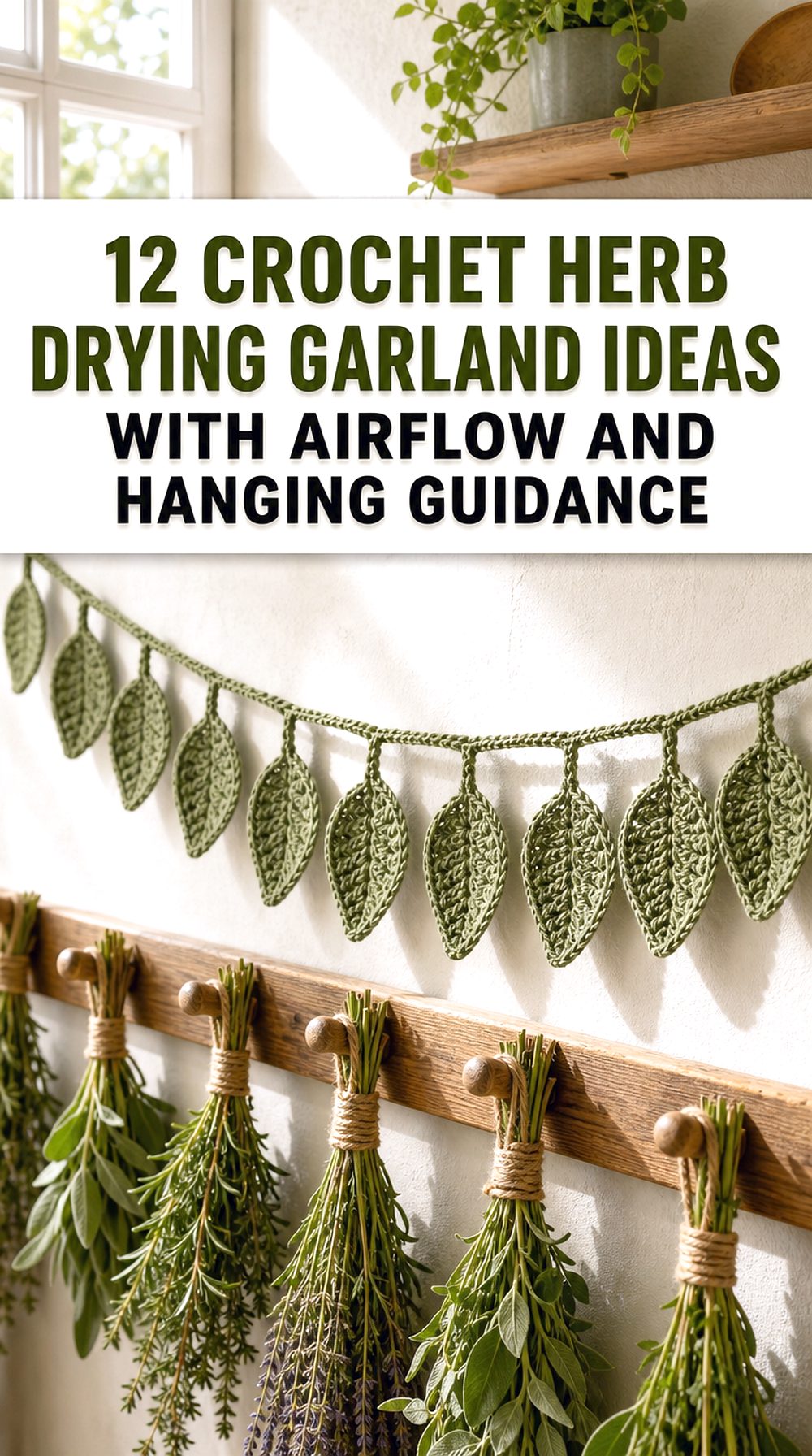
12 Crochet Herb Drying Garland Ideas with Airflow and Hanging Guidance
A Crochet herb drying garland can turn a practical preserving task into organised kitchen or pantry décor, but the yarn should not be treated as the food-contact drying surface. The ideas below use Crochet leaves, flowers, linked loops, baskets, and realistic herb motifs to frame a separate strong cord, rod, or set of clean ties that actually supports the bunches. Each linked page teaches the decorative component shown in its title; the adaptation notes explain how that component may work beside a herb-drying setup without claiming the original designer created it for that purpose. You will find choices for narrow walls, dowel displays, labelled batches, colour-coded rows, and compact seasonal harvests, plus guidance on airflow, load, cleaning, spacing, and storage.
Quick List
- Crochet Dowel-and-Basket Herb Drying Garland
- Crochet Linked-Loop Herb Drying Garland
- Crochet Autumn Leaf Herb Drying Garland
- Crochet Slim Leaf-Chain Herb Drying Garland
- Crochet Flower-and-Leaf Herb Drying Vine
- Crochet Picot Flower Herb Drying Garland
- Crochet Mini-Mandala Herb Drying Garland
- Crochet No-Sew Flower-and-Leaf Herb Drying Garland
- Crochet Daisy Marker Herb Drying Garland
- Crochet Eucalyptus-Style Herb Drying Garland
- Crochet Lavender Label Herb Drying Garland
- Crochet Fern-Frond Herb Drying Garland
How to Plan a Crochet Herb Drying Garland for Airflow and Secure Hanging
Begin with the support, not the decoration. A tightly fixed cotton cord, wooden dowel, or suitable metal rail should carry the herb bundles; Crochet motifs can sit above it, wrap around it loosely, or mark individual hanging points. Keep bunches small and separated so air can move around the leaves. Controlled air circulation is central to successful drying, and rosemary guidance from Penn State recommends hanging bundles in an open area; softer, moisture-rich herbs may need a different method rather than a dense hanging bundle.
Choose a smooth, washable yarn for removable labels and decorative pieces, then prevent damp stems or leaves from resting against it. Plan the garland length around the wall space and expected weight after harvesting, leaving clear gaps between batches. Use colour or motif shape to identify herbs, and attach dated paper tags or washable labels separately. Finally, position the arrangement away from cooking steam, splashes, direct heat, and crowded corners where moisture may linger.
1. Crochet Dowel and Basket Herb Drying Garland
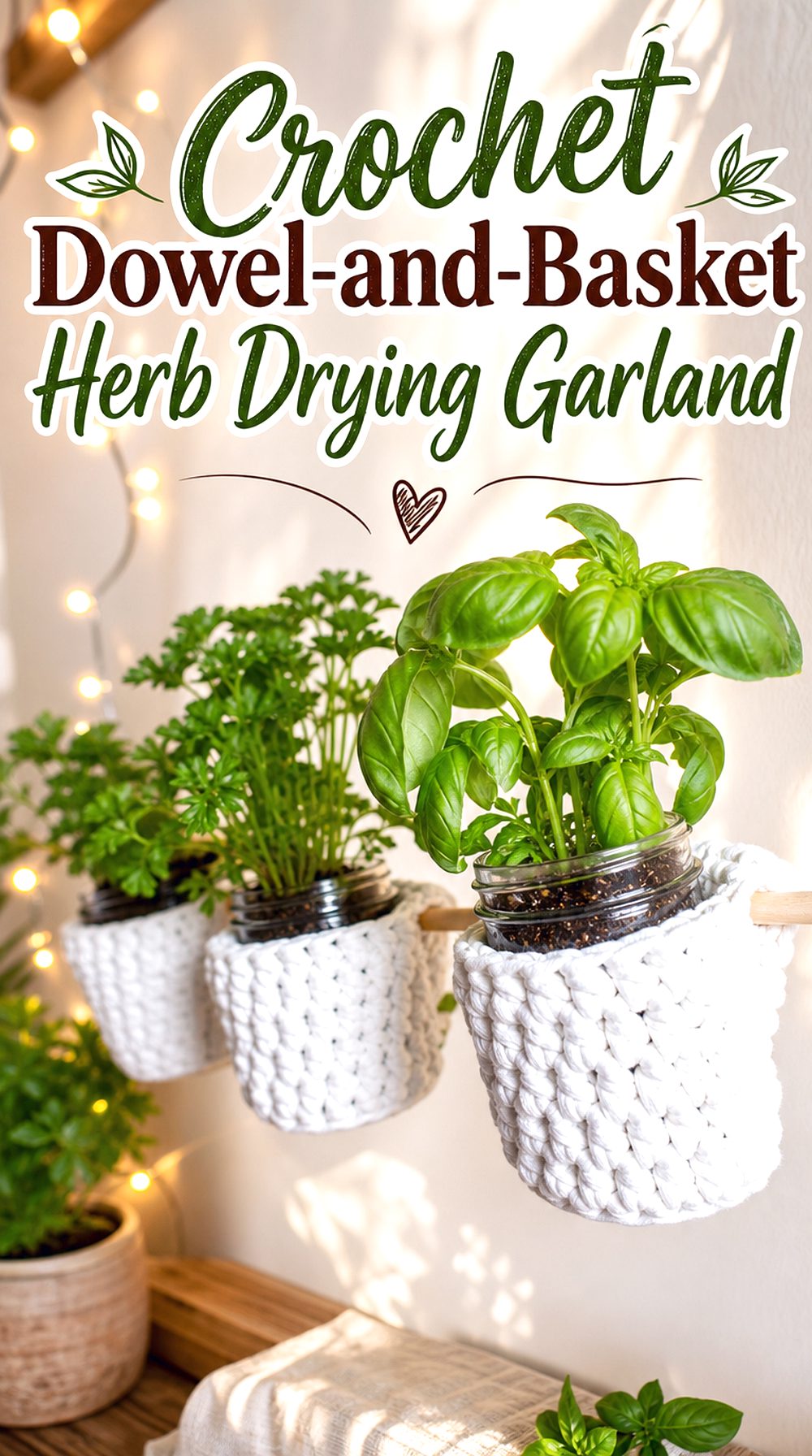
Design Details: The linked herb-garden project uses small crocheted baskets arranged on a dowel, with folded back sections forming loops that slide onto the rod. That repeated basket rhythm can inspire a structured Crochet herb drying garland for a utility wall.
Practical Point: Use the baskets only as visual stations or holders for dry labels, spare ties, and already-dried sachets. Suspend fresh herb bunches from separate clean hooks or cords fixed to the dowel, because enclosing damp leaves in dense crochet would restrict airflow. A three-station arrangement suits rosemary, thyme, and oregano batches without making the wall feel crowded.
Before You Choose: The dowel and wall fixings carry the load, so test them before adding herbs. Wider spacing will be more useful than adding many baskets, and pale neutral yarn makes handwritten herb tags easier to read.
2. Crochet Linked Loop Herb Drying Garland
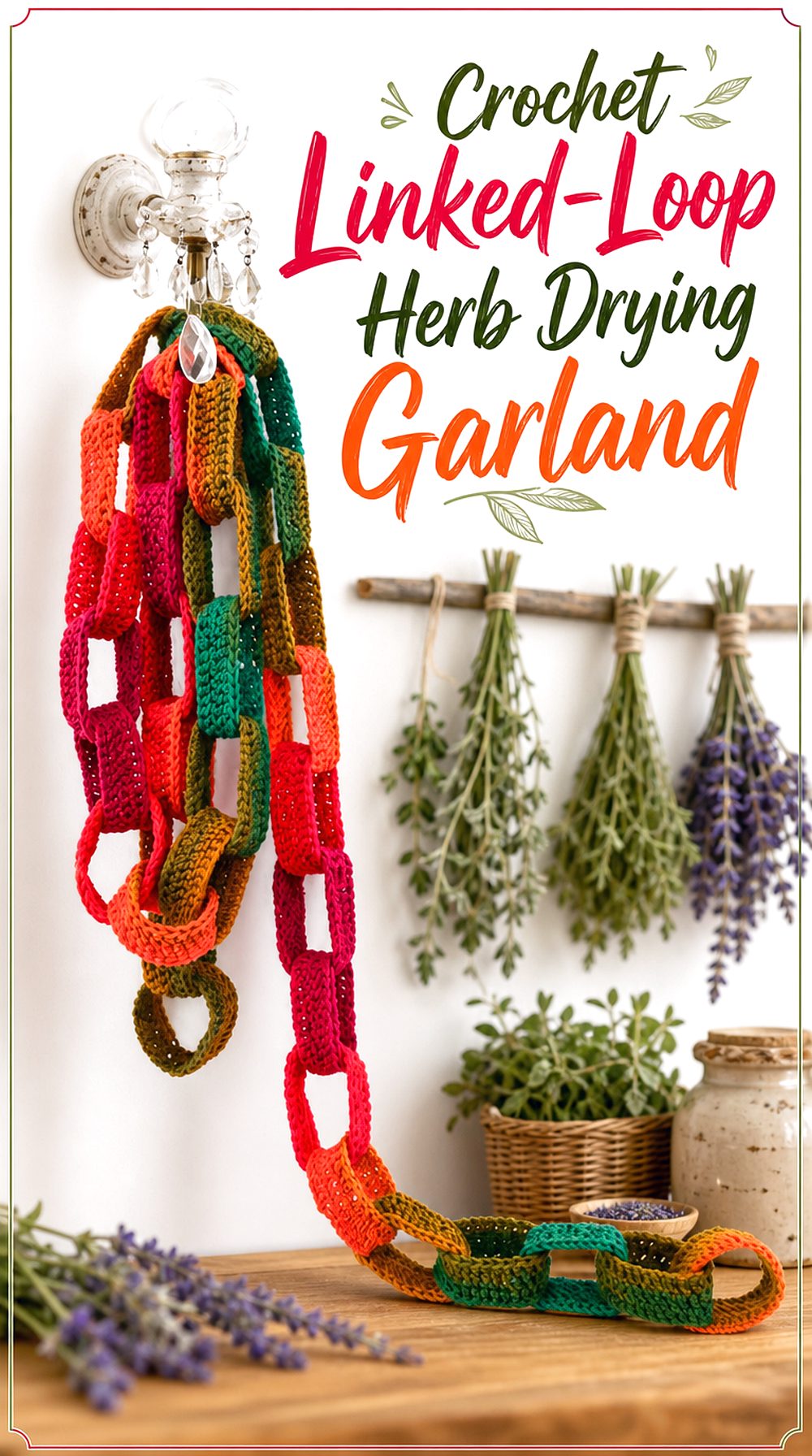
What Stands Out: This tutorial creates a chain from broad tubular Crochet links, producing a bold, rounded garland with clear openings between sections. The modular format makes it easy to assign one link to each herb type or harvest date.
Best Use: Hang the decorative chain parallel to a separate load-bearing cord. Tie herb bundles to that cord, then place a coloured link above each position as a visual marker. Sage green, clay, mustard, and cream can create a practical pantry palette without relying on tiny labels from a distance.
Good to Know: The source version uses acrylic yarn, so keep the links away from damp leaves and food-contact surfaces. Large links also occupy more visual space than a slim vine. This idea works best on a wide wall where the Crochet chain can remain decorative while the support line handles the actual weight.
3. Crochet Autumn Leaf Herb Drying Garland
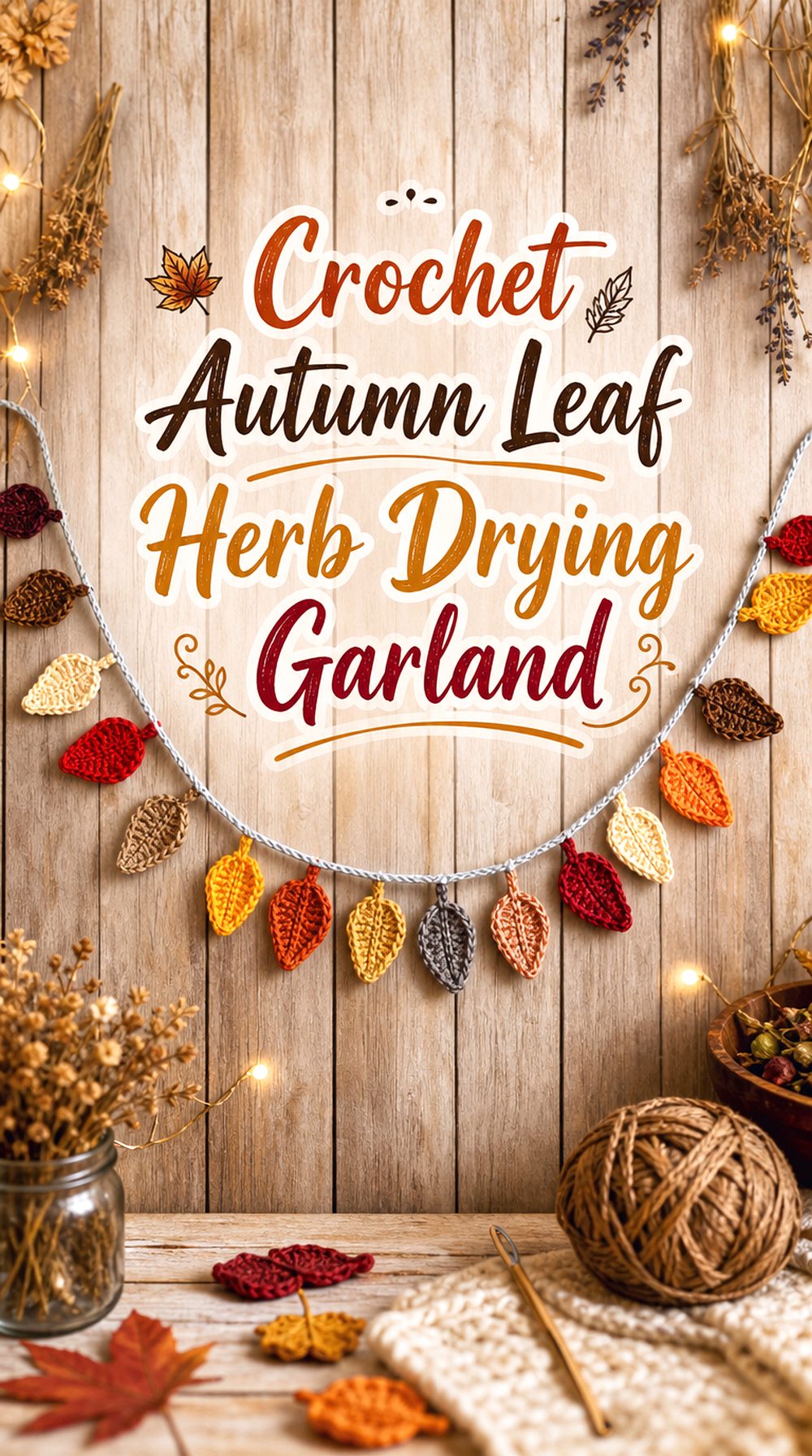
Design Details: The source garland uses individually shaped leaves with a visible central surface-crochet line and short stem, then strings them into a seasonal display. That defined leaf silhouette suits a Crochet herb drying garland where each motif marks a separate bunch.
Customisation Idea: Replace autumn colours with muted herb tones—sage, olive, moss, and dry straw—or use one colour per plant. Attach the motifs to a decorative upper cord while fresh herbs hang from clean ties on a stronger line just below. The small stems can also hold removable paper labels without touching the leaves being dried.
Care Note: Numerous separate motifs mean more ends and more places for dust to collect. Keep the garland removable, shake it outdoors between seasons, and store it flat. Avoid overcrowding the support line simply to match the number of Crochet leaves.
4. Crochet Slim Leaf Chain Herb Drying Garland
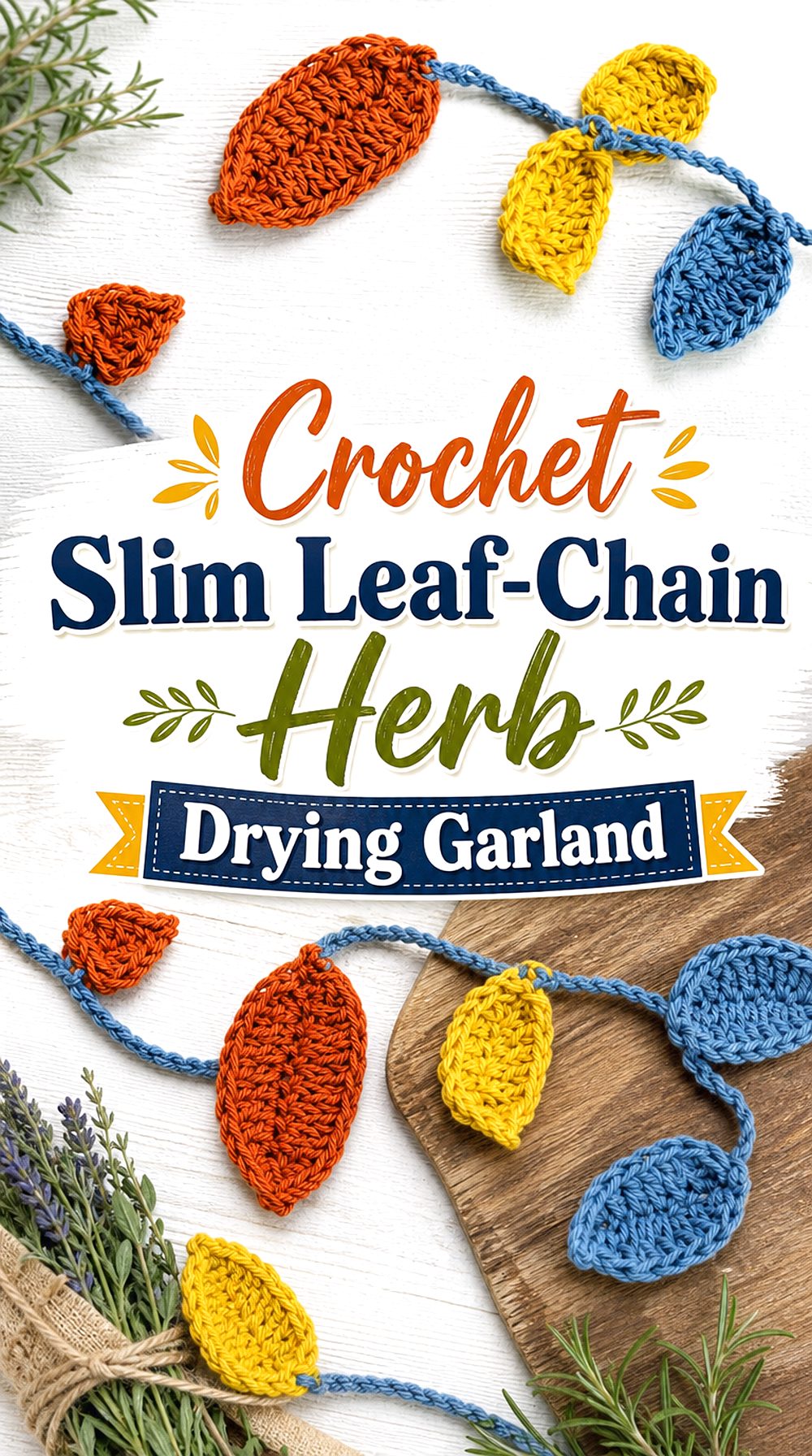
Why It Works: This leaf garland is built from simple leaf shapes attached to a chain, and the tutorial offers both English and German guidance plus size variations. Its narrow profile suits a compact Crochet herb drying garland above a counter or pantry shelf.
Fit and Finish: Work a firm chain rather than a loose, stretchy one, and add leaves at measured intervals that match the herb positions below. Different leaf sizes can indicate small, medium, and large harvest batches, while consistent green shades keep the display calm.
Practical Point: Treat the crocheted chain as a marker line, not the structural drying line. A slim design can look neat, but it may sag if asked to support multiple damp bundles. Mount it lightly above a separate cord or dowel, and leave enough clearance that real leaves do not brush against the yarn.
5. Crochet Flower and Leaf Herb Drying Vine
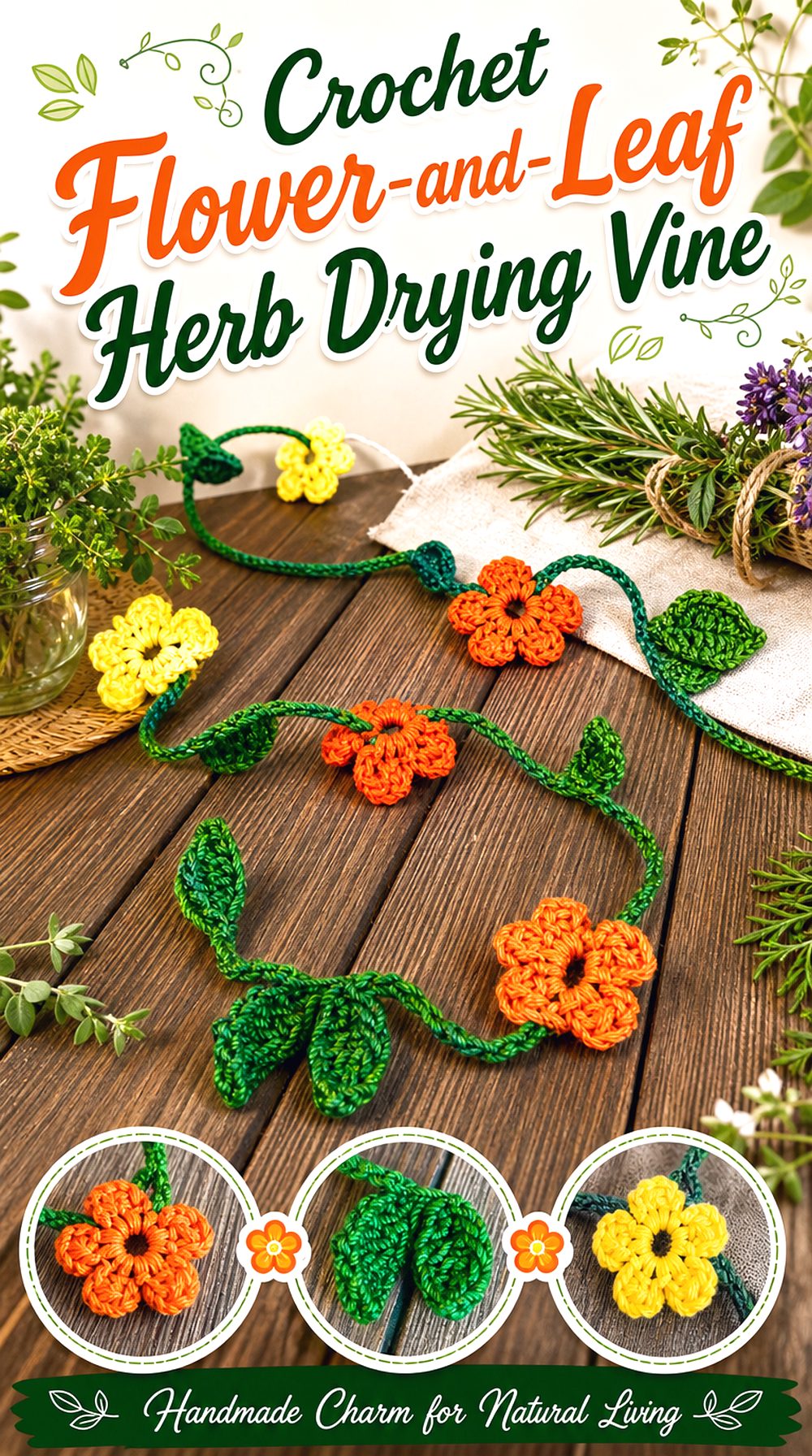
Construction Focus: The Flower Fairy Vines tutorial uses freeform placement of leaves, double leaves, flower loops, and chain spaces, allowing the maker to control the order and frequency of each element. That flexibility is useful for a Crochet herb drying vine with deliberately spaced markers.
Who It Suits: Choose this idea when harvest amounts change through the season. More leaves can mark regular herbs, while occasional flowers can identify special batches such as lavender or chamomile. The vine may run along the front of a shelf or above a separate drying cord.
Before You Choose: Freeform layouts can become visually busy, so sketch the spacing before crocheting. Keep motifs small enough that they do not block airflow or hide dated tags. The flower loops are decorative details; use independent ties or hooks for the actual bunches rather than loading the Crochet chain.
6. Crochet Picot Flower Herb Drying Garland
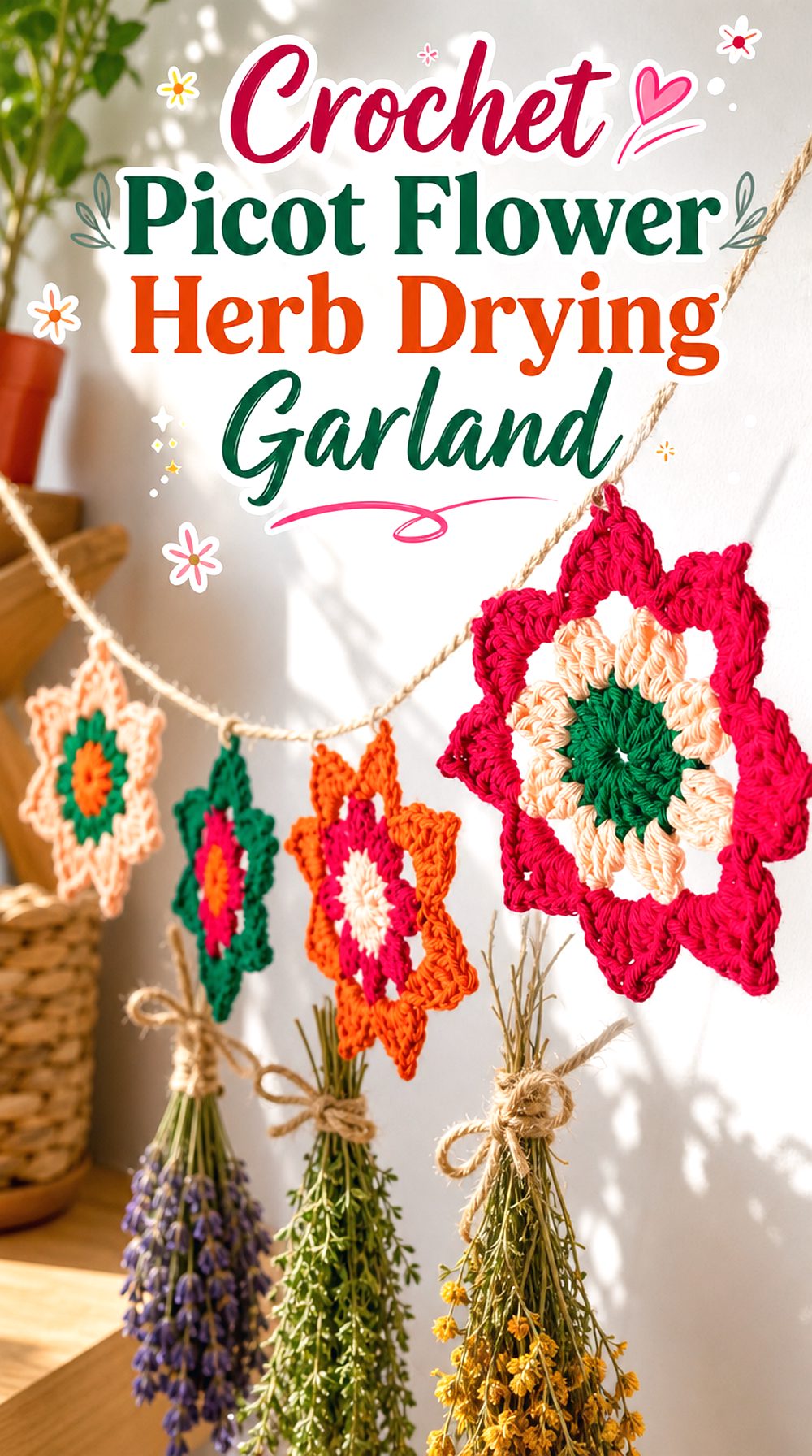
What Stands Out: This garland combines large, eight-petal flower motifs, picot points, and a chained joining line with loops at both ends. The strong visual repeats could turn a plain drying rail into a decorative Crochet herb drying garland for a cottage-style kitchen.
Colour Direction: Use restrained colours instead of a party palette—cream for chamomile, purple for lavender, grey-green for sage, and warm green for rosemary. Position one flower above each herb batch and add a separate date tag below it.
Practical Point: The source flowers are substantial, so this option needs more wall depth than a slim leaf chain. Keep the motifs above the hanging herbs and do not stiffen any part that could contact food. When the harvest season ends, remove the garland, clean it according to the chosen fibre, dry it completely, and store the flowers flat.
7. Crochet Mini Mandala Herb Drying Garland
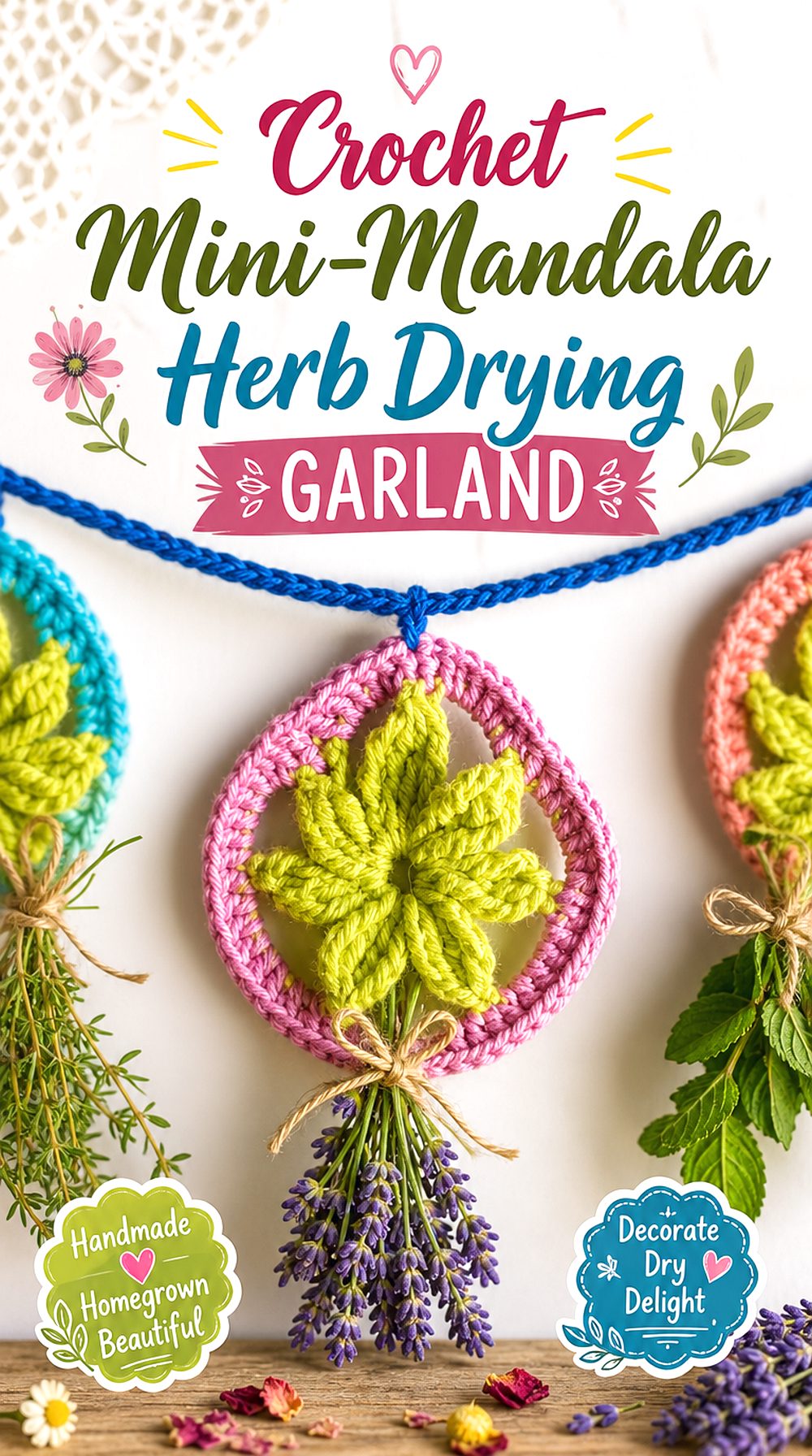
Design Details: The Flower Festival Garland is assembled from repeated two-colour mini-mandalas joined along a chain. Their round, open centres give the Crochet herb drying garland a clear badge-like look that can separate one batch from the next.
Best Use: Assign each colour pairing to an herb family or drying date, then hang the garland above a rod with independent hooks. The circular motifs are especially readable on a plain wall, making them useful where written labels are difficult to see from across the room.
Good to Know: Rounded motifs create more visual weight than leaves and may curl if stored carelessly. Block them before display and keep the joining chain lightly tensioned. This arrangement is primarily decorative and organisational; the real herbs should hang freely beneath it, with enough space between bundles for air to circulate.
8. Crochet No Sew Flower and Leaf Herb Drying Garland
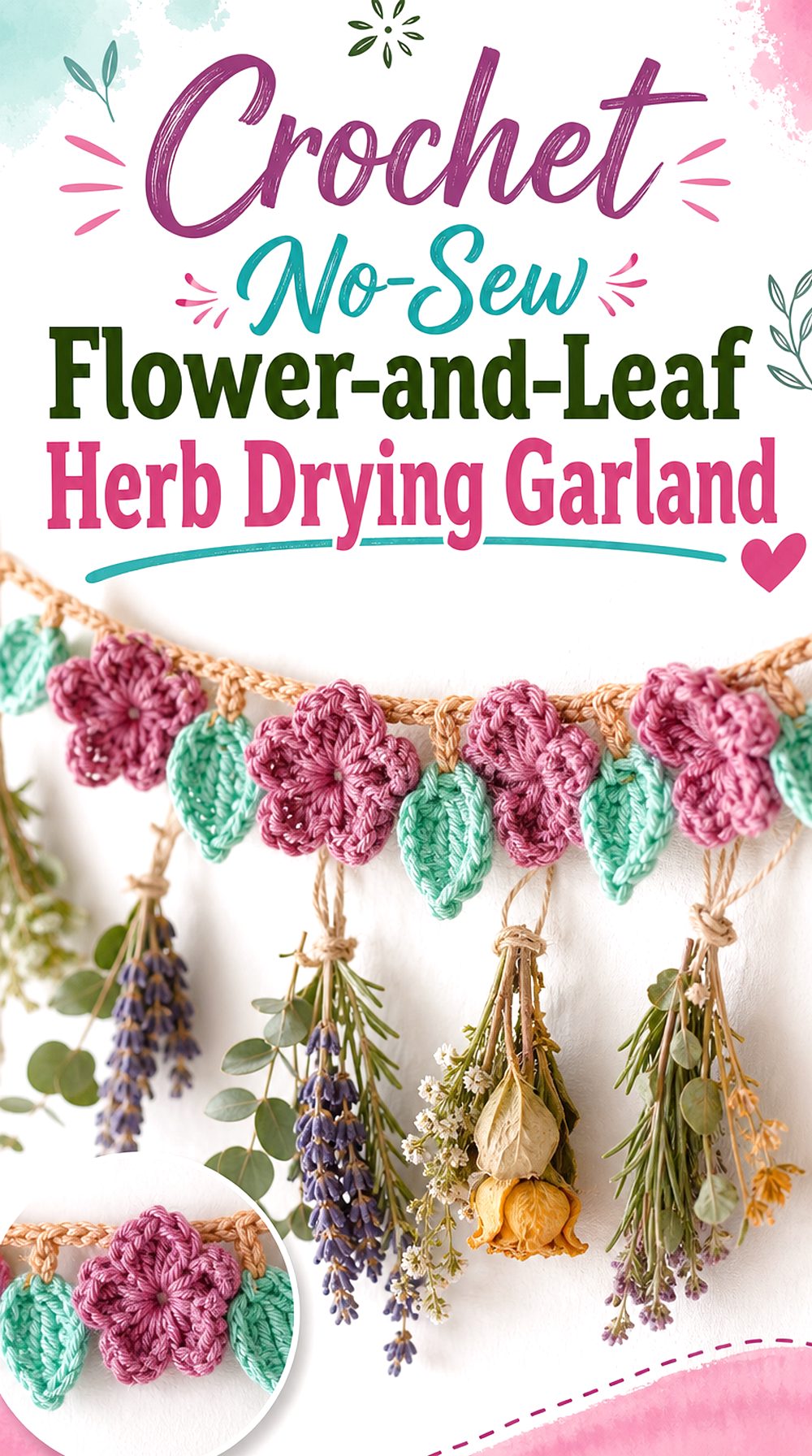
Why It Works: The linked project creates flowers and leaves along one continuous, no-sew Crochet line, with close- and wide-spaced motif versions. The wider option is the better starting point for a herb drying garland because it leaves clearer visual gaps.
Customisation Idea: Work each flower in a colour associated with a herb, then use the leaf beside it as the position marker. A removable tag can be tied to the main cord directly below. This approach suits small, frequent harvests where batches need quick identification.
Care Note: A continuous construction reduces loose attachments, but the fine motifs can still catch on brittle dried stems. Keep the Crochet line several centimetres above the herb tops and remove the herbs before taking down the garland. Choose spacing for function first; dense floral sections look fuller but make labels harder to read.
9. Crochet Daisy Marker Herb Drying Garland
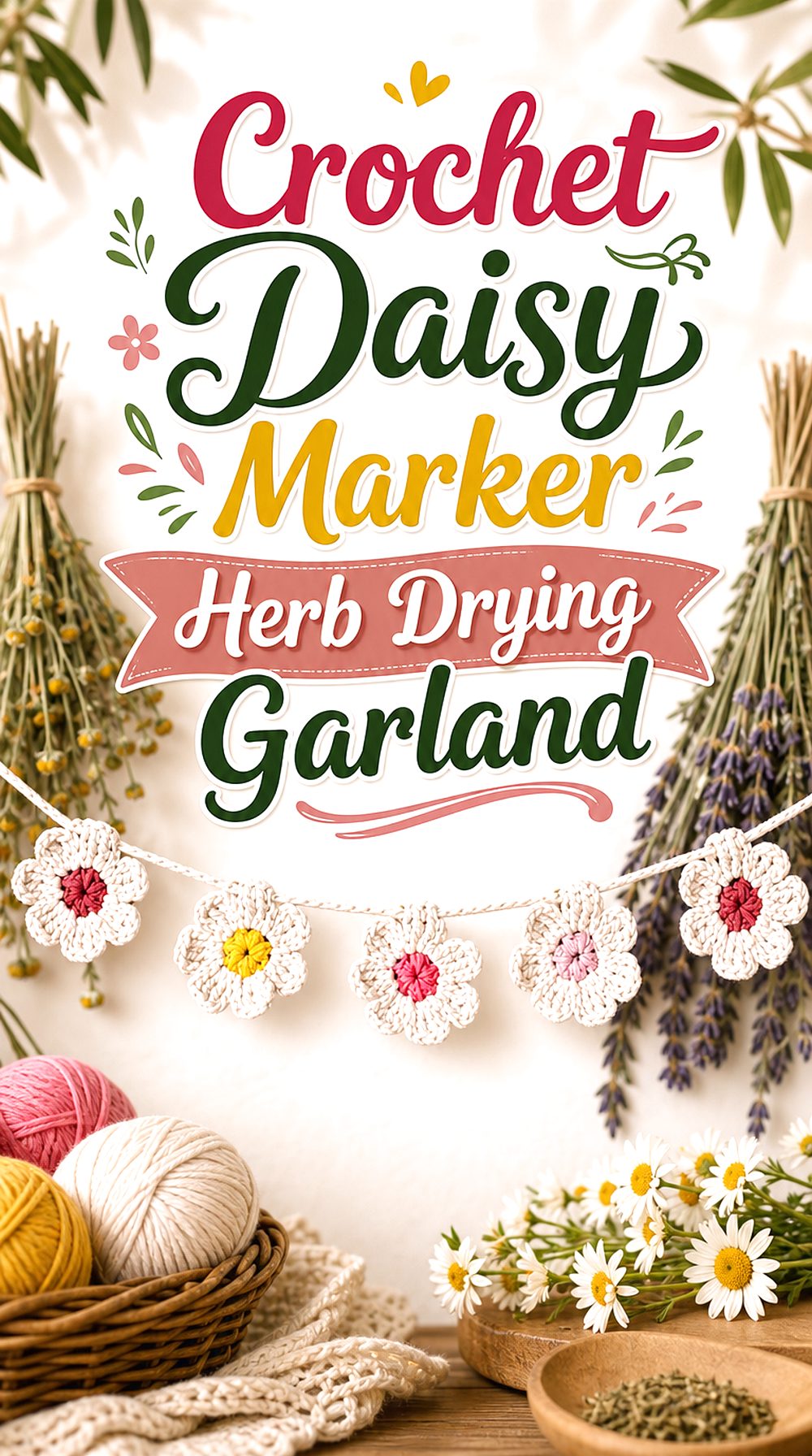
What Stands Out: This tutorial makes individual cluster-centred daisies with open chain-and-treble petals, then threads a long Crochet chain through the tops of the flowers. The removable-looking assembly is useful for a seasonal herb drying garland that can be rearranged as harvests change.
Best Use: Use one daisy colour for each herb or one shade for each week of harvest. Slide or space the flowers above separate hanging points, leaving the supporting cord and herb ties plain and easy to inspect. The cheerful shapes suit a bright kitchen, sunroom, or covered utility area.
Before You Choose: Open petals may distort if the joining chain is pulled too tightly. Keep the decorative chain relaxed and supported at both ends. Daisies also read as floral rather than strictly herbal, so a restrained palette and clear written labels will make the system more practical.
10. Crochet Eucalyptus Style Herb Drying Garland
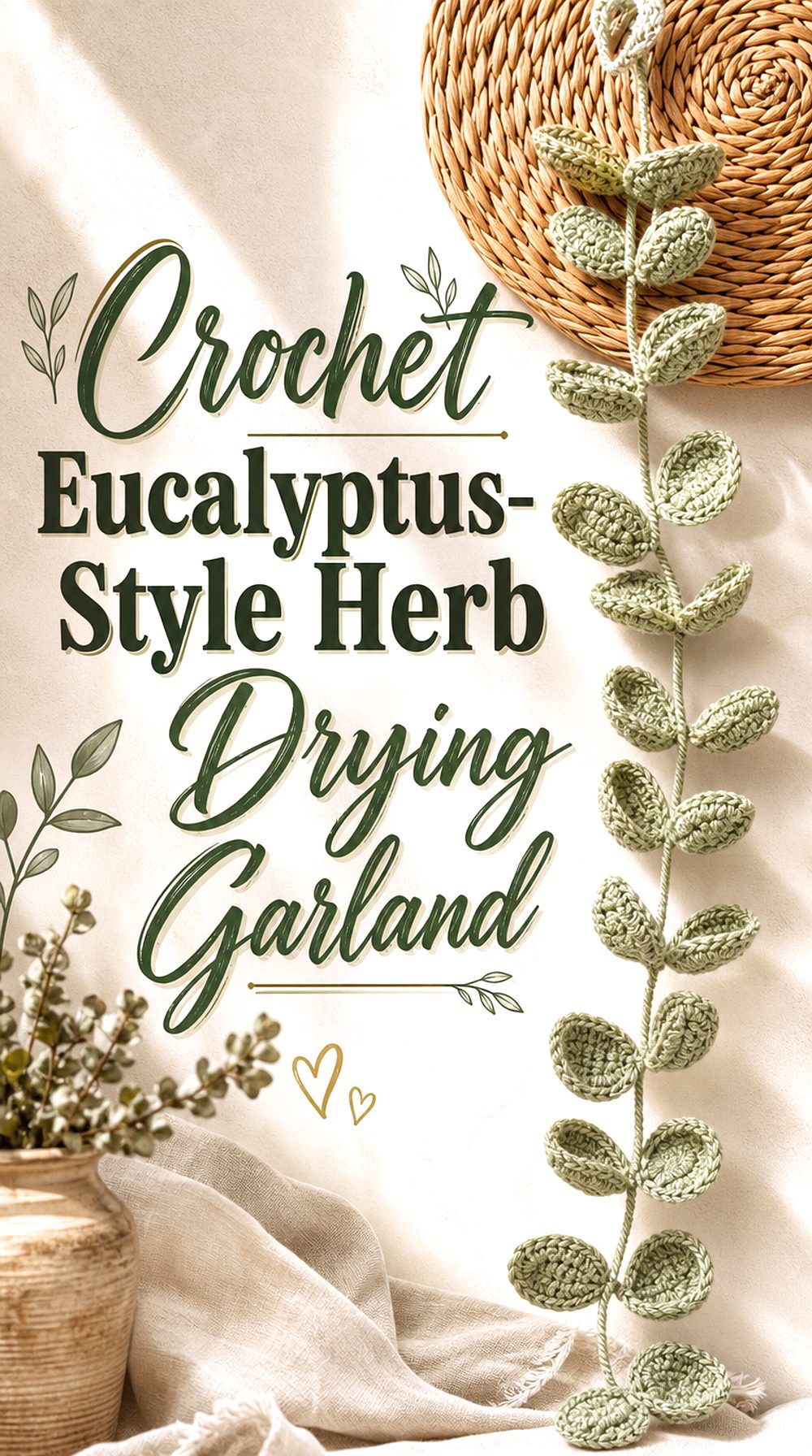
Design Details: The Crochet Eucalyptus tutorial builds paired leaves in several sizes and attaches them along florist wire, creating a shaped botanical stem rather than a flat motif chain. That dimensional form can become a refined marker section on a herb drying garland.
Display Idea: Make short eucalyptus-style sprigs and fasten them to the ends or centre of a wooden drying rail, leaving the working area open for real herb bundles. Silver green yarn pairs well with natural cord, unpainted wood, and simple kraft-paper tags.
Practical Point: Wire gives the decorative leaves shape but should remain separate from edible plants and easy to inspect for exposed ends. This is not the best choice for a fully flexible, washable garland. It works more effectively as a removable accent on a fixed rail where the Crochet foliage cannot brush against damp herbs.
11. Crochet Lavender Label Herb Drying Garland
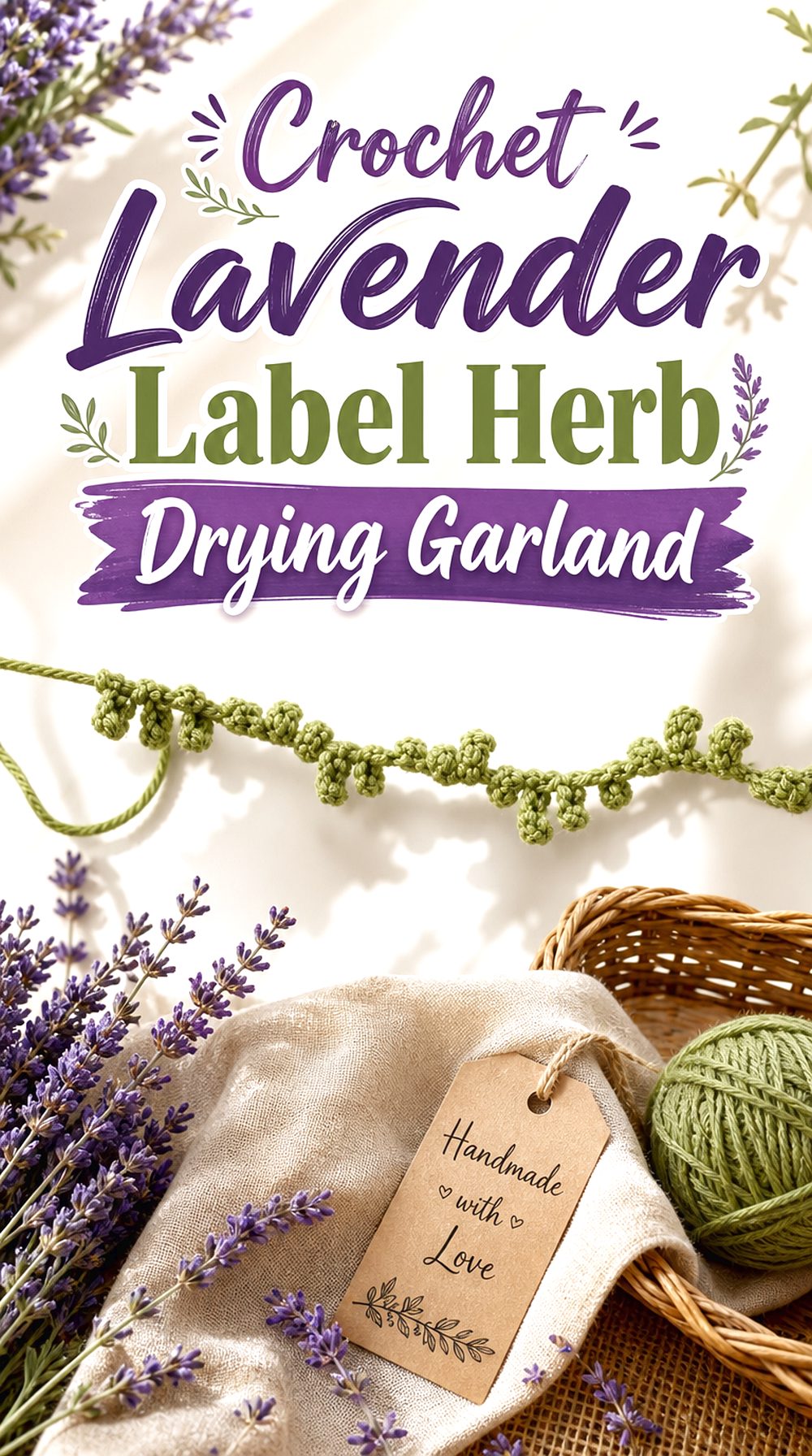
What Stands Out: The lavender tutorial creates a spiralled flower head, narrow leaves, and a wrapped stem, producing a recognisable herb motif with strong labelling value. A few stems can identify the lavender section of a mixed Crochet herb drying garland without needing oversized signs.
Best Use: Group two or three crocheted lavender stems at one end of the support rail, then hang real lavender bundles from separate ties nearby. Purple, dusty lilac, and muted green keep the marker clear while fitting a calm pantry palette.
Before You Choose: The source assembly uses a flower stem and adhesive, so this motif is less washable than a plain yarn leaf. Keep it as a detachable decoration, check that no wire or hardened glue is exposed, and never fasten edible herbs directly to it. For a fully washable setup, make a flat lavender-coloured tag instead.
12. Crochet Fern Frond Herb Drying Garland
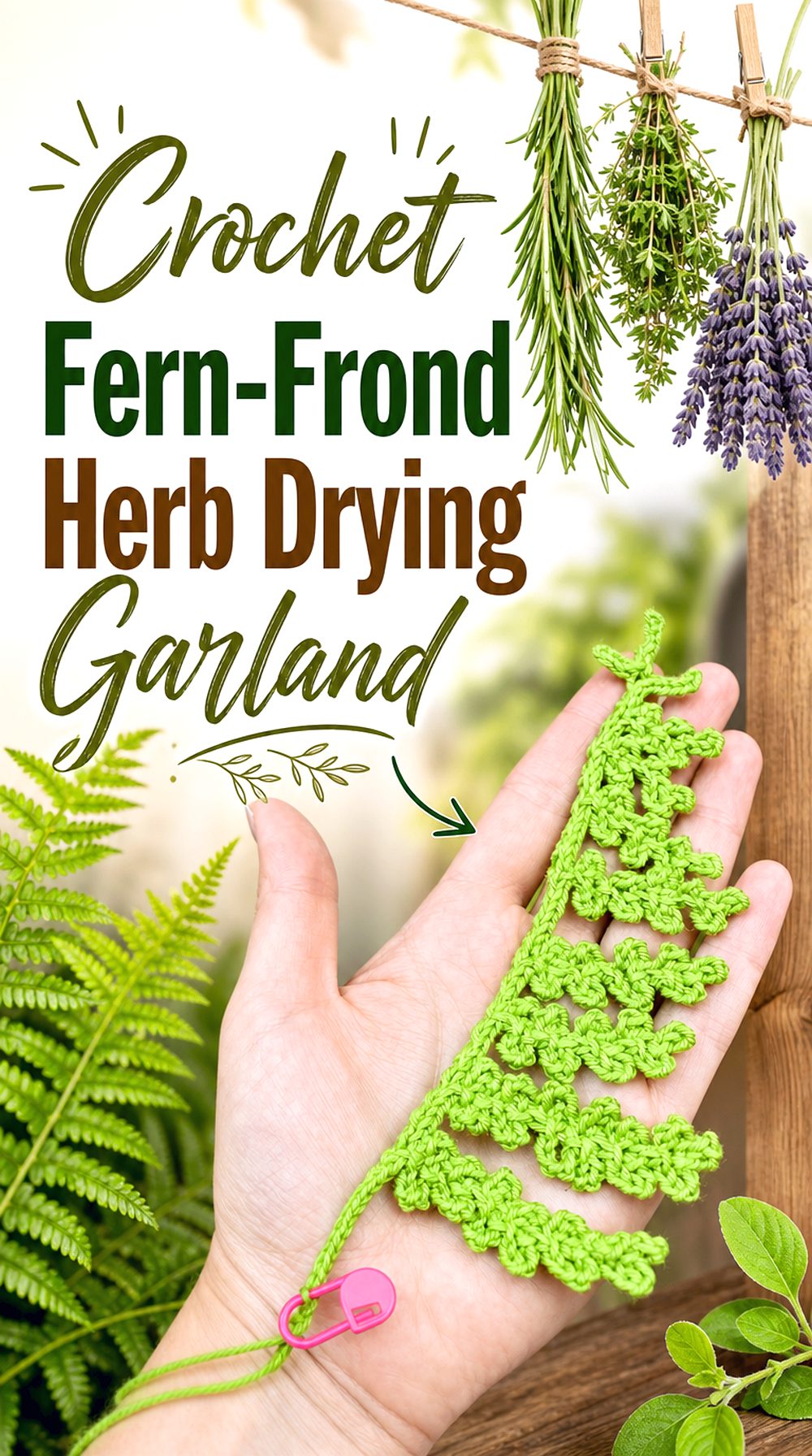
Construction Focus: This freeform fern tutorial begins with a chained stem and builds gradually longer branches and small looped leaflets on both sides. The tapered silhouette can form an elegant Crochet herb drying garland border or a central divider between herb groups.
Who It Suits: Freeform makers can alter the branch length, density, and overall scale to fit a narrow rail or a broad wall. Use one fern frond between mint-family herbs and woody-stemmed herbs, or repeat shorter fronds as batch separators.
Care Note: A detailed fern has many small loops that can snag dry, brittle leaves. Mount it behind or above the herb line rather than weaving real stems through the Crochet branches. If wire is added for shape, make the frond removable and inspect the covering before every season. Simpler branches will be easier to dust and store.
Useful Crochet Notes
Keep Crochet Away from Damp Herbs
Decorative Crochet can organise the display, but freshly washed or harvested herbs should hang from clean, separate ties with space around them. Yarn that stays damp can hold odours, collect plant debris, and become awkward to clean. Place motifs above or behind the bundles, and remove any piece that becomes wet before continuing the drying process.
Reinforce the Real Support Line
Do not judge strength by the appearance of the Crochet chain. Test the dowel, hooks, rail, or cotton support cord with a modest temporary load before adding herbs. Secure both ends, avoid long unsupported spans, and divide a large harvest across two shorter garlands. Recheck knots and wall fixings as the arrangement is used.
Label and Rotate Each Batch
Colour coding is useful, but pair it with a written herb name and harvest date. Keep labels visible without pressing them against leaves. Remove finished bundles promptly, clean the hanging point, and rotate newer batches into open spaces. This prevents old and fresh herbs from becoming mixed and makes it easier to notice slow-drying sections.
Conclusion
Choose the basket-and-dowel idea for a fixed utility station, a leaf or flower chain for clear batch marking, or the eucalyptus, lavender, and fern motifs for a more botanical finish. The simplest option is usually the easiest to clean and store. Whichever style suits the room, let a separate cord or rail handle the herbs while the Crochet work provides order, colour, and identity.
FAQs
Can a Crochet garland support fresh herb bundles?
A decorative garland should not be assumed to carry the weight of freshly harvested herbs. Use a securely mounted dowel, rail, hook system, or firm cotton cord for the load. Place the Crochet line above or beside it as decoration and labelling, especially when the yarn construction is open, stretchy, or motif-based.
Which yarn works well for the decorative sections?
Smooth cotton is a practical choice for flat leaves, chains, and removable labels because it gives clear stitches and can be easier to clean than fuzzy fibres. Fibre care still varies, so follow the yarn label. Avoid letting any yarn remain damp against herbs, and skip metallic or heavily textured yarn near brittle leaves.
How much space should be left between herb bunches?
Leave enough room for air to move around every bundle without neighbouring leaves pressing together. The exact gap depends on bunch size, leaf density, and room humidity, so begin with generous spacing and reduce the bundle size when drying seems slow. A crowded garland may look full but works less effectively.
How should the Crochet garland be cleaned and stored?
Remove all herbs, paper tags, wire accents, and detachable pieces first. Clean the Crochet section according to its fibre label, reshape it if needed, and allow it to dry completely. Store flat or loosely rolled in a dry container so leaves, flowers, and picots do not crease, stretch, or collect dust.
Are all herbs suitable for hanging in bundles?
No. Woody-stemmed herbs such as rosemary are commonly suited to open hanging bundles, while soft or moisture-rich leaves may dry too slowly when densely bunched. Keep bundles small, inspect them regularly, and use a dehydrator or another tested method when the herb, climate, or indoor humidity makes air-drying unreliable.