10 Crochet Plant Trellis Tie Ideas with Gentle Support and Care Guidance
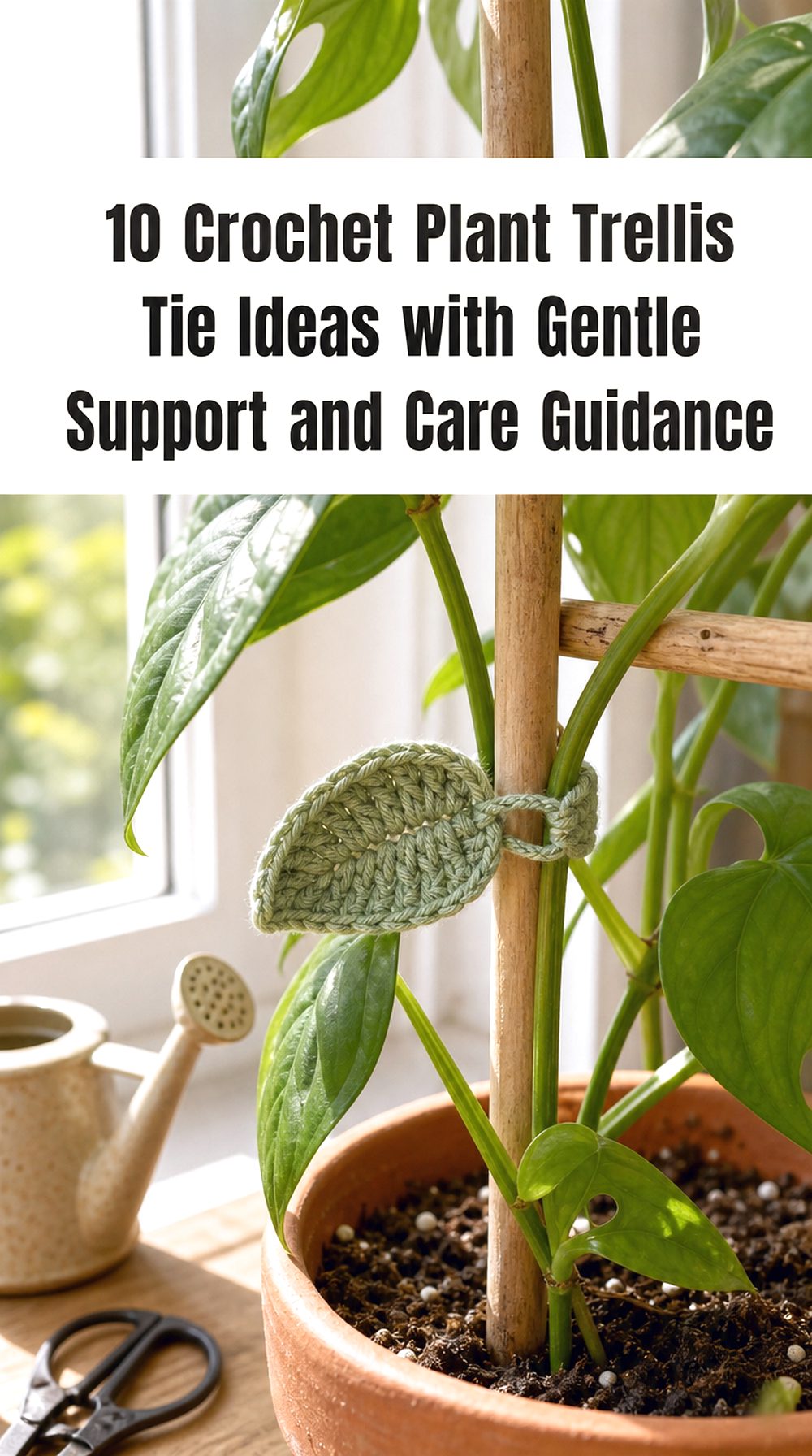
Crochet plant trellis ties can add colour and texture while guiding climbing stems towards canes, wires, hoops, or decorative supports. The ten ideas below range from narrow cords for lightweight vines to wider buttoned bands that spread pressure across a larger area. Some linked projects were originally designed as cable keepers or general-purpose Crochet cords, but their adjustable construction can also inspire reusable garden ties.
Whichever style you choose, the tie should hold the stem gently rather than clamp it against the support. Leave room for growth, inspect fastenings as the plant thickens, and place raised leaves or buttons where they will not rub delicate growth. Each idea focuses on visible construction, suitable uses, customisation, and practical limitations, while the linked page provides the complete instructions.
Quick List
- Twin-Leaf Stem Crochet Plant Trellis Tie
- Loop-Finish Leaf Sprout Crochet Plant Trellis Tie
- Single-Leaf Adjustable Crochet Plant Trellis Tie
- Buttoned Band Crochet Plant Trellis Tie
- Wide Tapered Wrap Crochet Plant Trellis Tie
- Colourful Chain Crochet Plant Trellis Tie
- Rounded I-Cord Crochet Plant Trellis Tie
- Braided-Look Crochet Plant Trellis Tie
- Clustered One-Row Crochet Plant Trellis Tie
- Two-Tone Lace Tape Crochet Plant Trellis Tie
How to Choose Crochet Plant Trellis Ties for Gentle Support
Start by matching the tie width to the stem. A flat, smooth band can distribute pressure across a thicker stem, while a slim cord may be sufficient for light annual vines. Whatever the shape, allow extra space for the stem to expand. The RHS recommends ties long enough to loop comfortably around both plant and support, and suggests a figure-of-eight arrangement where separation from the support helps reduce rubbing.
Consider the closure next. A bow can be loosened easily, a looped leaf works without extra hardware, and a buttoned band is convenient to reopen but must be positioned away from fragile leaves. Choose a colour that remains visible among foliage so inspections are not forgotten.
Crochet fibre should not be assumed to withstand an entire outdoor season unchanged. Check ties after rain, strong sun, and rapid growth. Replace anything that has tightened, stretched excessively, frayed, or developed an unpleasant odour. Decorative lace and raised motifs are better suited to sheltered pots or the trellis itself than direct contact with very soft stems.
1. Twin Leaf Stem Crochet Plant Trellis Tie
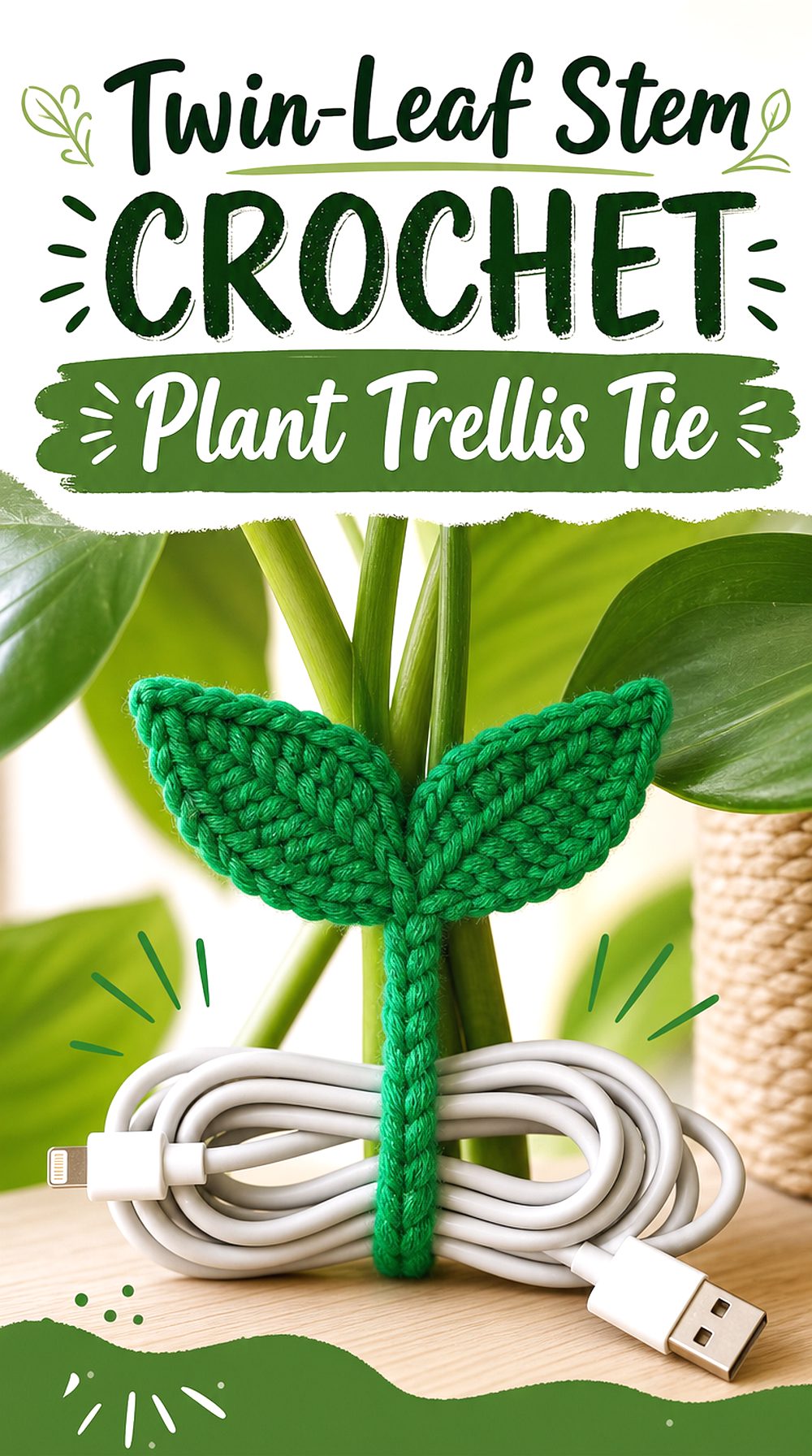
This Crochet tie combines a narrow, flat stem strip with two shaped leaves attached near its centre. The graduated stitches form rounded leaf tips and a visible change in height along each side, giving the decoration a fuller botanical outline rather than a simple oval. The straight strip can be wrapped around a small trellis bar and a flexible vine.
Best Use
The two leaves make the fastening easy to spot among real foliage, which helps when checking whether the stem has grown. Place the motif against the support rather than directly beneath a soft stem.
Practical Point
The source suggests adjusting the stem length for different cable sizes, and the same approach can provide more growing room around a plant. Because the leaves are sewn onto the strip, inspect those joins before reusing the tie outdoors.
2. Loop Finish Leaf Sprout Crochet Plant Trellis Tie
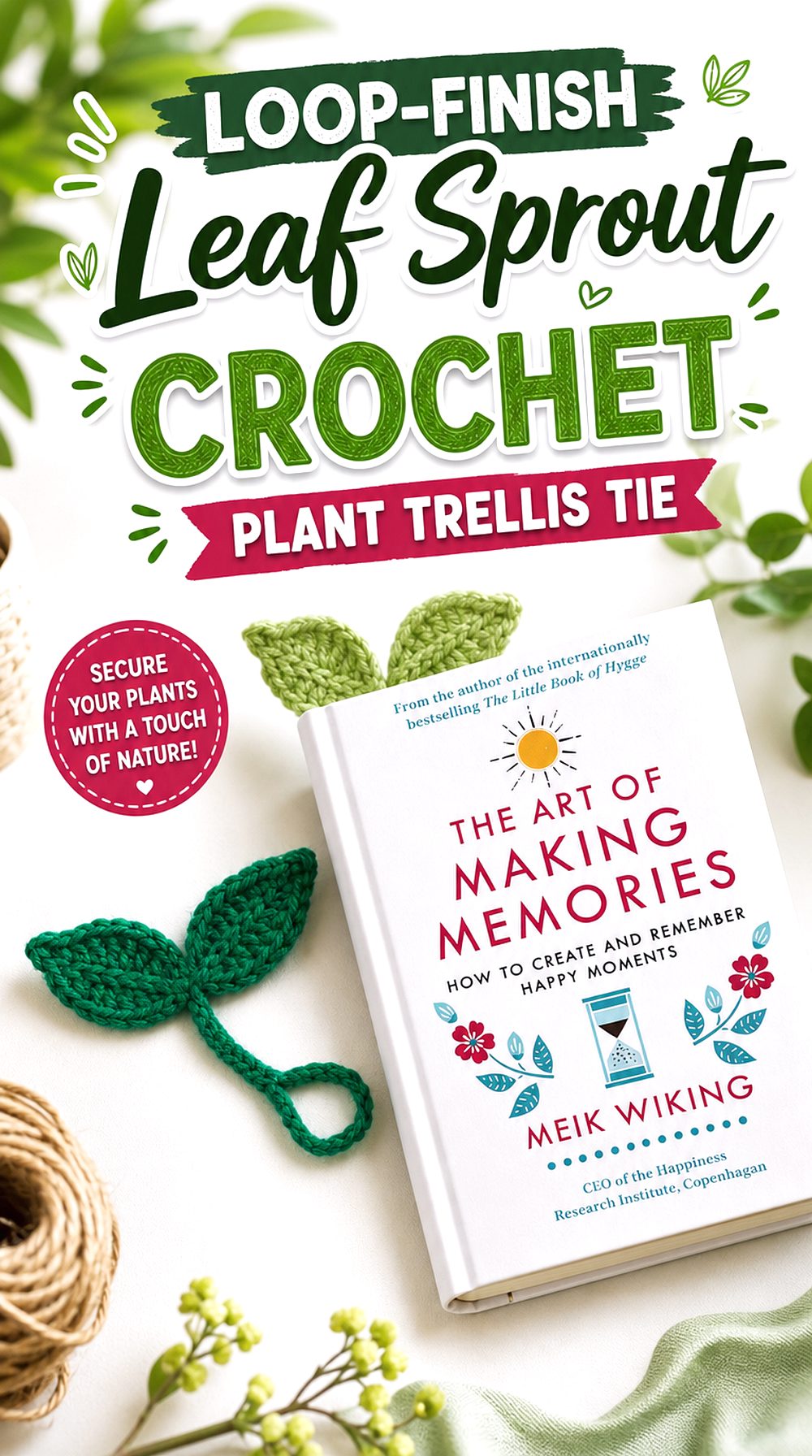
A pair of small leaves sits at one end of this Crochet sprout design, while the extended chain forms a built-in loop. Instead of tying a bulky knot, the leafy end can pass through the loop to close the fastening. This creates a compact finish that can work around a narrow cane, indoor plant hoop, or lightweight trellis wire.
Customisation Idea
Lengthen the connecting section before forming the loop when more clearance is needed. Tonal greens create a natural effect, while yellow, coral, or blue can make growth checks easier.
Before You Choose
A loop closure can gradually pull tighter if the plant or trellis moves. Leave visible slack and position the leaves on the support side. The original page also shows a straight, non-looped bookmark option, but the looped version is the more adaptable starting point for a removable plant tie.
3. Single Leaf Adjustable Crochet Plant Trellis Tie
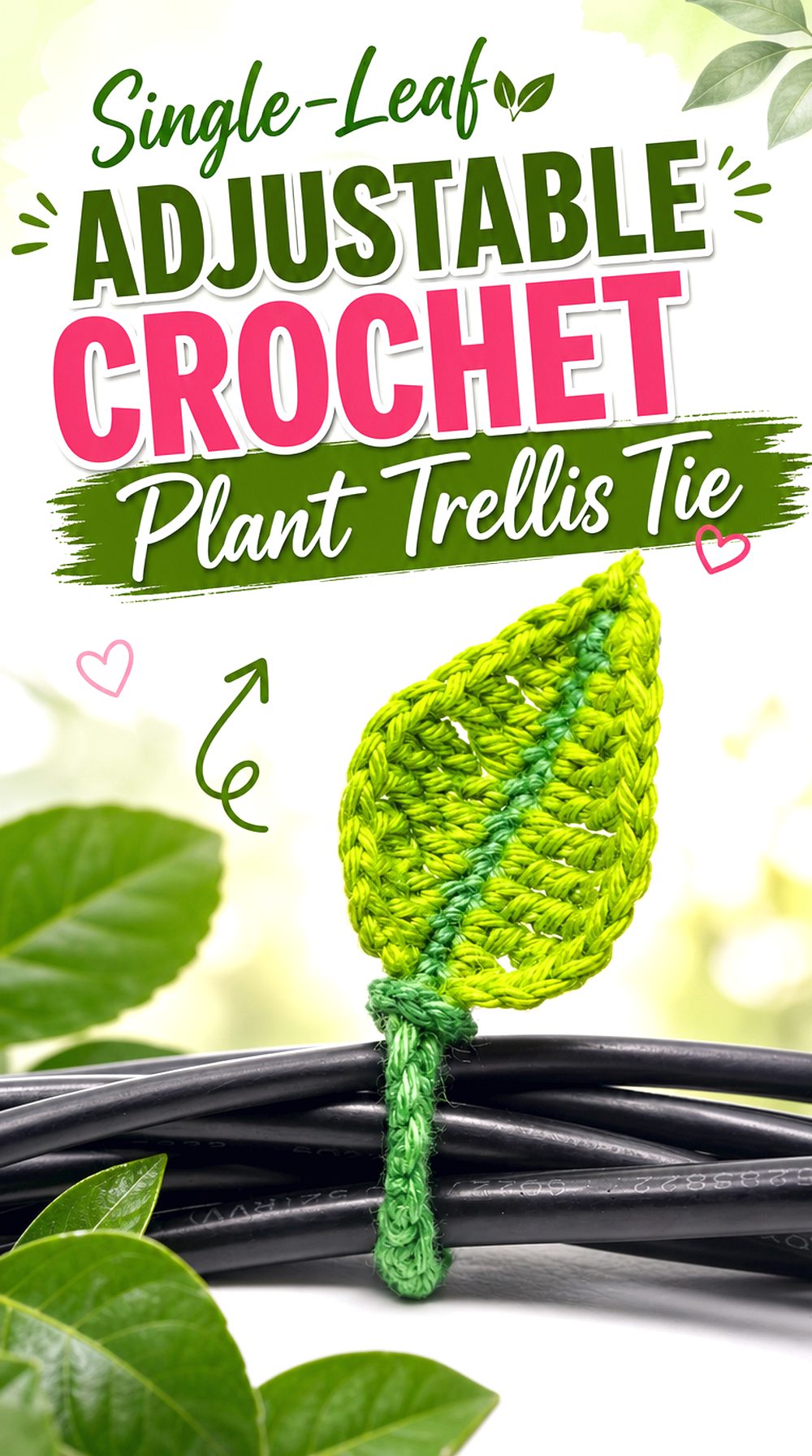
This single-leaf Crochet tie has a cleaner, less bulky profile than the double-leaf versions. A shaped leaf forms the decorative end, while the narrow stem section wraps around the object being secured. The source confirms that the length can be adjusted, making it useful when several trellis points require slightly different sizes.
Who It Suits
Choose this style for compact houseplant frames, small bamboo stakes, or vines with closely spaced leaves where a larger motif would feel crowded. Matching the yarn to the foliage keeps the support discreet.
Good to Know
The slender stem concentrates pressure into a smaller area, so it should remain loose around living growth. For a heavier stem, use the Crochet tie to secure a broader protective band to the trellis rather than placing the narrow cord directly against the plant. Check the leaf point occasionally for snagging.
4. Buttoned Band Crochet Plant Trellis Tie
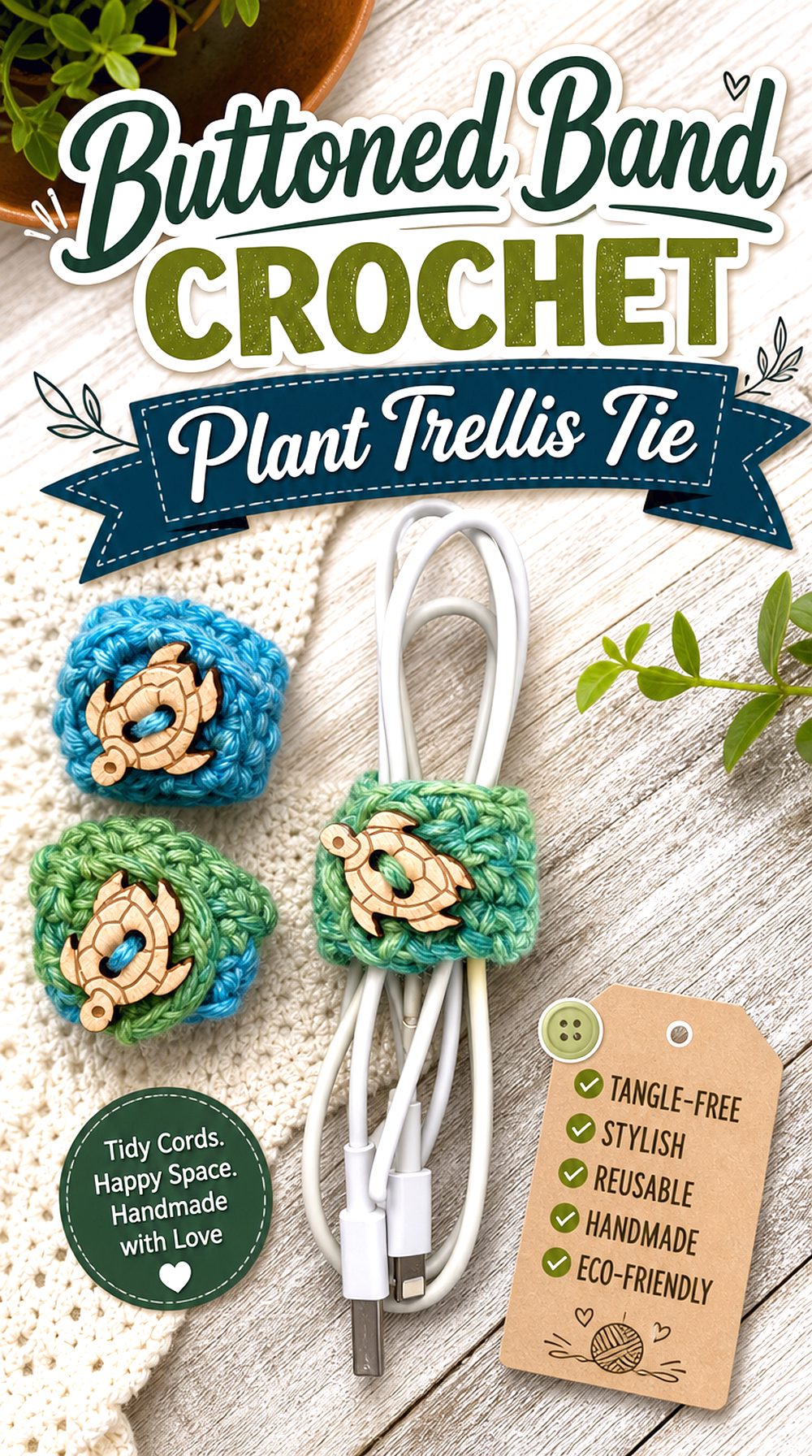
Worked as a short rectangular band, this Crochet cord keeper has a button at one end and a crocheted loop at the other. The close-set rows create a smooth, flat surface that spreads contact more evenly than a fine string. Its simple shape also makes the width and length straightforward to adjust.
Best Use
This structure can suit sturdy stems trained against a cane, particularly when the fastening needs to be opened repeatedly. Turn the button towards the trellis so the smooth band, rather than the hardware, rests nearest the plant.
Care Note
Wooden or decorative buttons may change after repeated exposure to water, soil, and sunlight. A sheltered conservatory or indoor plant display is therefore a more suitable setting than an exposed vegetable plot. Before reuse, inspect the button stitching, loop, and band edges. Never force the closure if growth has made the fit snug.
5. Wide Tapered Wrap Crochet Plant Trellis Tie
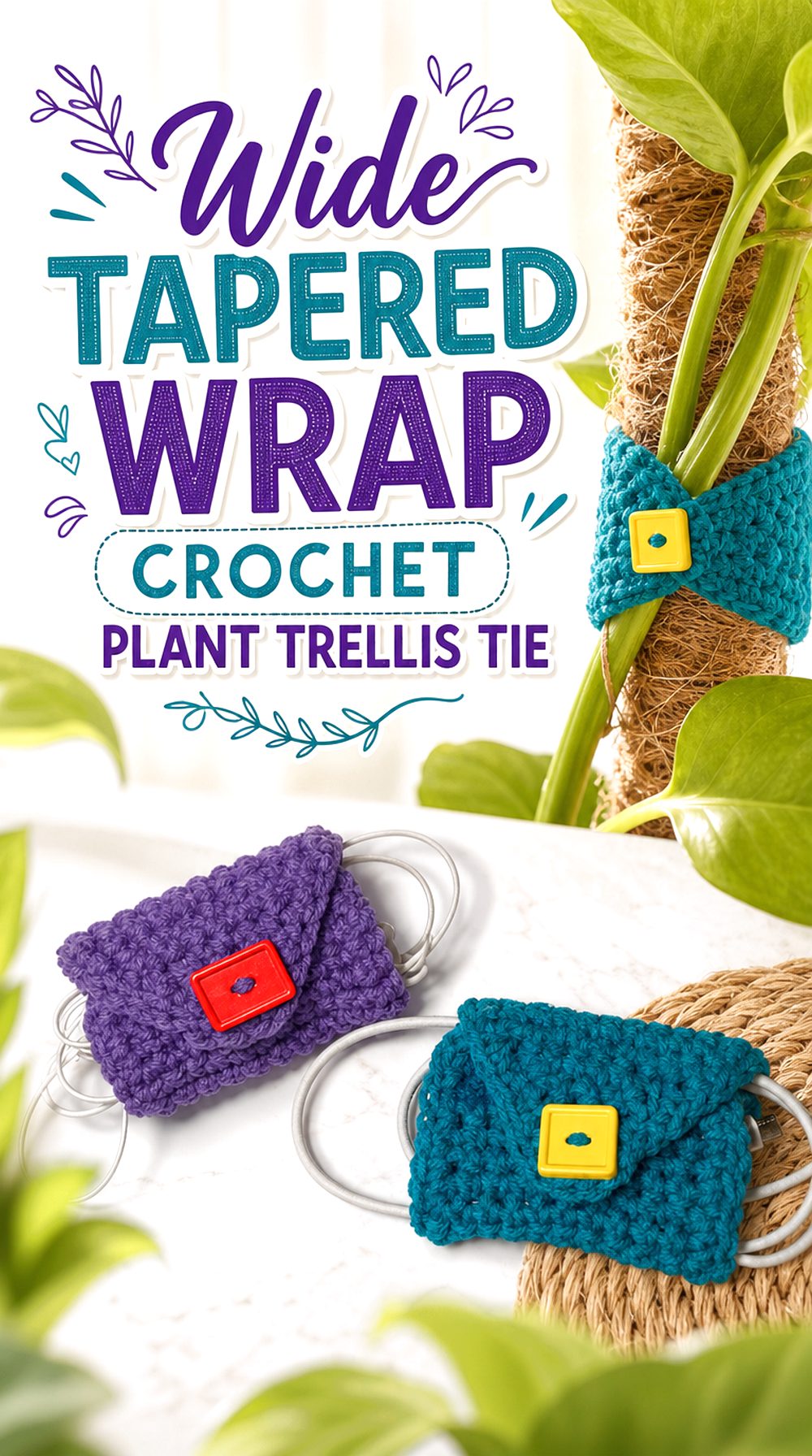
This Crochet wrap is noticeably wider and longer than a small cable keeper. A rectangular body narrows towards the button-loop end, and a finished border outlines the complete piece. That broader shape can distribute contact across a larger section when used around a substantial support.
Why It Works
The pattern is designed to be adjusted in both width and length. For plant use, a shortened version could wrap around a trellis post and gather several established canes without compressing each stem individually. The tapered end helps the closure remain visually neat.
Practical Point
This is a relatively substantial tie, so it may overwhelm fine seedlings or young vines. Reserve it for thicker growth, bundled canes, or for fastening mesh to a frame. Position the button away from leaves, check that the edging has not become abrasive, and loosen the wrap before stems fill the available space.
6. Colourful Chain Crochet Plant Trellis Tie
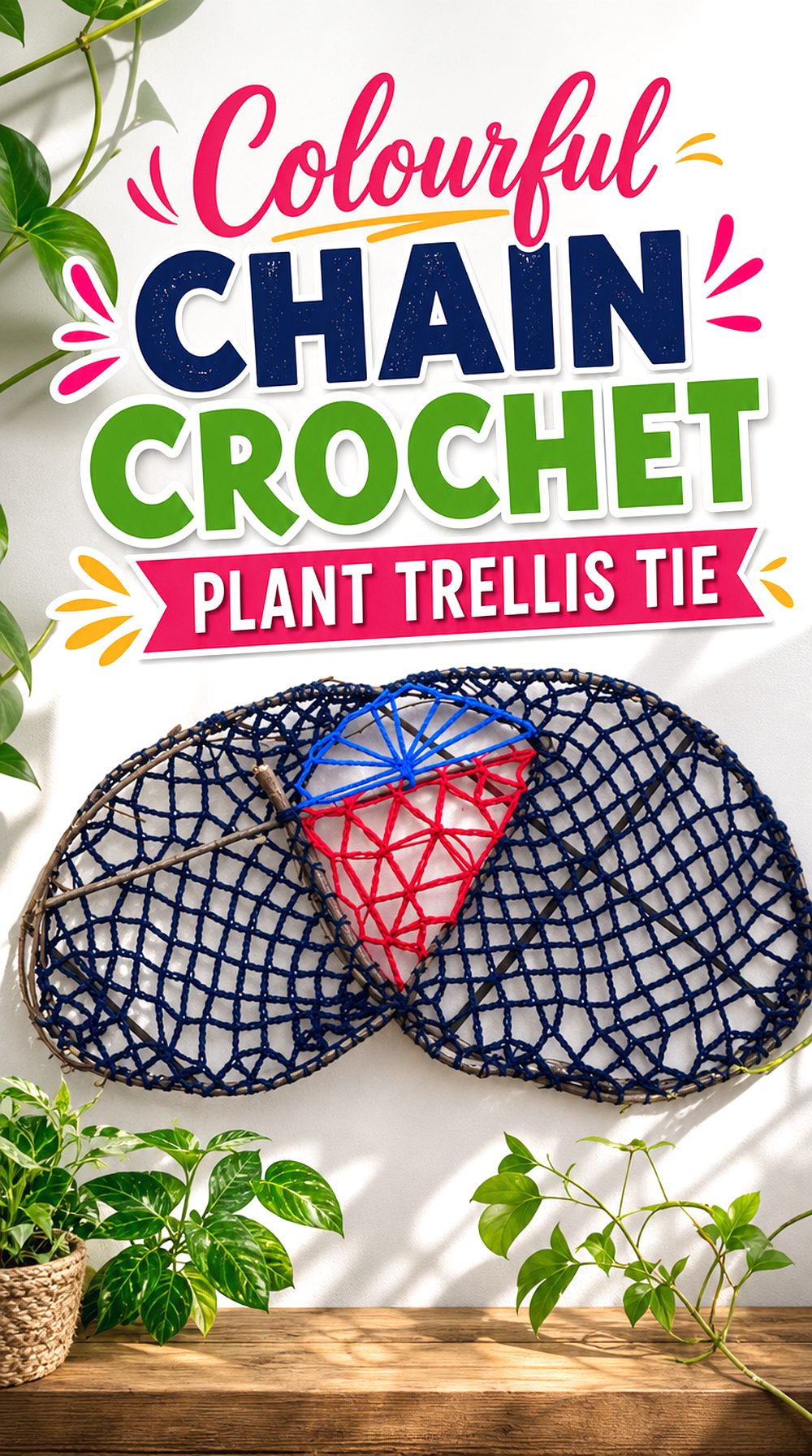
Simple lengths of Crochet chain can become bright fastening cords without adding buttons, thick bands, or large motifs. The linked garden project uses colourful chains to bind natural hoops to an existing structure and also shows them decorating a willow basket planter. The open, flexible appearance works especially well with rustic wood.
Best Use
Rather than tightening the chain around a tender stem, use it to attach trellis sections, fix a lightweight hoop to a frame, or create a loose figure-of-eight tie between an established vine and its support. Contrasting colours can mark different training points.
Before You Choose
A basic chain can stretch and its open loops may catch on small shoots. Adding a firmer return row would create more body, but it would also increase thickness. Inspect outdoor ties regularly and replace any section that has weakened. This design is particularly useful when the support itself needs decorative binding.
7. Rounded I Cord Crochet Plant Trellis Tie
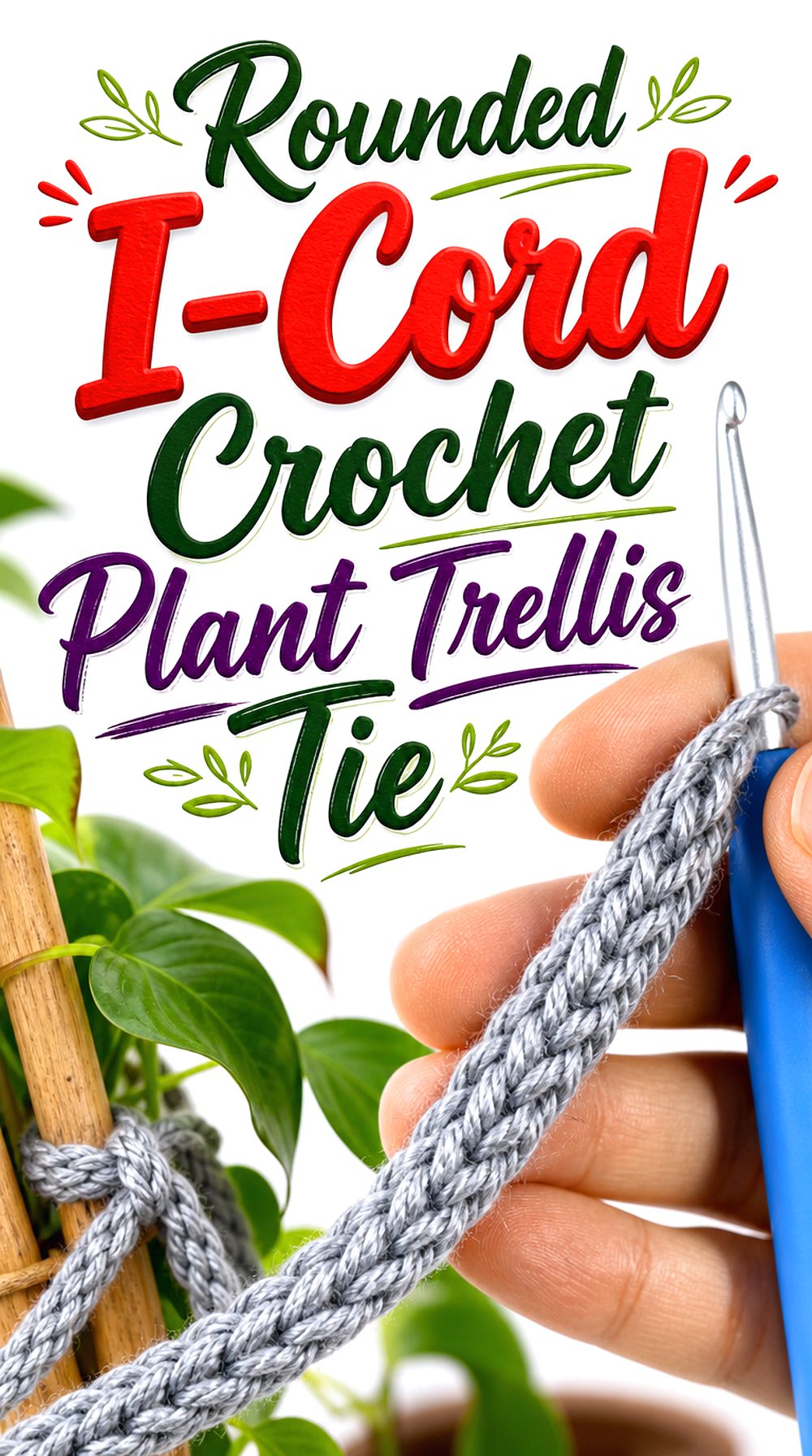
A Crochet I-cord forms a smooth, rounded tube with a balanced appearance on every side. The linked tutorial shows a neat cord commonly used for handles, edging, and other long attachments. Its compact shape gives a plant tie a cleaner finish than a loose foundation chain.
Who It Suits
This cord can suit lightweight vines that need a soft-looking connection to a circular hoop or narrow stake. Work a longer length and secure it in a loose bow or figure of eight so it can be reopened as the plant grows.
Practical Point
Although the rounded surface looks substantial, it remains a narrow fastening. It should not be pulled tightly around thick or rapidly expanding stems. Select a smooth yarn, keep joins and ends away from the plant, and test whether the completed cord bends comfortably before placing it in use. A bright contrasting shade will make later inspections easier.
8. Braided Look Crochet Plant Trellis Tie
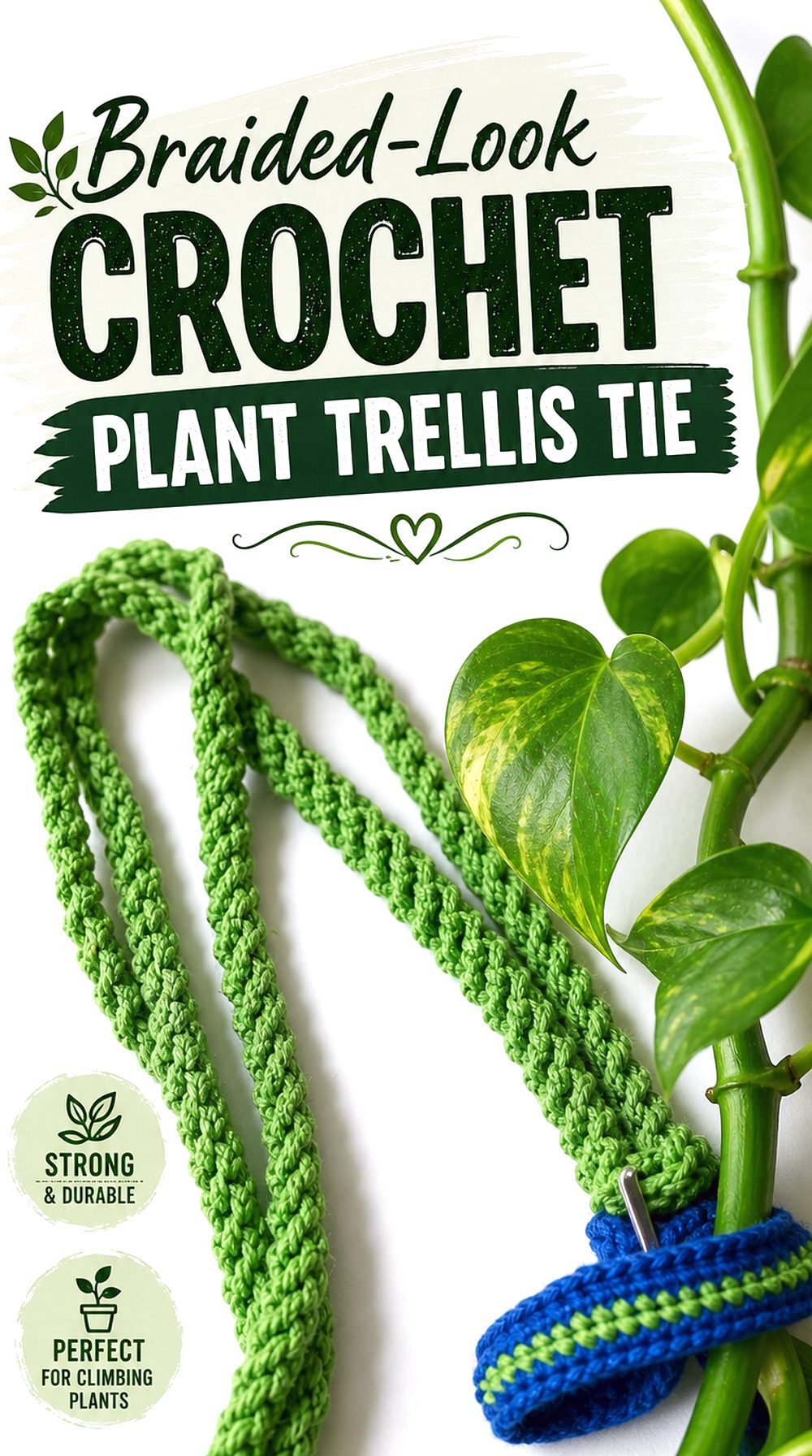
This Crochet cord has a raised, braided appearance and looks finished from either side. The source describes it as reversible and sturdy with some built-in stretch. Those features create a more decorative fastening for an indoor climbing plant, painted trellis, or carefully styled balcony pot.
Customisation Idea
Use two short lengths in coordinating colours to distinguish new training points from older ones. The cord can also be made long enough for a bow, avoiding permanent hardware and allowing adjustments during the growing season.
Good to Know
Built-in stretch can be useful for flexibility, but it should not replace regular fit checks. A cord that appears comfortable may still press against an expanding stem once its elasticity is fully extended. Use the braided tie around a smooth support, leave a clear gap, and move it before the plant grows through or around the textured ridges. It is less suitable for very brittle new shoots.
9. Clustered One Row Crochet Plant Trellis Tie
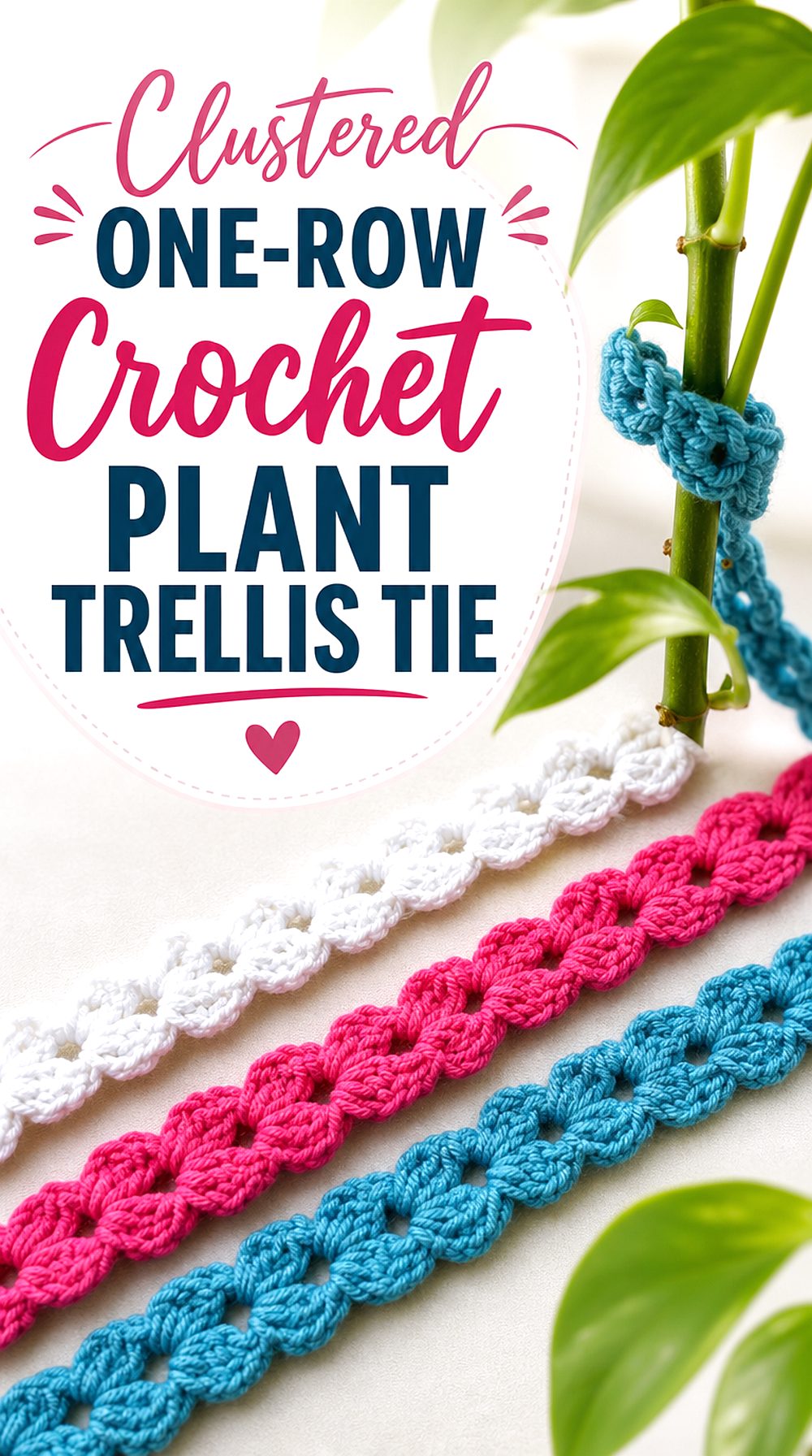
Repeated clusters give this one-row Crochet cord a decorative sequence of raised sections and small openings. The result is more textured than a plain chain, yet it remains narrow enough to wind around a slim trellis bar. The source shows the cord in several colours and allows it to continue to any desired length.
Display Idea
Use it where the tie is meant to be visible, such as on a kitchen herb frame or a decorative houseplant ladder. A neutral trellis paired with a terracotta, mustard, or leafy green cord can make the stitch rhythm easier to see.
Before You Choose
The clustered surface is not ideal against delicate or fuzzy stems because the openings can catch small growth. Place the cord around the trellis and connect it to a smoother plant loop, or reserve it for securing two parts of the support. Inspect the raised sections for pulled loops before reuse.
10. Two Tone Lace Tape Crochet Plant Trellis Tie
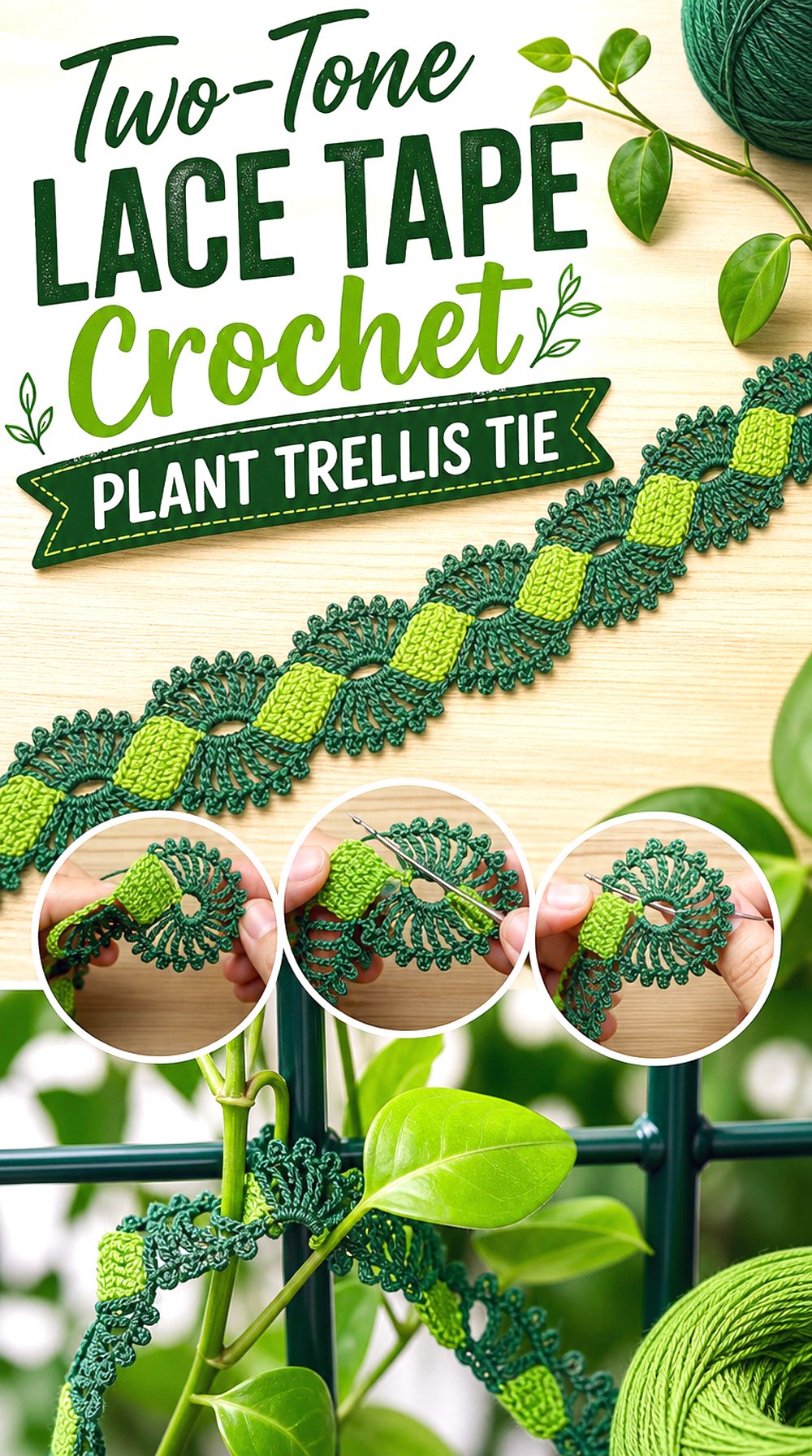
This decorative Crochet tape uses two colours and combines solid rectangular sections with a picot-like outer treatment. The green sample has a leafy, ornamental quality that can echo the planting around it. Its width and repeating structure make it more noticeable than a plain cord.
Best Use
Treat this as trellis decoration with a supporting function rather than a tight stem tie. It can wrap around the junction of two indoor plant hoops, finish the edge of a small display frame, or hold a smooth secondary tie in place.
Care Note
The raised lace edge and open spaces can catch young leaves, tendrils, or pruning tools. Keep the ornamental side facing away from the plant and avoid using it where vigorous vines will grow directly through the tape. The tutorial is primarily visual, and the accompanying video is not presented in English, so visual learners may find it easier to follow than readers seeking detailed written directions.
Useful Crochet Notes
Leave Space for New Growth
A finished tie should guide the plant rather than hold it rigidly. Leave enough room for the stem to thicken and move, then inspect it throughout active growth. For heavier stems, crossing the tie between the plant and support creates a figure-of-eight buffer that can reduce direct rubbing.
Match the Width to the Stem
Use broader, smoother Crochet bands for substantial stems and reserve slim cords for lightweight vines or for attaching parts of the trellis itself. Wide, flexible contact materials are generally less likely to create concentrated pressure than narrow fastenings. Buttons, knots, leaves, and yarn ends should face away from the living stem.
Inspect Outdoor Ties Before Reuse
Remove Crochet ties at the end of their useful period rather than leaving them hidden beneath foliage. Check for tightening, fading, pulled stitches, damaged buttons, persistent dampness, or debris caught in openwork. Clean suitable ties, allow them to dry fully, and store them flat. Discard any fastening that no longer feels smooth or secure.
Conclusion
Choose a leaf-loop tie when you want a small botanical detail, a flat buttoned band when width and reopening matter, or a plain cord when several custom lengths are needed. Decorative cluster and lace styles work more comfortably on the trellis than against fragile stems. Whichever Crochet idea suits your display, leave growing space and make regular inspection part of normal plant care.
FAQs
Are Crochet ties suitable for every type of climbing plant?
They can suit many supported plants, but the fastening must match the stem. Fine, brittle, hollow, or rapidly expanding growth needs generous space and minimal pressure. Some self-clinging plants may not need ties at all, while roses and other non-clinging stems often require regular guidance onto their supports.
Which yarn works well for Crochet plant trellis ties?
Choose a smooth yarn that bends without creating a hard edge. Cotton provides clear stitches but may absorb water, while synthetic yarn should not automatically be treated as weatherproof. Test the completed tie, inspect it after outdoor exposure, and avoid rough, heavily textured, metallic, or shedding fibres where they would touch a stem.
How tight should a Crochet plant tie be?
It should be loose enough for growth and some natural movement. Do not pull the plant rigidly against the support. For thicker stems or windy positions, a figure-of-eight arrangement can separate the stem from the trellis and reduce rubbing. Recheck the space regularly as the stem expands.
Can buttoned Crochet ties be used outdoors?
They may be used in sheltered positions, but every component needs inspection. Repeated water exposure can affect yarn, stitching, and some button materials. Face the button towards the trellis, keep it away from leaves and stems, and replace the tie if the loop stretches, the button loosens, or the band becomes rough.
How can Crochet plant ties be customised safely?
Adjust length and width before adding extra decoration. Colour changes are generally more practical than beads, bells, long tassels, or loose appliqués, which may snag stems or fall into soil. Keep leaf motifs and raised edging on the support side, secure every yarn end, and avoid decorations that make fit checks difficult.