
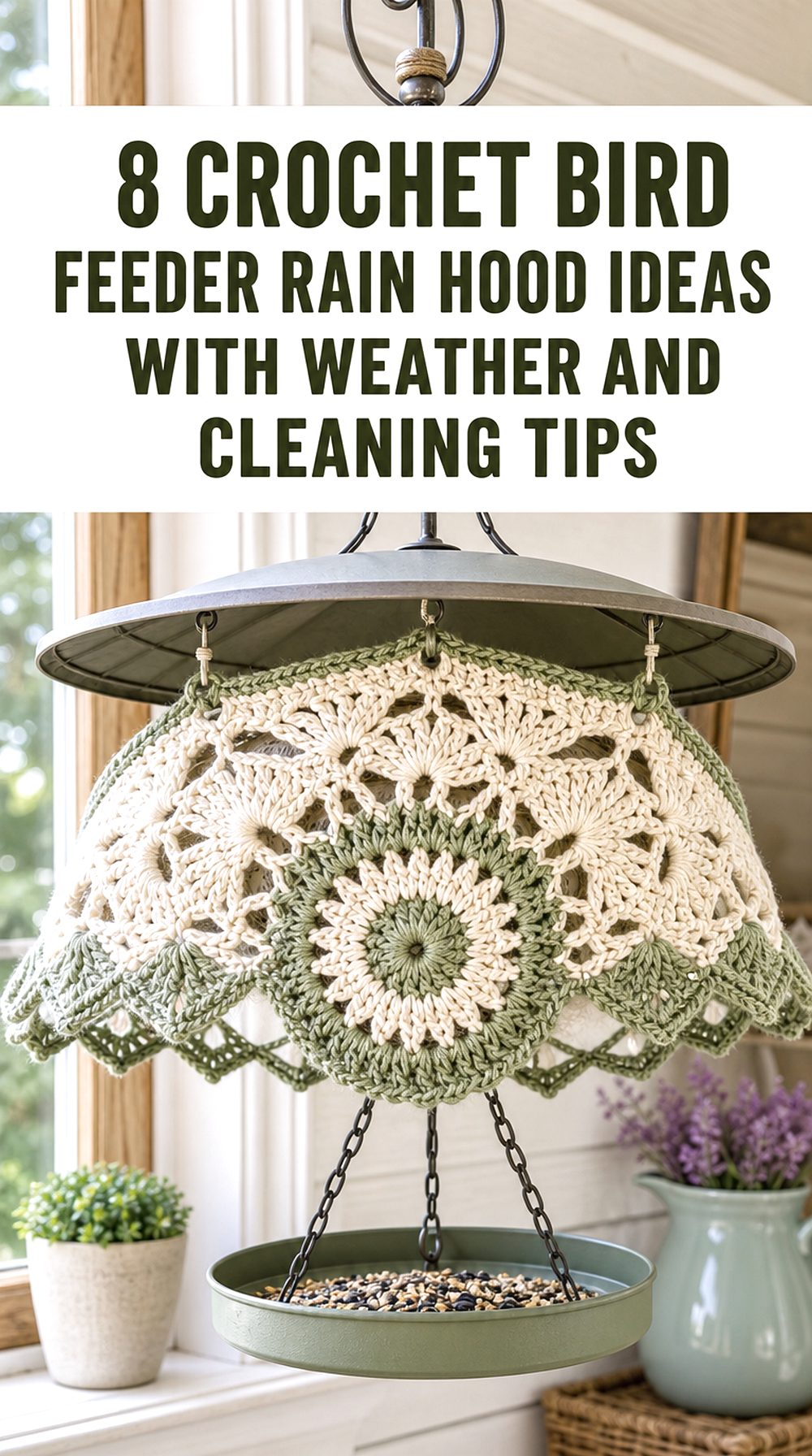
8 Crochet Bird Feeder Rain Hood Ideas with Weather and Cleaning Tips
Rain hoods can help keep feeder contents drier, but Crochet fabric should not be expected to stop rain on its own. The practical approach is to use Crochet as a decorative, removable outer layer around a rigid, washable roof, with the food tray or suet holder below. This guide compares eight Crochet bird feeder rain hood ideas drawn from feeder, net, hanger, hoop, and basket designs. Some sources are purpose-built feeders; others are clearly identified structural adaptations. You will see how shape, overhang, suspension, stitch openness, yarn behaviour, and cleaning access affect the result. The aim is a hood that looks considered, hangs steadily, sheds water through its solid core, and can be removed before washing the feeder. Wet seed can spoil, so dryness and regular cleaning matter more than decoration.
Quick List
- Crochet Triangular Plate Feeder with Wide Rain Hood
- Crochet Lace-Net Feeder with Disc Rain Hood
- Crochet Mini-Market Net Feeder with Cone Rain Hood
- Crochet Suet Cage with Deep Rain Hood
- Crochet Egg-Shaped Feeder with Round Rain Hood
- Crochet Multi-Cord Feeder with Flat Rain Hood
- Crochet Mandala Hoop Rain Hood
- Crochet Teardrop Basket Rain Hood
How to Choose a Crochet Bird Feeder Rain Hood
Start with the weatherproof layer. Crochet can frame, cover, or decorate a hood, but a smooth rigid disc, shallow bowl, or purpose-made canopy should handle the rain. Give that solid layer enough overhang for runoff to fall beyond the food, while leaving clear side access for visiting birds. Next, check suspension. Three or more equal cords usually provide better balance than a single off-centre loop, and a sheltered position reduces swinging.
Cleaning access matters just as much as shape. The Crochet section should detach without dismantling the entire feeding station, and the solid tray, roof, and food holder should be washable and able to dry fully. Avoid fringe, long loose tails, damaged mesh, or fibres that could catch feet. Inspect knots, rings, and hanging loops regularly, particularly after wet or windy weather. Finally, match stitch density to the job: openwork is useful around feeding access, while a closely worked decorative sleev
Crochet Triangular Plate Feeder with Wide Rain Hood
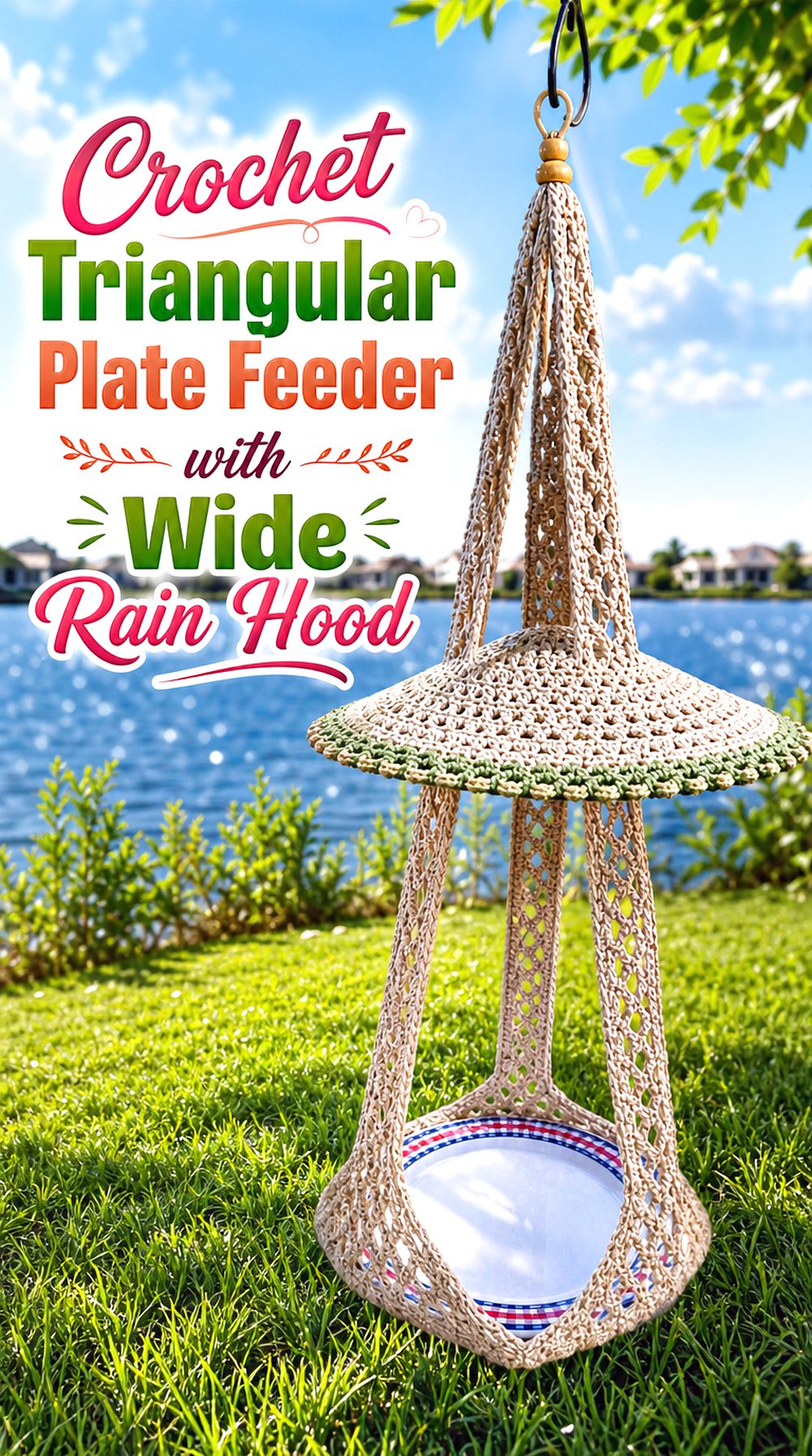
Design Details: The linked feeder uses a lacy triangular base sized around a plate, with shell and V-stitch sections creating three corner points. Equal straps rise from those points, giving the suspended tray a balanced, geometric outline.
Rain-Hood Adaptation: Keep the plate feeder below and add a separate rigid canopy above the strap join. A round or triangular washable roof can echo the base shape, while a removable Crochet edging softens its outline. Choose a canopy wider than the plate so runoff falls beyond the food.
Before You Choose: This hammock-style construction may sway in exposed positions, and the original tutorial itself advises avoiding very windy placement. Match all strap lengths carefully, keep loose ends enclosed, and remove the Crochet before cleaning the solid feeder parts.
Crochet Lace Net Feeder with Disc Rain Hood
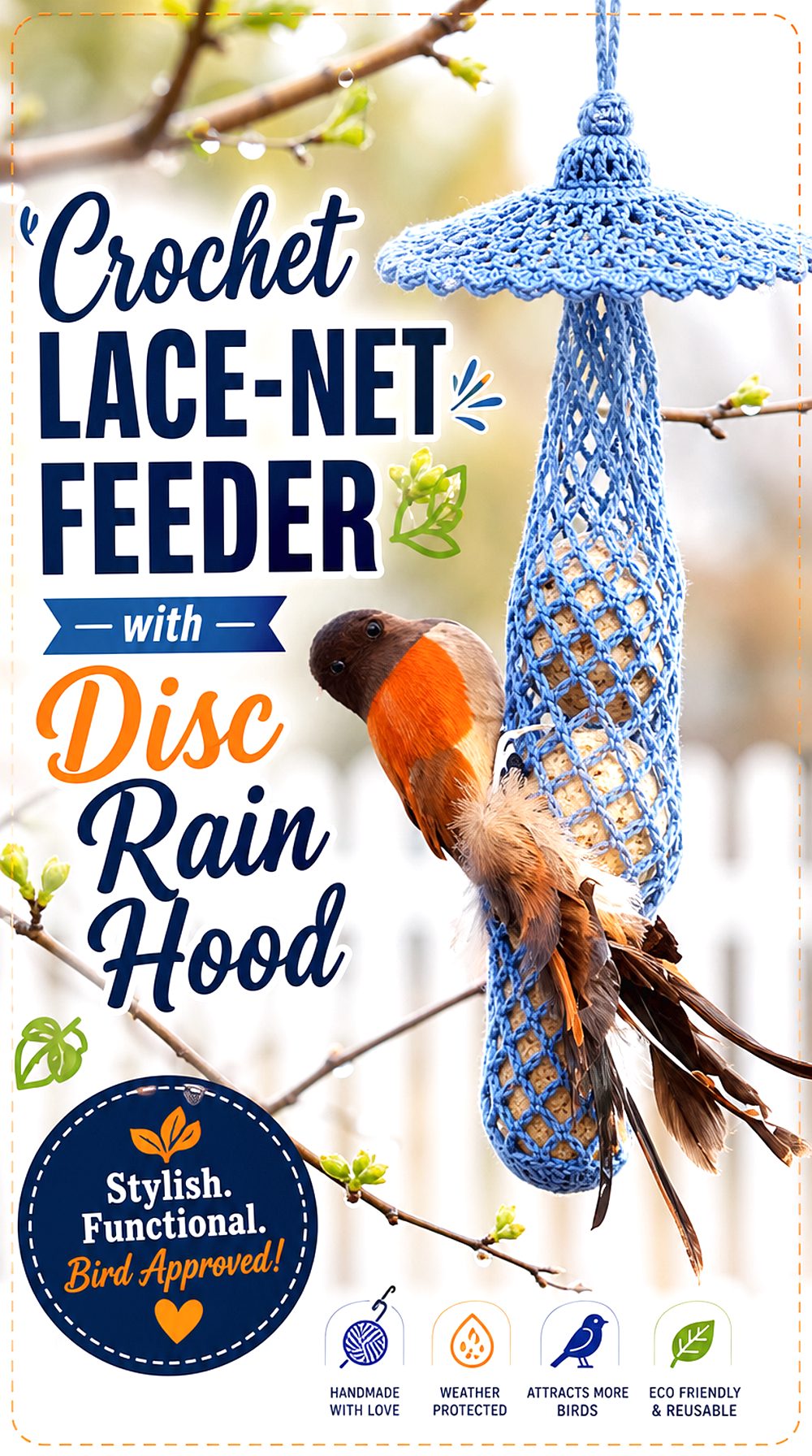
What Stands Out: This narrow Crochet feeder is worked as an open lace net with a circular start, chain-space sides, and a simple hanging loop. Its slim shape suits compact bird-food portions and creates a light, vertical silhouette beneath a canopy.
Best Use: Suspend the net from the centre of a rigid disc rain hood. The hood should sit above the food with enough clearance for birds to approach from the sides, while the open mesh leaves the contents visible. A dark denim, forest green, or muted ochre colour can blend with garden planting.
Practical Point: Lace openings make refilling easy to assess, but they do not stop driven rain. Keep the roof separate and washable, check the loop and net for stretching, and discard damp or spoiled food rather than leaving it to dry in place.
Crochet Mini Market Net Feeder with Cone Rain Hood
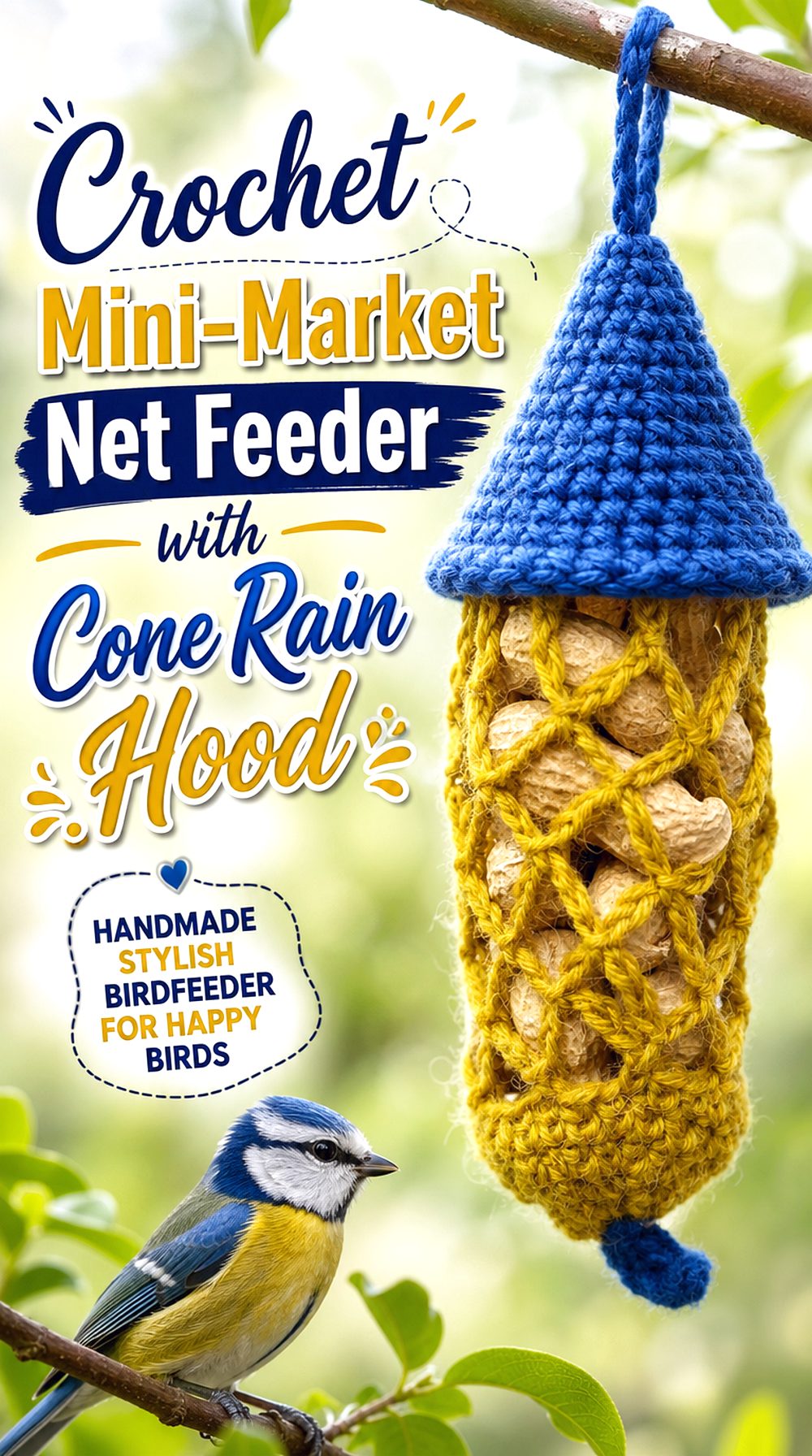
Design Details: The source project forms small cylindrical shopping-net shapes with a solid round base, airy chain loops, a tighter upper round, and a drawstring-style closure. The result is playful and compact, especially for larger food pieces rather than loose fine seed.
Customisation Idea: Add a lightweight rigid cone or shallow bowl above the drawstring. A Crochet border can wrap the roof edge, using the same colour as the net for a coordinated feeder-and-hood set. Keep the canopy broad enough that water runs outside the mesh.
Good to Know: Thin scraps can produce a delicate appearance, yet outdoor use demands frequent inspection. Avoid fringe, exposed long tails, or unravelled fibres near feeding openings. The German tutorial is complete and illustrated, but the rain hood is an adaptation rather than part of the original design.
Crochet Suet Cage with Deep Rain Hood
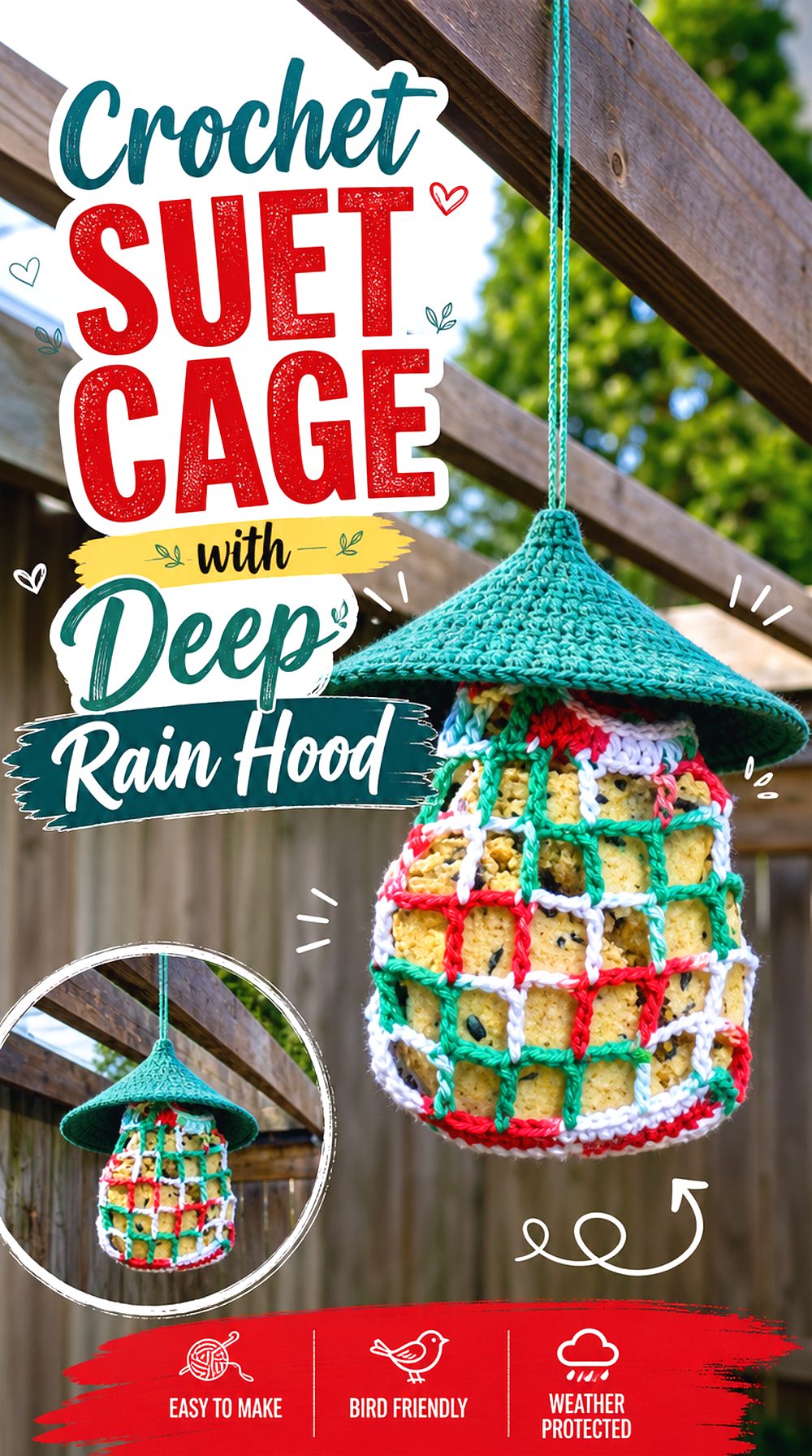
Construction Focus: This Crochet suet feeder develops from increasing rows into a taller treble-crochet body, with a firmer single-crochet base and several hanging loops. The finished shape is more cage-like than pouch-like, so birds can reach the suet through the open fabric.
Why It Works: A deep rigid hood above the cage can protect the top and upper sides without blocking access. The multiple hanging points offer a useful way to centre the feeder beneath a circular roof. Neutral cotton keeps the structure visually quiet, while one contrast row can mark the refill opening.
Care Note: Suet residue can collect on yarn and seams. Make the hood and feeder easy to detach, remove leftover food before washing, and let every component dry fully before reassembly. Inspect the suspension loops regularly because they carry both feeder and food weight.
Crochet Egg Shaped Feeder with Round Rain Hood
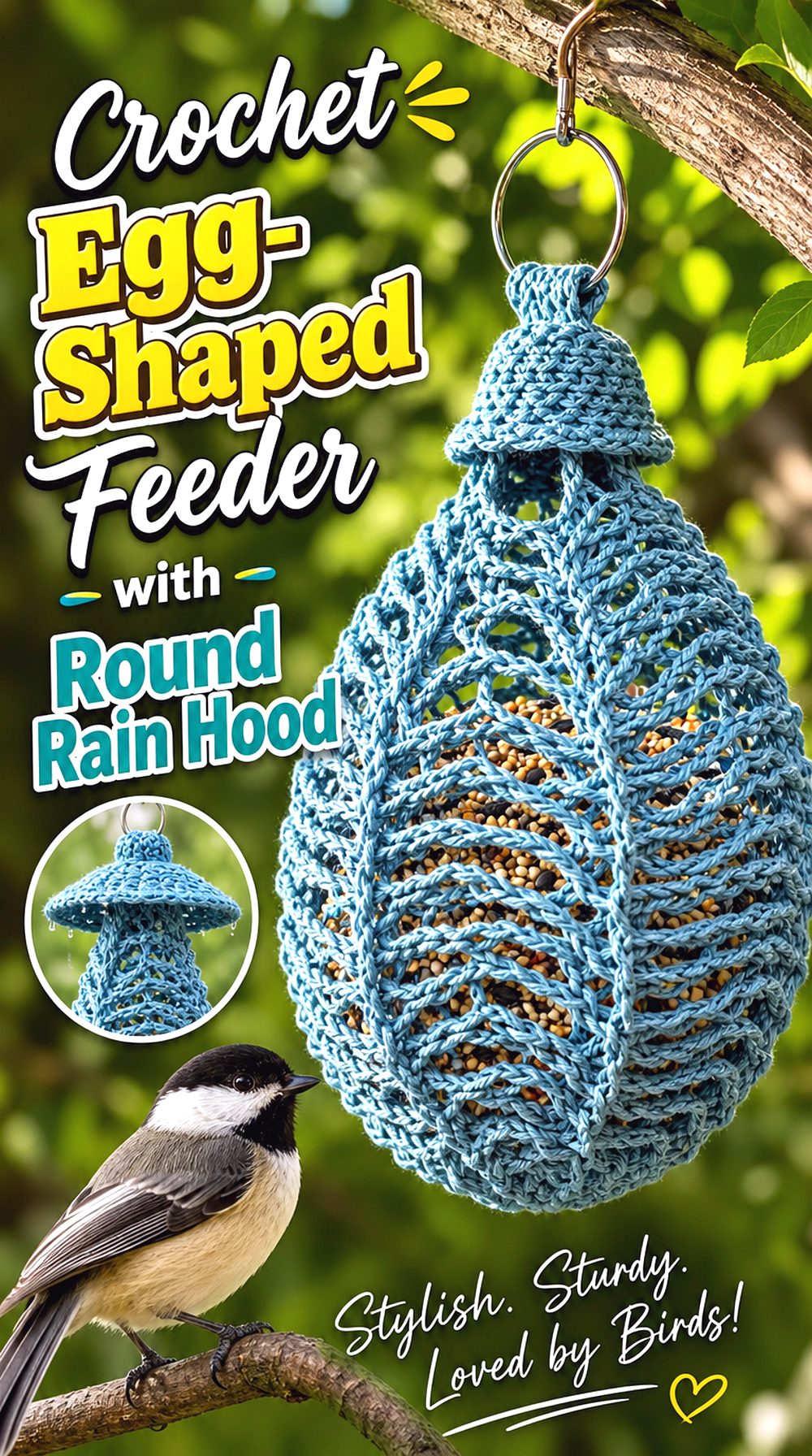
What Stands Out: The Nest Egg tutorial creates an oval mesh pouch with gradual increases and decreases, a solid hanger tab, a ring attachment, and an optional drawstring. The source also includes feeder variations for peanuts and sunflower seed, making this one of the most adaptable projects.
Rain-Hood Adaptation: Hang the egg-shaped feeder beneath a round roof fixed to the same upper ring. The contrast between the soft oval pouch and clean disc canopy gives the finished piece a tidy garden profile. A domed rigid roof will direct water away more effectively than a flat textile circle.
Before You Choose: Keep the Crochet taut enough that food does not push through enlarged gaps. Do not fill the pouch with loose yarn scraps; the source specifically avoids that option after noting the risk to birds. Remove the project if fibres fray or loops distort.
Crochet Multi Cord Feeder with Flat Rain Hood
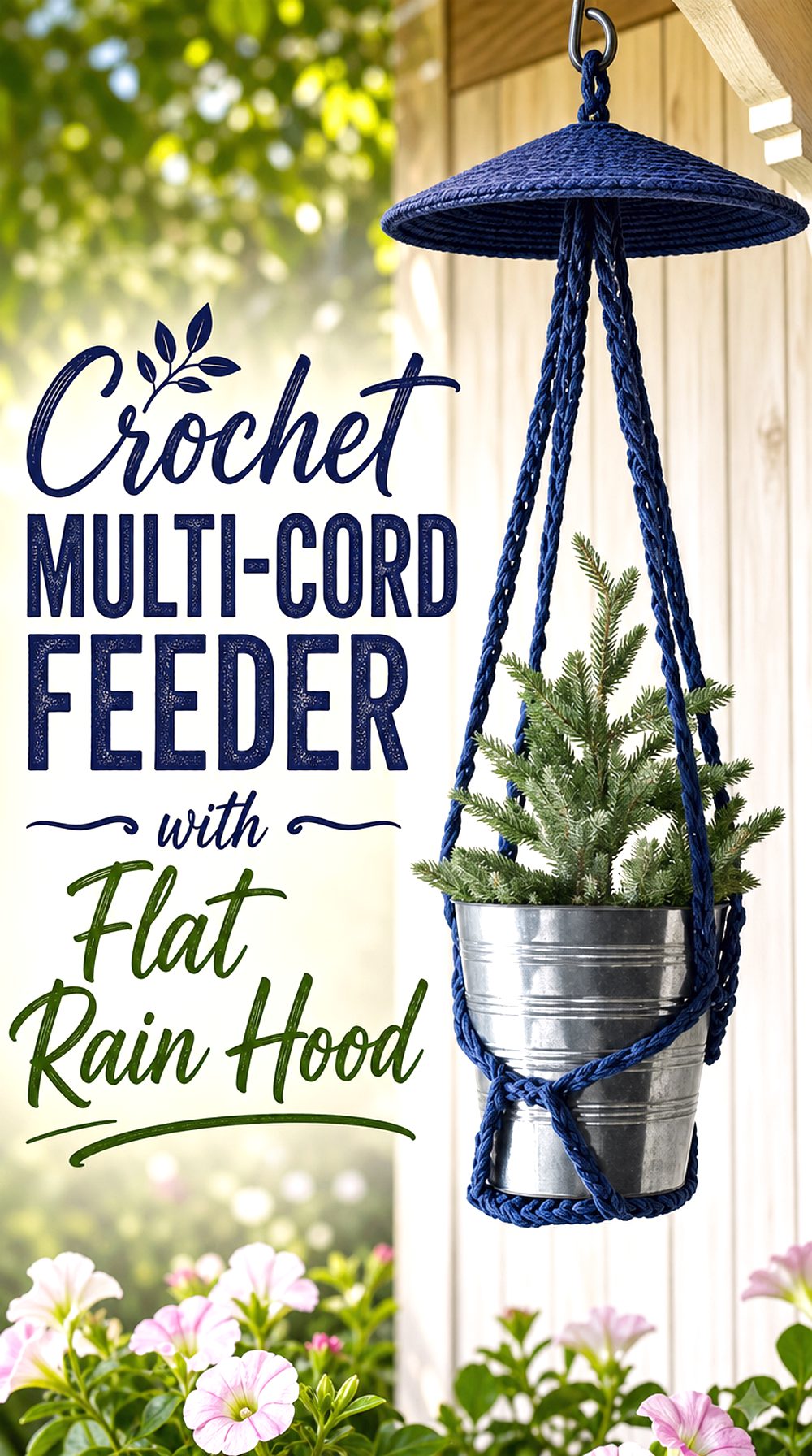
Design Details: The linked plant hanger starts with a flat Crochet circle and evenly positioned hanging cords that meet at a metal ring. Its geometry is useful for suspending a feeder tray level beneath a separate roof, although the original project is intended for an indoor plant pot.
Best Use: Adapt the cord layout around a rigid washable tray, then continue the suspension through a flat waterproof disc above it. The Crochet can sit below the roof edge where it remains visible without becoming the primary weather barrier. A broad single-colour band keeps the adaptation from looking busy.
Practical Point: The tutorial notes that T-shirt yarn stretches under load. For a feeder, test the loaded length before hanging and avoid materials that elongate enough to tilt the tray. This is a structural adaptation, so check every join rather than relying on decorative knots alone.
Crochet Mandala Hoop Rain Hood
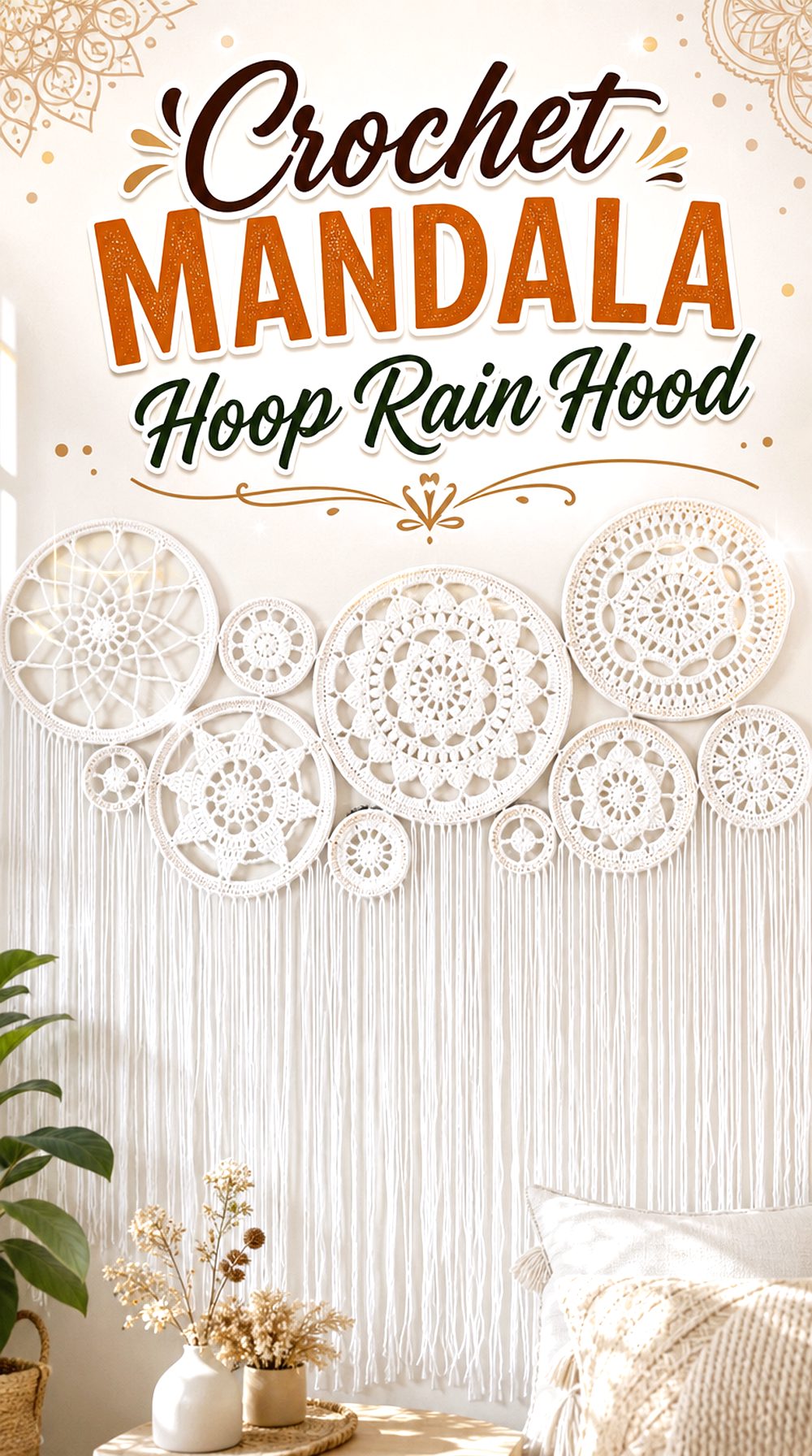
Design Details: This source offers circular Crochet mandalas stretched taut inside embroidery hoops. The open motifs, scalloped sections, and spoke-like rounds create a decorative underside that can be seen from below without adding bulk around the feeding area.
Why It Works: Mount one hoop beneath a larger rigid rain disc, keeping the mandala sheltered on the dry side. The hoop gives the Crochet a controlled edge, while the solid layer above handles water. Choose one motif rather than the source’s multi-hoop wall arrangement, and omit fringe completely for outdoor feeder use.
Fit and Finish: Gauge matters because the Crochet must stretch slightly to sit neatly in its hoop. A loose mandala may sag toward the feeder, while an over-tight one can distort the ring. Use a removable attachment so the decorative layer can be taken down for inspection and cleaning.
Crochet Teardrop Basket Rain Hood
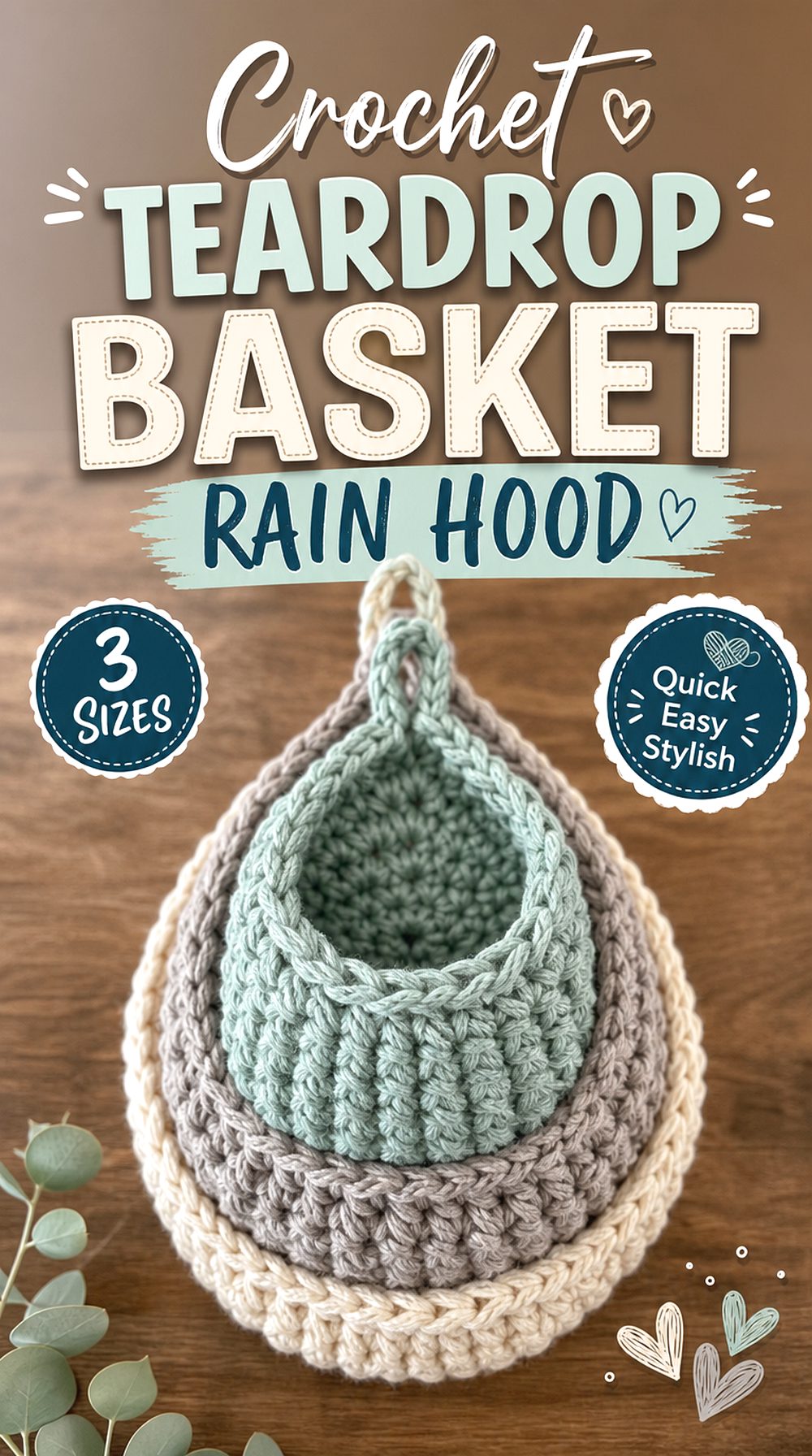
What Stands Out: The Dewdrop hanging basket has a dense teardrop body, a pointed hanging top, and a wide lower section. The tutorial offers three sizes and recommends non-stretch yarn for a firmer result. Its shape can inspire a deep outer hood rather than a flat canopy.
Rain-Hood Adaptation: Use the basket shape as a decorative sleeve over an upturned rigid bowl, leaving the lower edge clear of feeding ports. The pointed top provides a place for the hanging connection, while the broad body gives side coverage. Earthy jute tones suit rustic settings; smoother cotton is easier to inspect.
Care Note: The original is an indoor storage basket, so outdoor use is an adaptation. Jute and dense Crochet can hold dust and moisture. Make the sleeve removable, dry it separately, and replace it if the structure softens or becomes difficult to clean.
Useful Crochet Notes
Keep the Crochet Removable
Treat the rigid roof as the weather barrier and the Crochet as a detachable decorative layer. A removable edging, sleeve, or mandala can be washed and dried separately without trapping moisture against the canopy. Use simple ties or enclosed fasteners that release easily but do not leave long loops near the feeding area.
Control Loops, Tails, and Swinging
Finish every yarn tail securely and omit fringe, tassels, or dangling decorations. Equal-length suspension cords help a feeder hang level, while a sheltered location reduces swinging in wind. Inspect mesh, joins, and rings after storms; remove the hood immediately if yarn frays, stretches, or forms loose loops.
Clean the Feeder and Hood Separately
Discard stale or wet food before cleaning. Wash the rigid feeder and canopy according to the feeder maker’s instructions, rinse thoroughly, and allow them to dry completely. Clean the Crochet separately using care suitable for its fibre. Never reassemble the hood while either layer is damp, stained, or carrying food residue.
Conclusion
Choose the triangular or multi-cord format when balanced suspension matters most, the disc or mandala style for a clean decorative finish, and the deep suet or teardrop option when side coverage is the priority. Whatever the style, let a rigid washable component do the real rain-shedding work. The strongest choice is the one that stays stable, opens easily for refilling, and can be completely removed for cleaning.
FAQs
Can Crochet alone make a rainproof bird feeder hood?
No. Even tightly worked Crochet contains stitch gaps and absorbent fibres, so it should be treated as decoration or support rather than the only rain barrier. Place it beneath or around a rigid waterproof canopy with sufficient overhang, then keep the feeding area dry and discard food that becomes wet or spoiled.
Which yarn is practical for an outdoor feeder hood?
Choose a firmly spun, low-fuzz yarn that holds its shape and can be cleaned according to its care label. Avoid novelty fibres, fringe, and yarns that shed or stretch heavily. Cotton is easy to inspect but absorbs moisture, so any Crochet section should be removable and dried completely indoors.
How wide should a bird feeder rain hood be?
There is no universal measurement because feeder trays and access points differ. The rigid canopy should extend beyond the food area so runoff falls outside it, without blocking the birds’ approach. Test the empty feeder with poured water and adjust the overhang before adding food or hanging it permanently.
How can I reduce swinging in windy weather?
Use equal-length cords, centre the hanging point, and keep the loaded feeder balanced beneath the canopy. A three- or four-point suspension is generally steadier than an off-centre loop. Choose a sheltered position, inspect the support after strong winds, and take the feeder down if movement becomes excessive.
How should a Crochet bird feeder rain hood be cleaned?
Remove all food, detach the Crochet, and wash the rigid feeder and canopy according to the manufacturer’s guidance. Rinse and dry every solid part fully. Wash the yarn section separately using fibre-appropriate care, then replace it only when dry. Retire any piece that remains stained, misshapen, mildewed, or frayed.