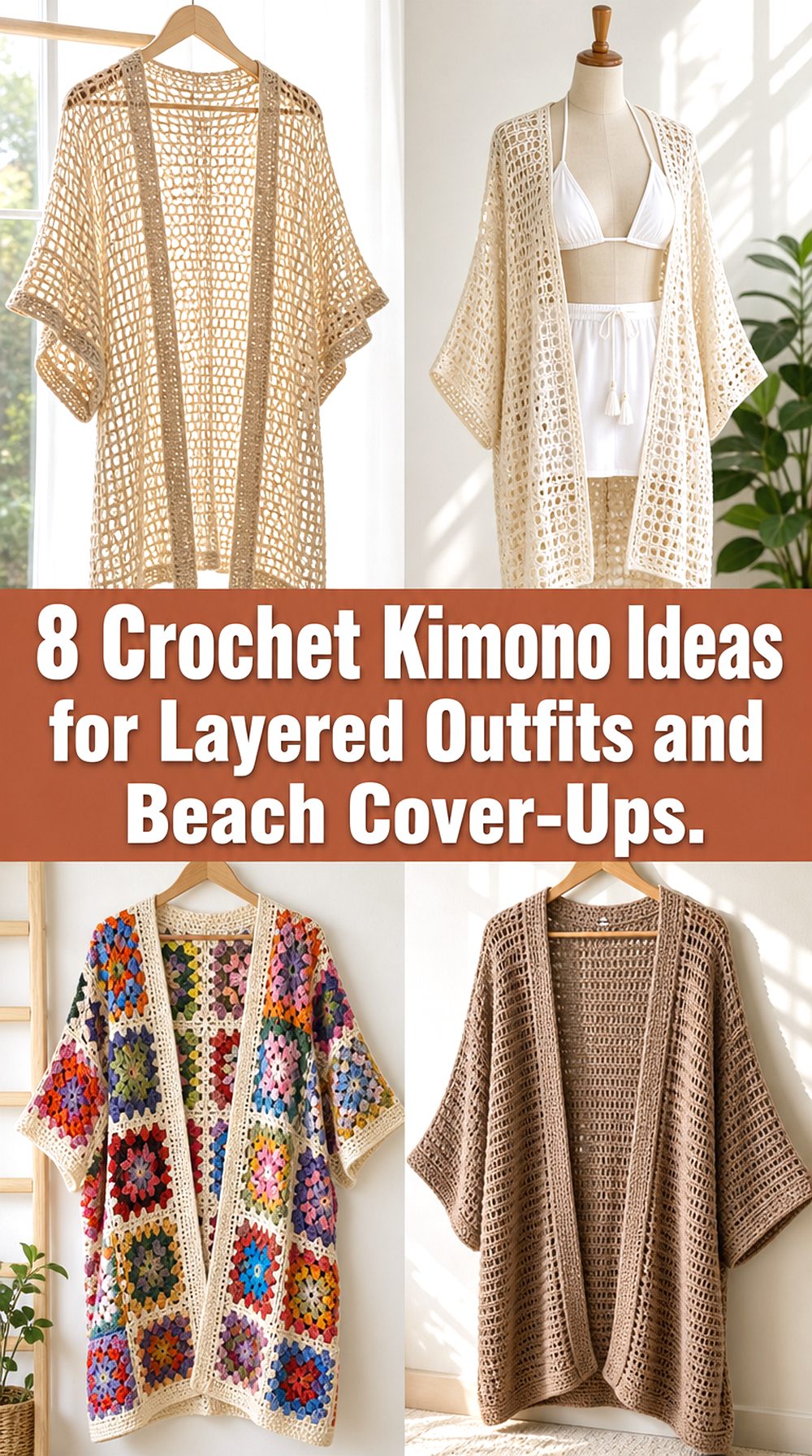
8 Crochet Kimono Ideas for Layered Outfits and Beach Cover-Ups
Crochet kimonos can cover a wide range of wearable projects, from breezy mesh layers to more substantial cardigan-style pieces. This collection focuses on shape, coverage, construction style, and use, so readers can compare more than color or surface detail before choosing a tutorial.
Some of these kimono ideas are suited to warm-weather layering, while others work more like relaxed cardigans. You will find beach cover-ups, motif-based designs, a hexagon option, a granny square version, and a chunkier cardigan shape, giving the list enough variety for different wardrobes, seasons, and comfort levels.
Quick List
- Crochet Flowy Mesh Kimono for Light Layering
- Crochet Beach Cover-Up Kimono
- Crochet One-Piece Sea Kimono Cover-Up
- Crochet Motif Summer Kimono
- Crochet Hexagon Kimono Cardigan
- Crochet Granny Square Kimono Cardigan
- Crochet Openwork Kimono Cardigan for Transitional Layering
- Crochet Chunky Kimono Cardigan
Why These Crochet Kimono Ideas Are Worth Making
A crochet kimono can be useful when a full sweater feels too closed but a simple scarf or shawl does not give enough coverage. The open-front shape makes it easy to layer over tanks, dresses, swimsuits, fitted tops, or simple everyday outfits without needing a tight fit through the body.
These projects also give readers several decision points before starting. A mesh kimono offers airflow and drape, a beach cover-up focuses on swimsuit layering, motif and granny square designs bring visible structure, and chunkier cardigans provide a heavier garment look. Choosing by length, sleeve width, coverage, and assembly style can make the final piece more useful.
1. Crochet Flowy Mesh Kimono for Light Layering
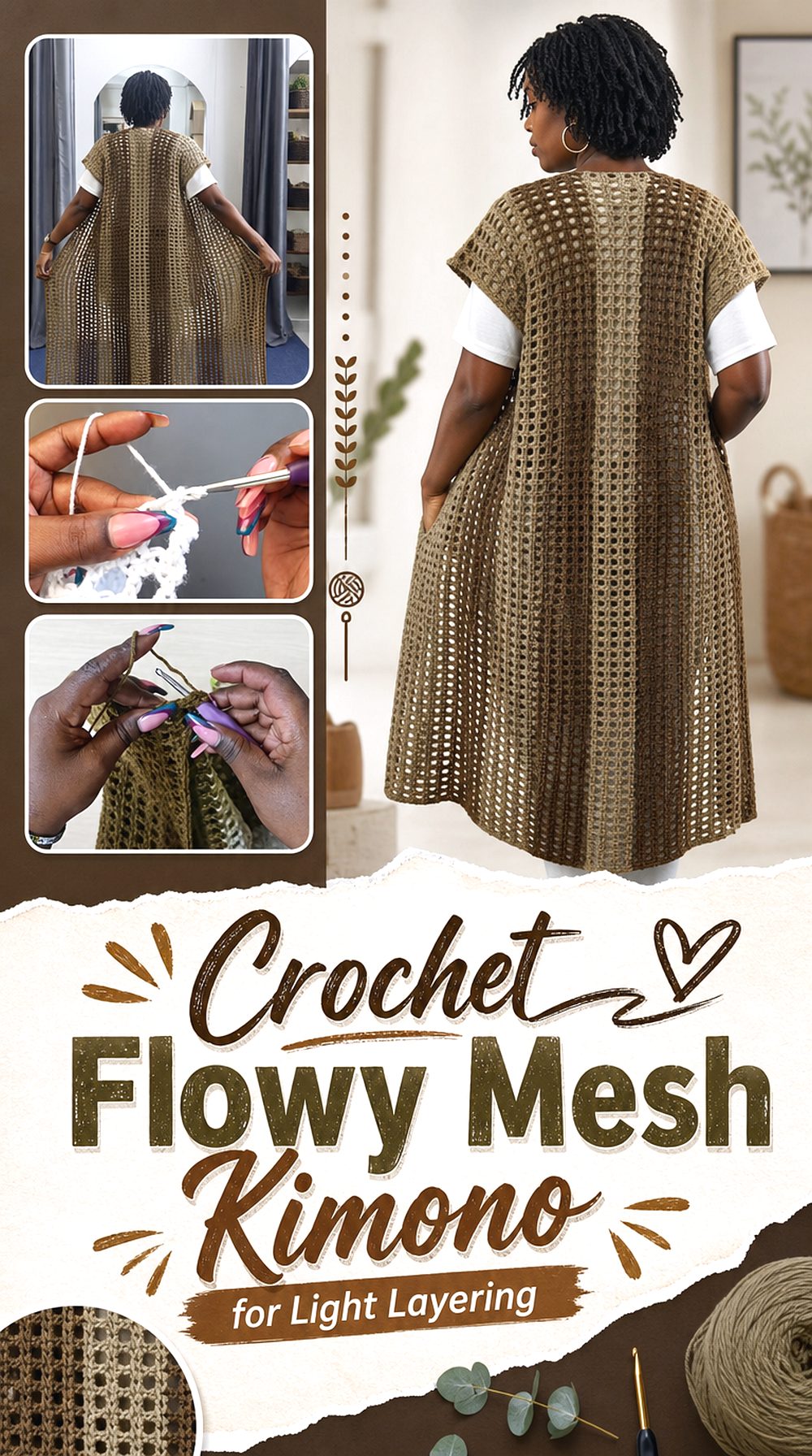
An open grid design gives this kimono a soft, airy look with plenty of visual space between the stitches. The finished style is described as lightweight and oversized, which makes it more of a loose layering garment than a fitted cardigan. It may work over a tank, dress, or simple base layer when the goal is movement and coverage without a heavy surface.
This option stands apart from the beach cover-ups because the styling feels more like an everyday wardrobe layer.
Think About Coverage
Mesh fabric changes how a kimono functions. It can give shape and movement without fully covering the garment underneath, so readers should think about what they plan to wear under it. A close-fitting tank, slip dress, or swim layer will show through more clearly than it would under a solid cardigan. That makes coverage a styling decision, not just a size decision.
Confirm the Material List
The creator includes a material list in the source, so readers should review it before buying supplies. For a garment with an open grid and oversized shape, yarn weight and hook choice can affect drape, length, and how the fabric hangs. It is better to gather the listed tools first and then compare them with any yarn label guidance.
Check the Overall Drape
A flowy kimono needs enough movement to sit comfortably over the body without pulling at the shoulders or sleeves. While following the original tutorial, pause when the main shape begins to appear and compare the garment width with your intended fit. A loose design can still feel too narrow if the fabric does not fall the way you expect.
Original Tutorial and Creator Credit
Creator: LaDenser Crochets
2. Crochet Beach Cover Up Kimono
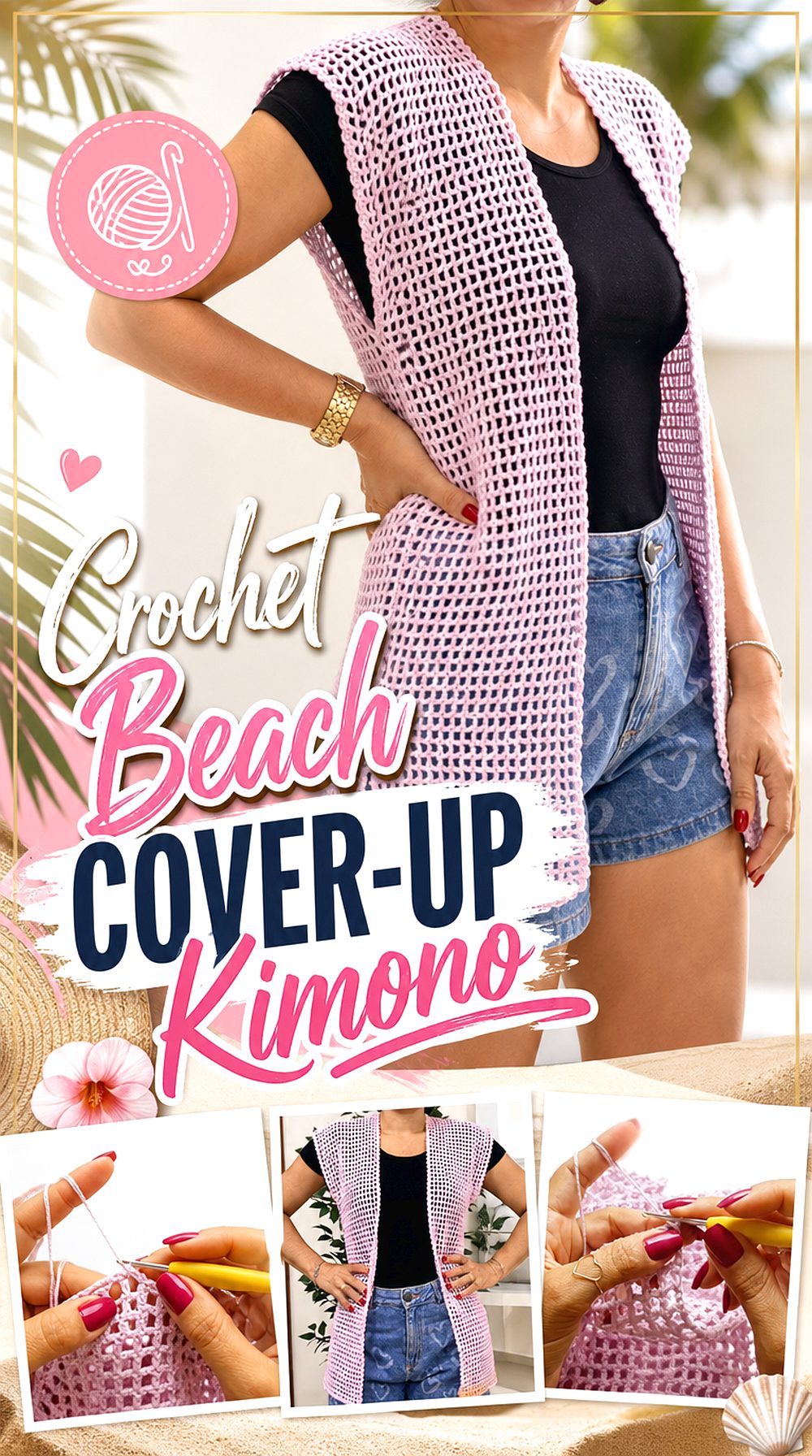
This crochet kimono is presented as a beach cover-up, so its main purpose is layering over swimwear or warm-weather clothing. The finished idea is useful for readers who want a garment that gives some coverage without behaving like a closed sweater. Its appeal comes from the relaxed cover-up category rather than a structured cardigan fit.
Compared with the flowy mesh kimono, this one sits more clearly in beachwear planning, where length, openness, and fiber choice all matter.
Consider Beach-Layer Use
A beach cover-up needs to be judged by how it will be worn, not only by how it looks on its own. Readers may want to think about whether they need more shoulder coverage, a longer body, or an open front that slips on easily. The original tutorial should be used for exact construction details, while the final use should guide the project choice.
Check What the Class Covers
The source is described as a complete step-by-step class, which is helpful for readers who prefer guided instruction. Still, it is smart to review the full guide before starting so you know how the garment shape develops, where any finishing happens, and whether the pace suits your learning style. A wearable project is easier to follow when the full path is clear first.
Confirm Care and Fiber Details
Beach and poolside garments may be exposed to sunscreen, moisture, sand, or frequent handling. The available source information does not confirm every care detail, so readers should keep the yarn label and check any creator notes before relying on the finished item for repeated outdoor use. Fiber behavior matters more for cover-ups than for purely decorative layers.
Original Tutorial and Creator Credit
Creator: Nathália do Vale Oficial
3. Crochet One Piece Sea Kimono Cover Up
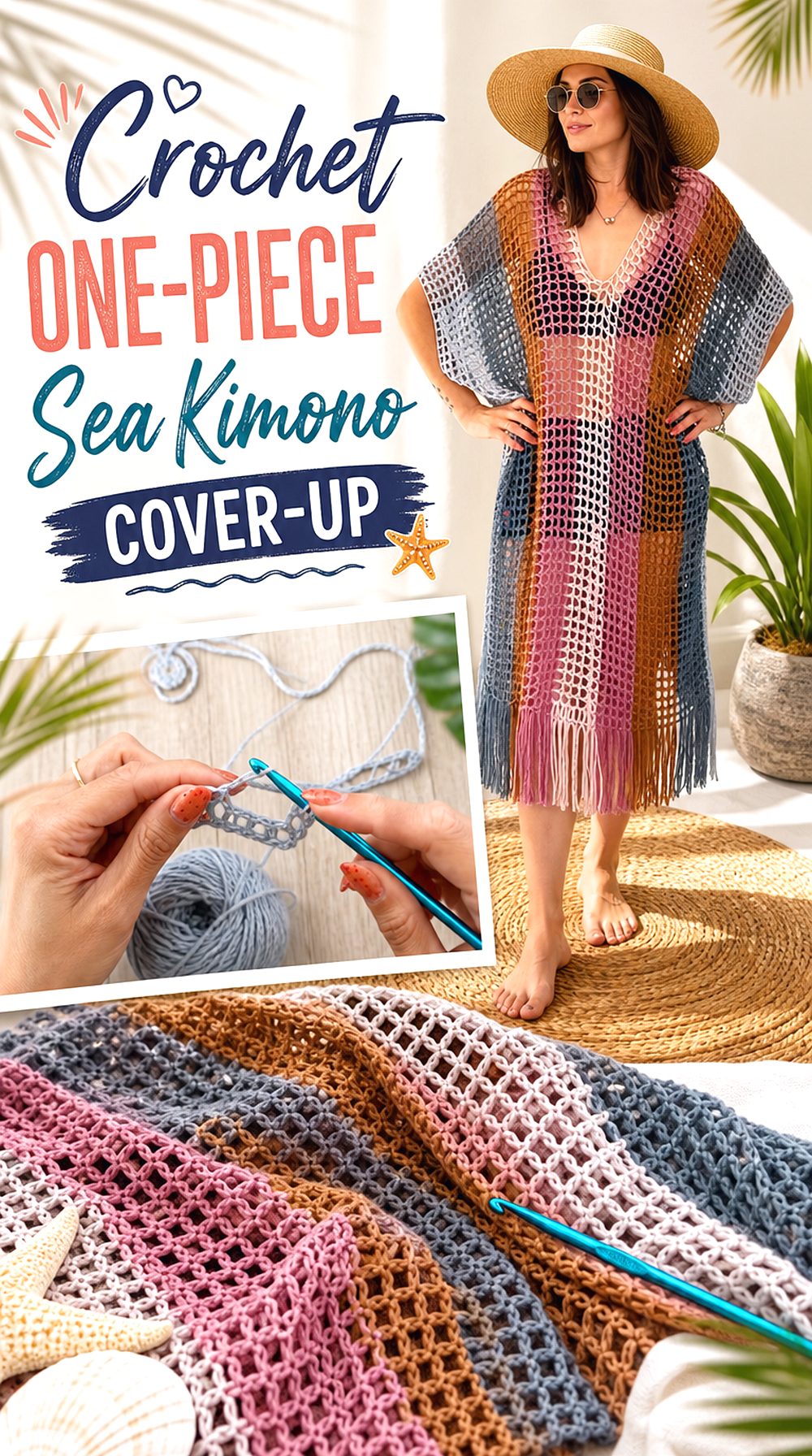
The one-piece format makes this sea kimono cover-up different from panel-heavy or motif-based options. The source describes it as a beach cover-up and notes that it can be adapted to size or measurement, which gives readers a clear reason to examine fit before starting. Its simple project identity is useful: a single beach layer with a shape that should be planned around the body.
This idea may suit readers who prefer a smoother garment layout over a patchwork or block-style look.
Note the One-Piece Format
A one-piece kimono can feel less segmented than a garment built from many separate motifs. Readers who dislike managing several pieces may be drawn to that structure. Even so, a one-piece wearable still needs careful attention to width, length, and sleeve opening. The shape may look simple, but the measurements still decide how comfortably the cover-up sits.
Check Measurement Guidance
Because the source mentions adapting the kimono to size or measurement, readers should pay close attention to that part of the guide. Before choosing supplies, compare the intended garment length and body width with a cover-up or cardigan that already fits well. This keeps the project connected to real wear instead of relying only on the sample appearance.
Plan the Intended Coverage
A sea kimono cover-up may be worn over swimwear, but coverage preferences vary widely. Some readers may want a longer, roomier layer, while others may prefer a lighter shape that stays closer to the body. Review how the original tutorial handles sizing, then decide what level of openness and length makes sense for the setting where it will be worn.
Original Tutorial and Creator Credit
Creator: Johana Tejidos
4. Crochet Motif Summer Kimono
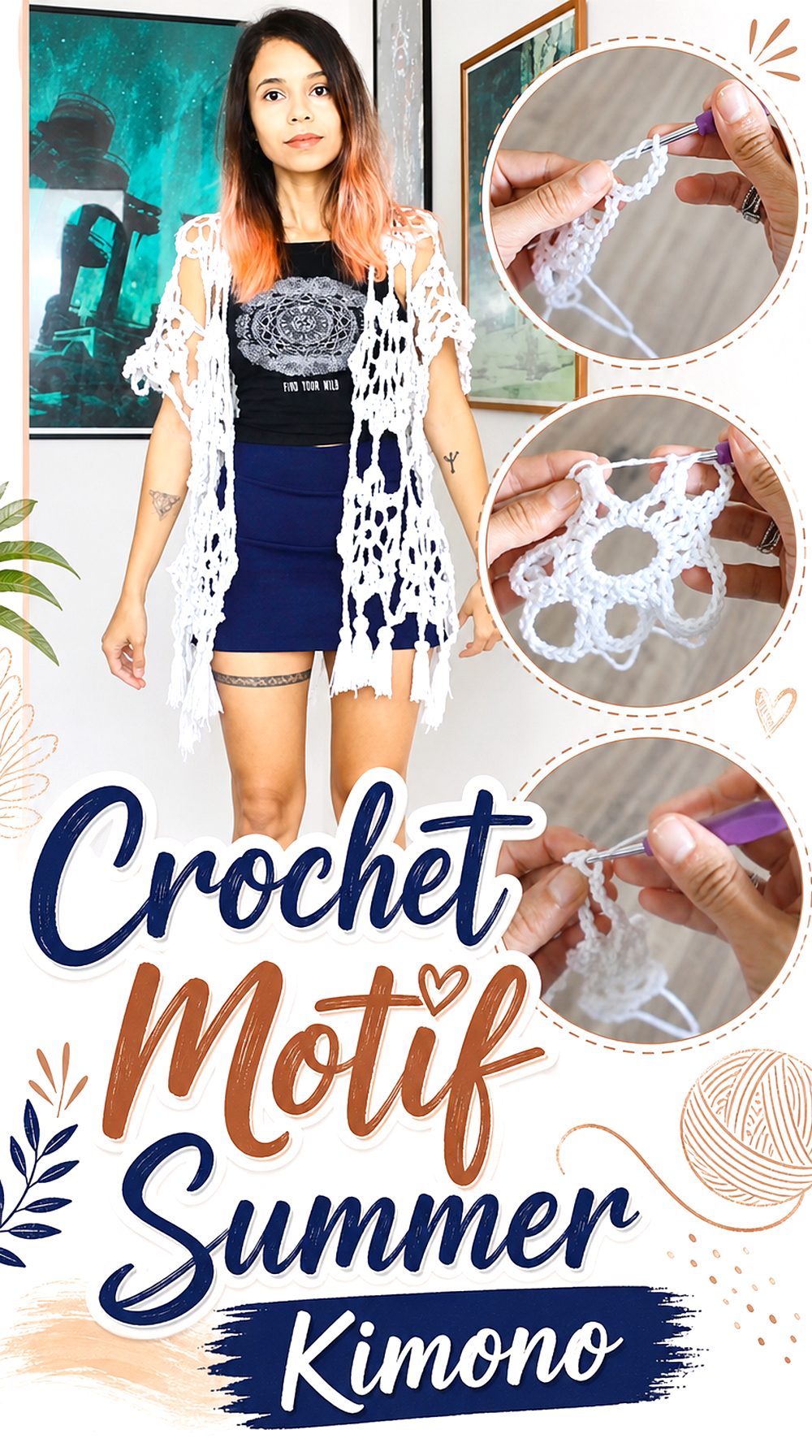
Motifs give this summer kimono a more decorative structure than a plain mesh or simple cardigan. The source notes that the project works with crochet motifs and includes sizing from S to L, so it is a better match for readers who enjoy a visible repeated layout. The finished idea feels especially suited to warm-weather outfits where the pattern surface becomes part of the styling.
This project differs from the granny square kimono because the focus is on a summer motif layout rather than a classic square-block cardigan.
Keep the Motif Layout Organized
Motif-based garments depend on arrangement. Before joining anything, readers should pay attention to how the repeated pieces line up and how the overall kimono shape is formed. A tidy layout can help the neckline, front opening, and hem look intentional. This is not about changing the design, but about following the source carefully enough to avoid misplaced sections.
Review the Size Range
The source information states a size range from S to L, so readers outside or between those sizes should check whether adjustments are clearly explained. Wearable crochet should not be chosen by label alone. Compare shoulder coverage, body width, and desired ease with the guidance provided in the original tutorial before deciding whether this is the right summer kimono.
Check How Much Coverage You Want
A motif kimono can provide coverage while still leaving open spaces in the fabric. That makes it useful for layering, but it also means the garment underneath remains part of the outfit. Readers should think about whether they want a decorative top layer, a modest cover, or a beach-style piece, then check the finished look before committing to colors and materials.
Original Tutorial and Creator Credit
Creator: Marie Castro
5. Crochet Hexagon Kimono Cardigan
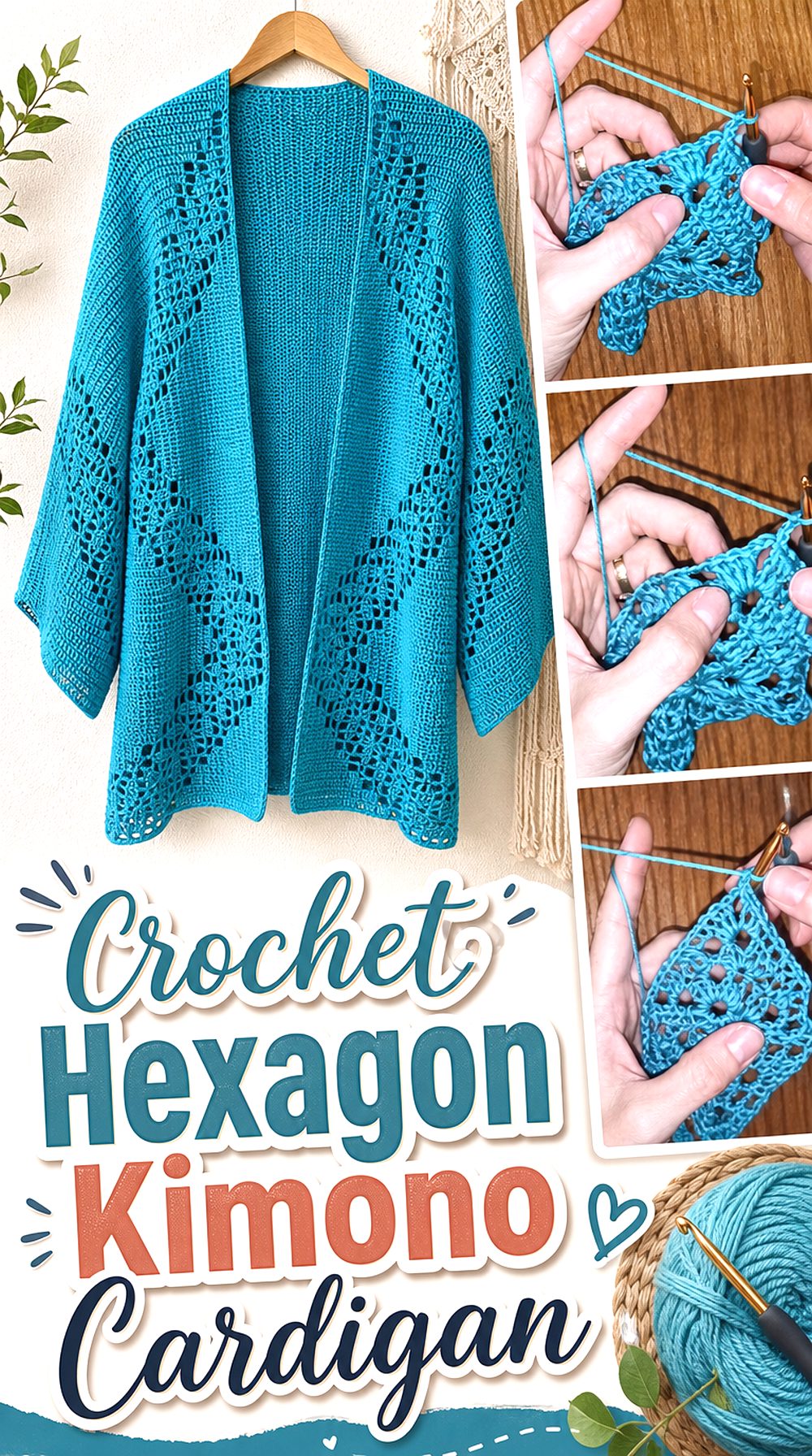
A hexagon-based kimono cardigan has a different shape logic from a straight-panel garment. The source presents it as a simple hexagon cardigan or crochet kimono, which makes it a useful option for readers interested in a relaxed sleeve and body shape. The finished piece may appeal to someone who wants a cardigan-style kimono with a softer, folded structure.
It stands apart from the motif summer kimono because the hexagon form controls the garment shape rather than acting only as surface decoration.
Compare the Hexagon Shape as You Work
Hexagon garments can change appearance as the shape folds into a wearable form. Readers should compare the developing piece with the creator’s finished view so the sleeve and body direction remain clear. This is especially useful for anyone who has only made flat scarves, blankets, or simple rectangles before. The main check is orientation, not speed.
Think About Sleeve Width
The hexagon format often creates a relaxed sleeve area, so sleeve width is worth noticing before the project is finished. A wider sleeve can look soft and casual, but it may also affect how the cardigan layers under coats or over fitted tops. Readers should use the original source to understand the finished proportions before choosing this as an everyday layer.
Check Final Assembly View
The final assembly view matters because the same flat shape can be confusing before it becomes a garment. Pause around major shape changes, check right and wrong sides if the creator identifies them, and make sure both sides appear balanced. Avoid guessing the fold or join direction from memory; the original tutorial is the safest reference for that stage.
Original Tutorial and Creator Credit
Creator: Crochet with GG
6. Crochet Granny Square Kimono Cardigan
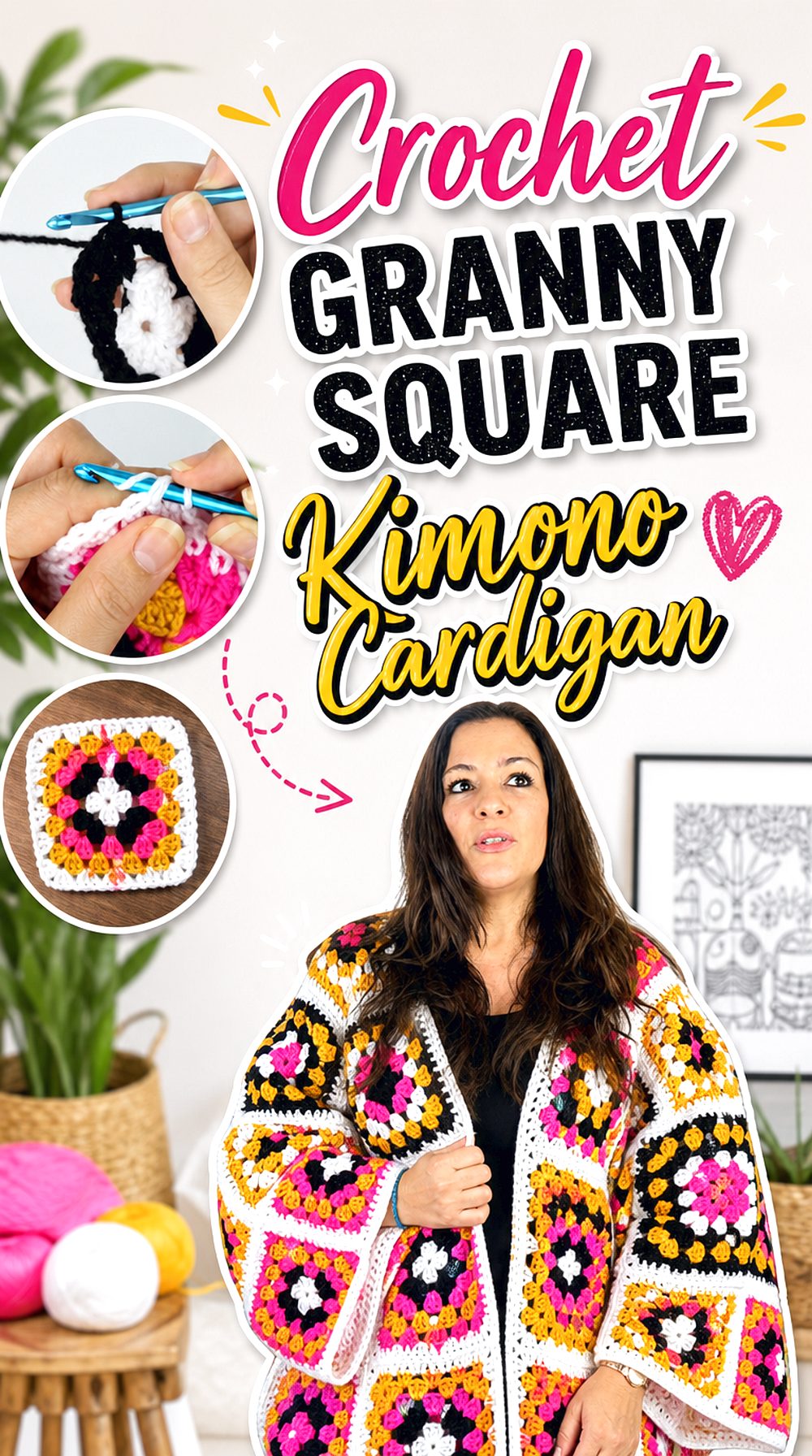
The granny square layout gives this kimono cardigan a clear handmade grid with strong opportunities for color planning. Unlike the one-piece sea kimono or the flowy mesh layer, this option has a block-based look that makes each section visible. It may suit readers who enjoy motif repetition and want a garment where the layout is part of the finished style.
Because squares can change the visual balance of a cardigan, planning the arrangement is just as important as choosing colors.
Plan the Granny Square Arrangement
A granny square kimono cardigan depends on where each square lands across the body, front opening, back, and sleeves. Readers should lay out the pieces as directed and check the balance before joining. Strong color contrast can be useful, but it can also make uneven placement more noticeable. The arrangement should support the garment shape rather than distract from it.
Watch the Joining Section Closely
Joining is one of the most important parts of a square-based wearable. The squares may look complete individually, but the cardigan only takes shape when the joins are placed correctly. Readers should slow down during this section and compare the left and right sides often. This keeps the front opening, shoulder area, and sleeve sections from drifting out of alignment.
Think About Color Placement
Color placement can change the mood of a granny square kimono more than it would on a single-color mesh garment. A planned palette can make the cardigan look calmer, while a high-contrast layout can emphasize every square. Readers should decide whether they want the garment to feel bold or balanced, then follow the tutorial without copying any creator-owned photo styling.
Original Tutorial and Creator Credit
Creator: Crochet Maniak
7. Crochet Openwork Kimono Cardigan for Transitional Layering
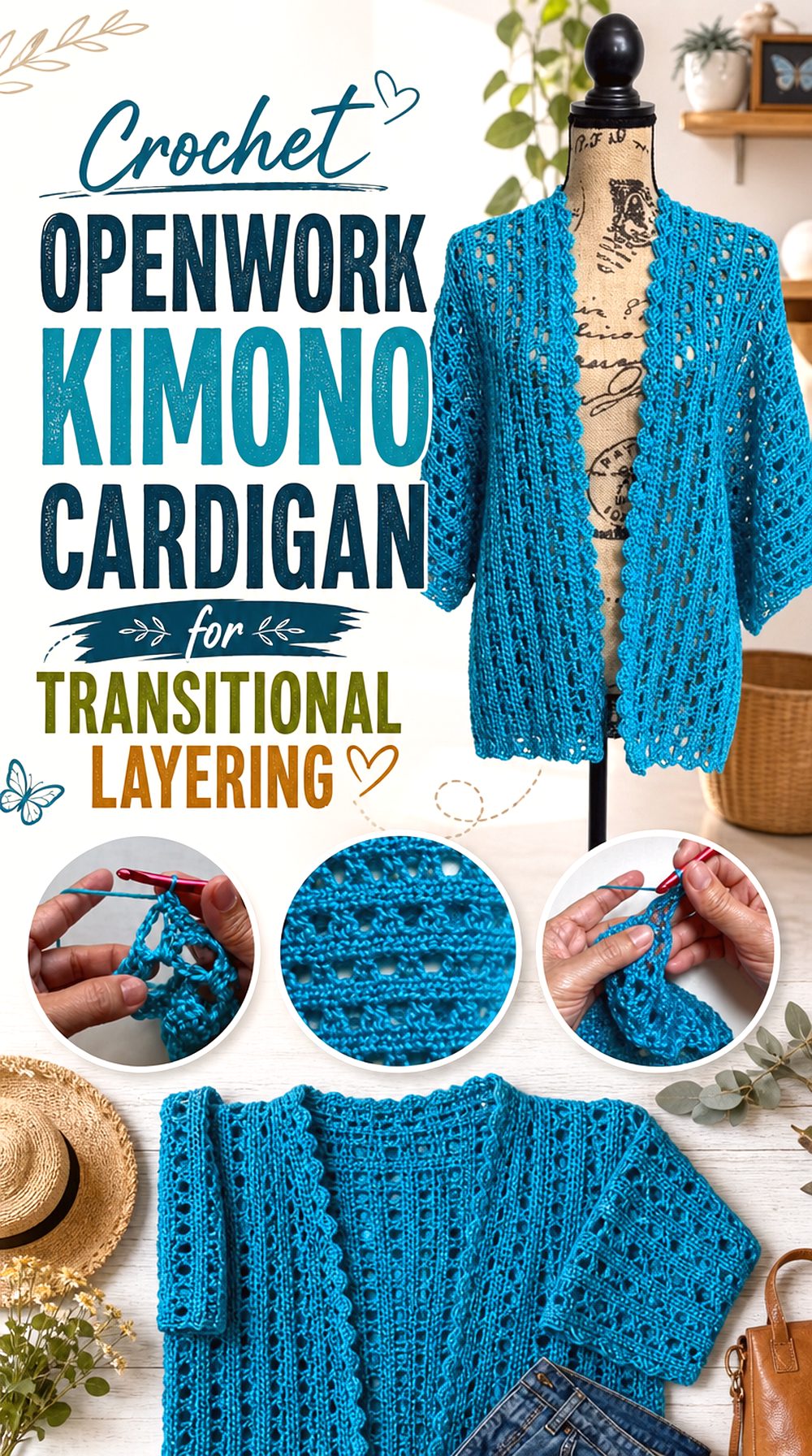
This openwork kimono cardigan is described as wearable from spring to fall, which makes it a practical middle option between beach cover-ups and heavier cardigan styles. The open front and airy surface give it a lighter feel, while the cardigan shape keeps it useful for outfits beyond swimwear. It is a good comparison point for readers who want seasonal layering without choosing a chunky garment.
The project is less motif-focused than the granny square version and more garment-focused than a simple cover-up.
Consider the Intended Season
An openwork cardigan can be useful across mild weather, but it should not be treated like a heavy sweater. Readers should think about the climate where they plan to wear it and what base layer will go underneath. The open surface may suit spring and fall outfits, but warmth depends on more than appearance, including fiber, fit, and how much air passes through.
Check Fit and Adjustment Notes
The source mentions fit and adjustment suggestions, so readers should look at those notes before beginning. A kimono cardigan may seem forgiving because it is open-front, but body width, sleeve opening, and length still affect the result. Compare the creator’s guidance with personal measurements and the type of clothes you plan to layer underneath.
Look at the Open Front Finish
The front edge is a visible part of any kimono cardigan. A clean opening helps the garment hang neatly and makes the piece easier to style over simple tops. Readers should pay close attention to the finishing stage in the original source, especially if they want the cardigan to look balanced when worn open rather than tied, buttoned, or overlapped.
Original Tutorial and Creator Credit
Creator: Crafting Shed
8. Crochet Chunky Kimono Cardigan
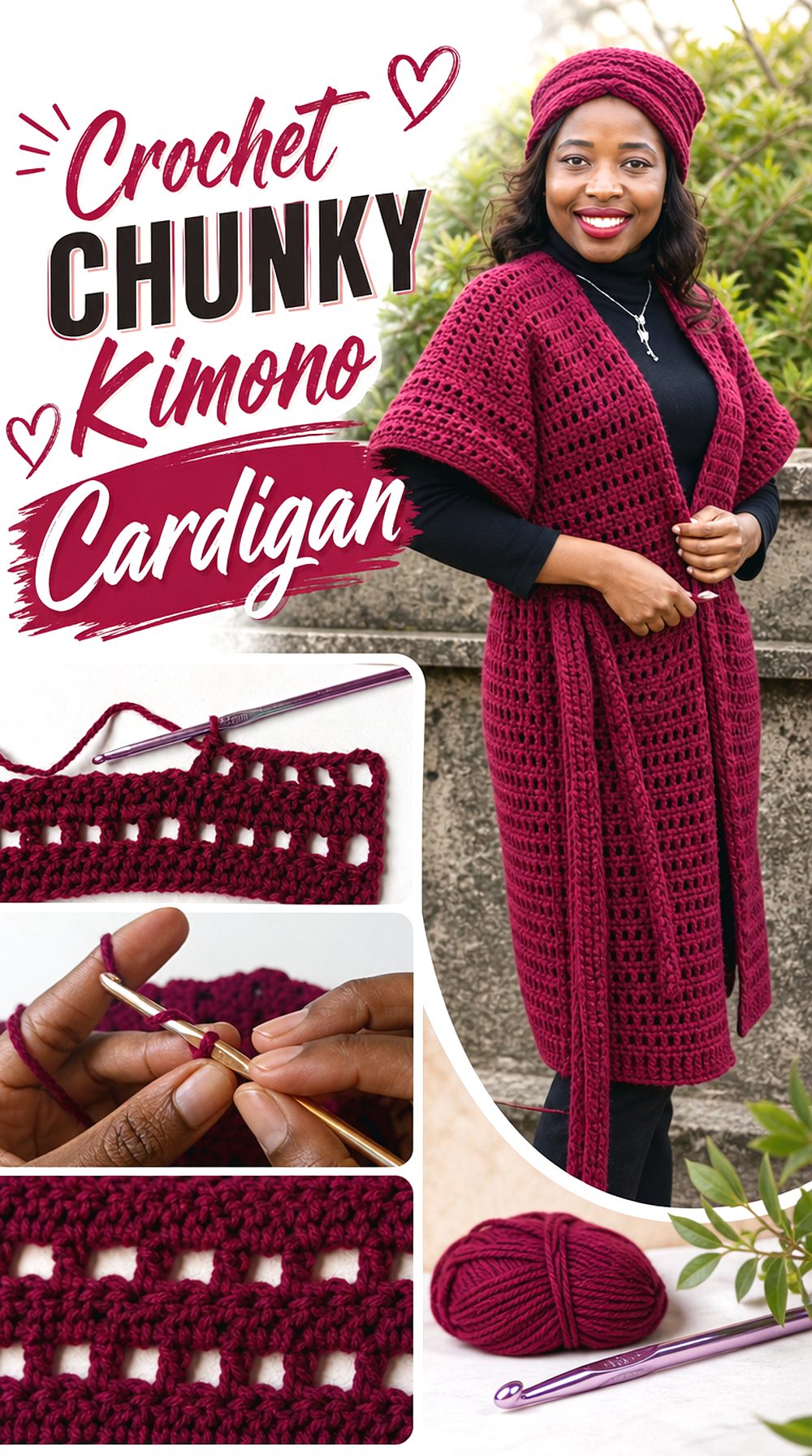
A chunky kimono cardigan gives the collection a heavier, more substantial garment option. The source lists chunky yarn among the materials, so this project will naturally look different from the mesh, beach, and openwork choices. It may appeal to readers who want the relaxed kimono shape but prefer a cardigan with more visual weight.
This idea is best compared by proportion. The body, sleeves, and front opening should look intentional, because thicker yarn can make every edge and seam more noticeable.
Plan for a Heavier Look
Chunky yarn changes the presence of a kimono cardigan. The fabric may appear bolder, the sleeves may look more substantial, and the finished garment can read more like outerwear than a delicate layer. Readers should decide whether that stronger texture suits their wardrobe. A chunky kimono may not replace a light summer cover-up, but it can fill a different layering need.
Confirm the Supply List
The source provides a supply list, so readers should review it carefully before starting. With thicker yarn, substitutions can affect the size and drape more noticeably than expected. Rather than assuming any bulky-looking yarn will behave the same way, compare label information, hook guidance, and the creator’s notes. This helps the final cardigan stay closer to the intended proportions.
Check the Sleeve and Body Proportions
A chunky kimono cardigan needs enough room to move without becoming too oversized for the wearer’s preference. Sleeve width, body length, and front opening shape all deserve attention as the garment develops. Readers should compare the work with the creator’s finished view before moving into final finishing, especially if they want a relaxed shape that still feels wearable.
Original Tutorial and Creator Credit
Creator: Marion Crochets
Conclusion
These crochet kimono ideas offer several ways to approach an open-front wearable. Choose the flowy mesh kimono for light layering, the beach and sea cover-ups for swimwear use, the motif or granny square options for visible pattern structure, the hexagon version for a softer folded shape, the openwork cardigan for mild-season outfits, or the chunky cardigan for more garment weight. Use the original tutorials for exact construction details, sizing notes, and finishing guidance before starting.
FAQs
How do I choose the right crochet kimono idea?
Start with the main use. A beach cover-up should be judged by coverage and wear over swimwear, while a cardigan-style kimono should be judged by sleeve width, body length, and layering needs. Motif, granny square, and hexagon designs also require more attention to layout, joining, and visual balance.
Should a crochet kimono be fitted or oversized?
Many kimono-style crochet garments are relaxed, but the right fit depends on the source tutorial and how the finished piece will be worn. Check the creator’s size notes, finished views, and measurement guidance before starting. An open front gives flexibility, but shoulder width, armholes, and length still matter.
What should I check before changing yarn?
Review the creator’s listed yarn, hook, gauge notes, and finished measurements when available. Changing yarn can affect drape, garment length, sleeve width, and the way open stitches sit. For beach cover-ups or mesh kimonos, fiber behavior and care information are also worth checking before buying supplies.
Are crochet kimonos good for beginners?
Some kimono tutorials may be approachable, while others involve motifs, joining, garment shaping, or measurement adjustments. Instead of relying only on a difficulty label, preview the full tutorial and look for clear explanations of sizing, assembly, and finishing. A simple-looking garment can still require careful checking.
Can I sell a crochet kimono made from a YouTube tutorial?
Do not assume selling is allowed just because the tutorial is public. Check the creator’s description, pattern terms, pinned comments, website, or linked policy before selling finished items. Also review any local labeling, business, or tax requirements that may apply to handmade garment sales.