
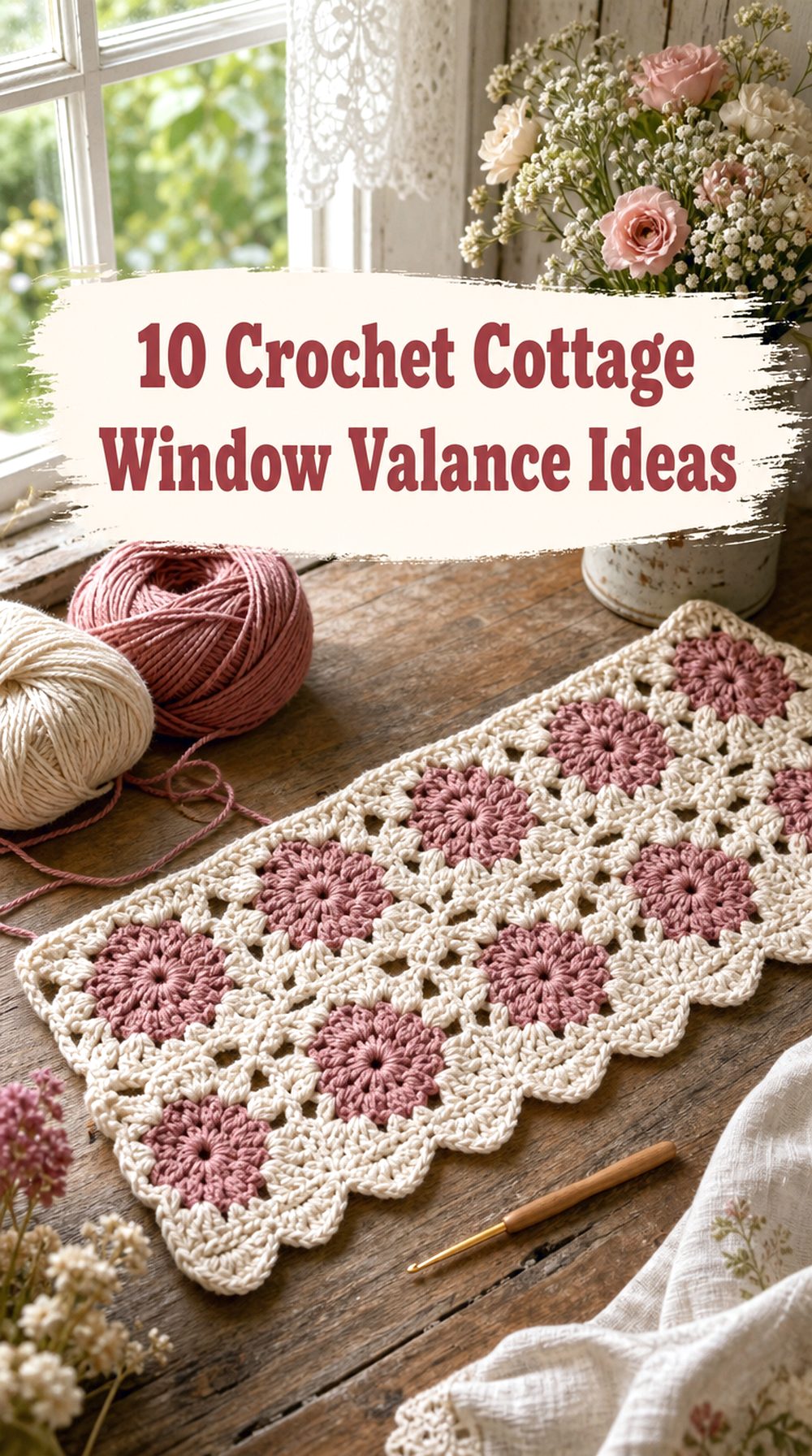
10 Crochet Cottage Window Valance Ideas
Cottage windows look especially welcoming when they are finished with handmade texture rather than a heavy fabric topper. In this collection, you will find Crochet valances shaped with flowers, hearts, granny squares, airy lace, cheerful stripes, and vintage points. Some designs suit kitchens and breakfast nooks, while others bring gentle privacy to bathrooms, bedrooms, or garden rooms. Each Crochet project lets daylight filter through its open stitches, and the small motifs, scalloped edges, and colourful joins give an ordinary window a warm, carefully finished look.
Quick List
- Crochet Flower Power Cottage Window Valance
- Crochet Two-Tone Chevron Cottage Window Valance
- Crochet Earthy Striped Cottage Window Valance
- Crochet Flower Lattice Cottage Window Valance
- Crochet Vintage Pointed Café Window Valance
- Crochet Granny Square Cottage Window Valance
- Crochet Filet Heart Cottage Window Valance
- Crochet Dainty Lace Cottage Window Valance
- Crochet Spring Garden Filet Window Valance
- Crochet Simple Grid Café Window Valance
Crochet Flower Power Cottage Window Valance

Joined flower motifs give this Crochet valance a bright, patchwork look that feels right at home above a cottage kitchen sink. Full blooms form the main rows, while half flowers soften the outer edges and create a gently shaped outline. Mixed shades make every petal stand out, though a smaller palette would look calmer in a bedroom. Use the join-as-you-go arrangement to keep the flowers evenly spaced, then add or remove motifs until the valance suits your window. Tutorial
Crochet Two Tone Chevron Cottage Window Valance

Bold zigzags keep this Crochet window valance fresh rather than overly delicate. Alternating light and dark bands make the chevron peaks easy to see, while open treble stitches allow daylight to pass through the fabric. Hung over a bathroom, utility room, or cabin window, the graphic shape adds privacy without looking heavy. Repeat fewer rows for a true topper length, and choose two colours already used in the room so the strong pattern feels connected to the surrounding cottage décor. Tutorial
Crochet Earthy Striped Cottage Window Valance

Earthy brown, green, and orange strips give this Crochet curtain a cosy retro mood. The narrow pieces are worked separately, alternated by colour, and sewn together to create a striped panel with plenty of movement. A shorter version would sit neatly across a kitchen window while leaving the sill open for herbs or small pottery. Keep the joining stitches tidy so the vertical lines hang straight, and wash the finished valance gently before hanging to help the separate sections settle into an even drape. Tutorial
Crochet Flower Lattice Cottage Window Valance

Four-petal flowers link together into an airy Crochet lattice that looks almost weightless at a sunny window. The continuous floral pattern creates soft openings between each bloom, and built-in loops let the finished valance slide directly onto a curtain rod. It works well across a wide kitchen or garden-room window where a solid fabric would block too much light. Begin along the window width for the nicest drape, and test the hanging direction early so the flower rows fall smoothly instead of pulling sideways. Tutorial
Crochet Vintage Pointed Café Window Valance
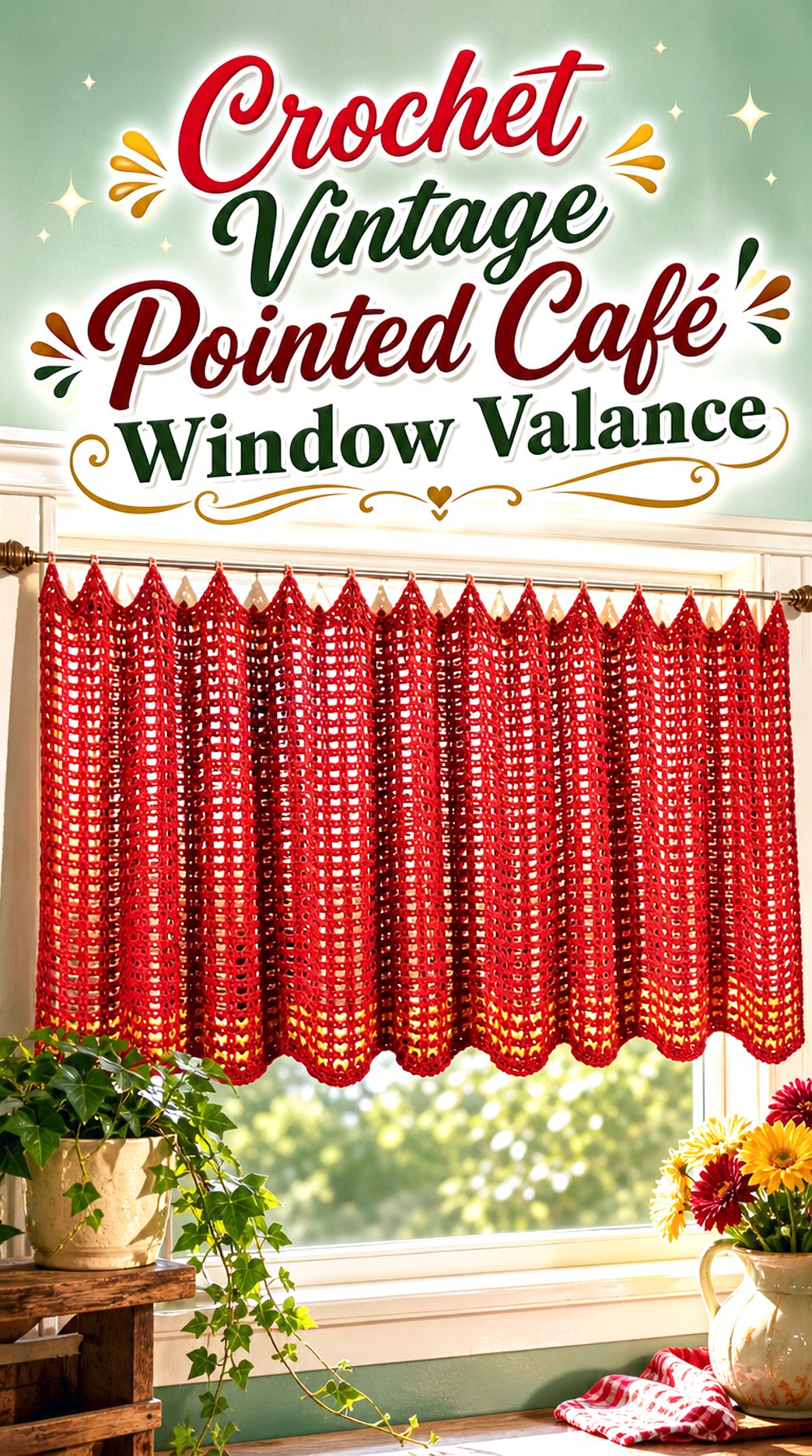
Tapered hanging points give this vintage Crochet café curtain the character of an old cottage kitchen textile. Open mesh rows form the main panel, while small metal rings sit at the pointed top for a distinctive rod treatment. Woven trim near the lower edge adds another period detail without hiding the stitchwork. Use the design as a short valance above plain café panels, and block every point carefully before attaching the rings so the top line stays crisp and the panel hangs at an even depth. Tutorial
Crochet Granny Square Cottage Window Valance
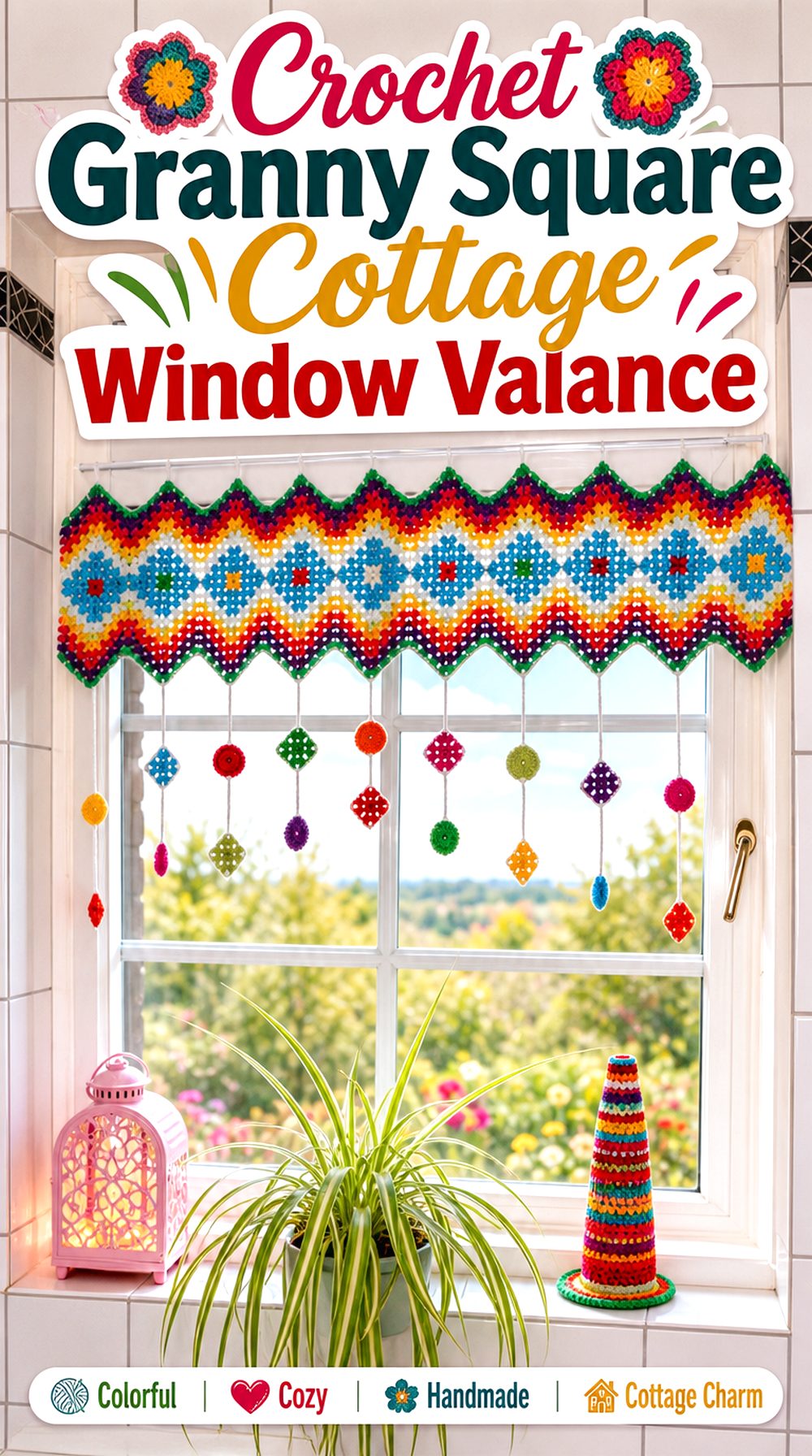
Granny squares bring familiar colour and texture to this Crochet cottage valance. A row of joined motifs forms the centre, extra cluster rows widen the panel, and small hanging loops finish the top neatly around the rod. Optional dangling mini squares can create a playful lower edge for a bathroom or craft-room window. Choose colours from nearby towels, tiles, or painted furniture, then repeat one shade around every motif to help the mixed squares read as one balanced window treatment. Tutorial
Crochet Filet Heart Cottage Window Valance
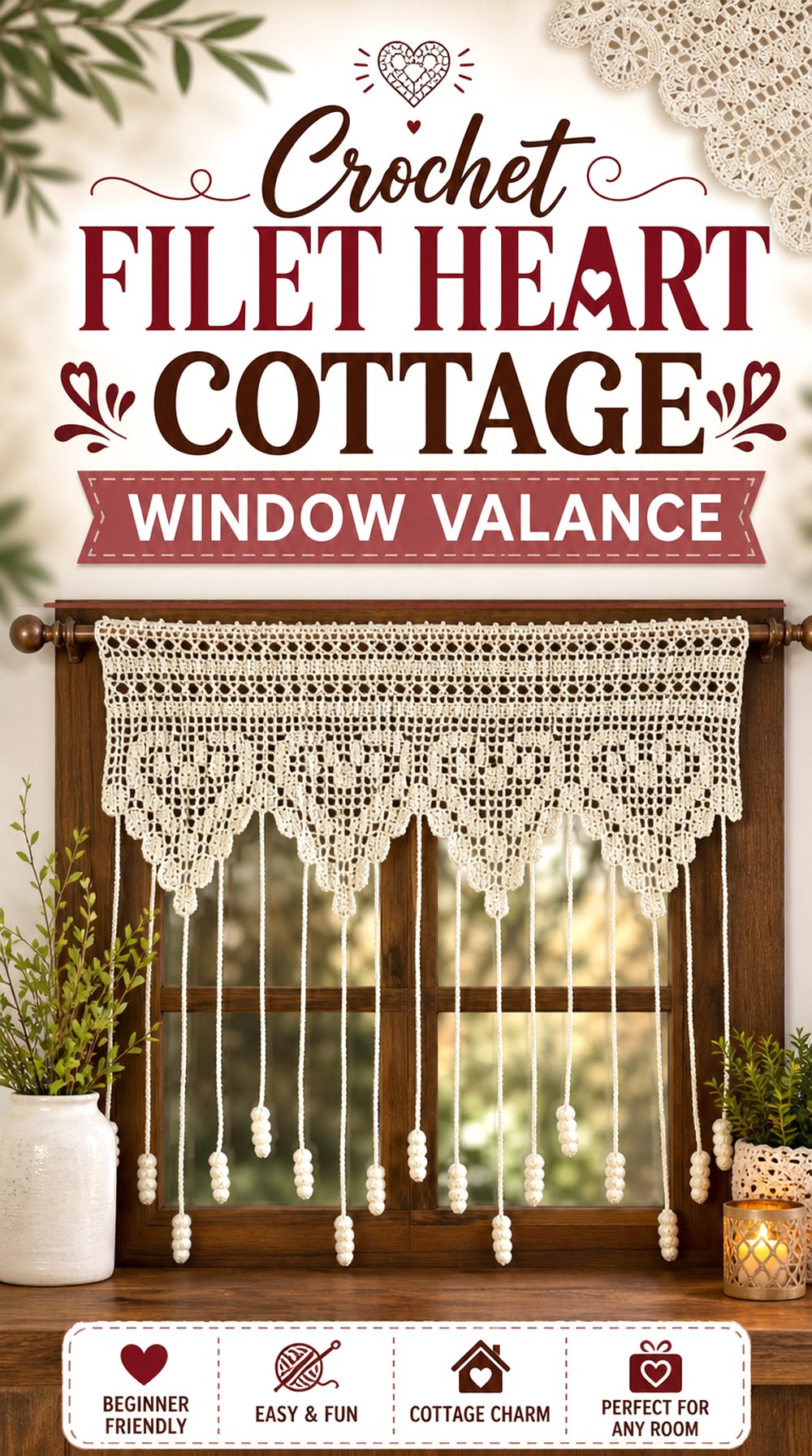
Repeating hearts turn this Crochet brise-bise into a sweet cottage window feature without making it feel childish. The open filet background keeps the panel light, while solid heart shapes show clearly against the glass. A picot top edge strengthens the hanging line, and curled tassels add gentle movement along the bottom. This style suits a bedroom, sewing room, or small landing window. Work the curlicues to a consistent length, then steam the panel lightly so the hearts sit square and the border hangs evenly. Tutorial
Crochet Dainty Lace Cottage Window Valance
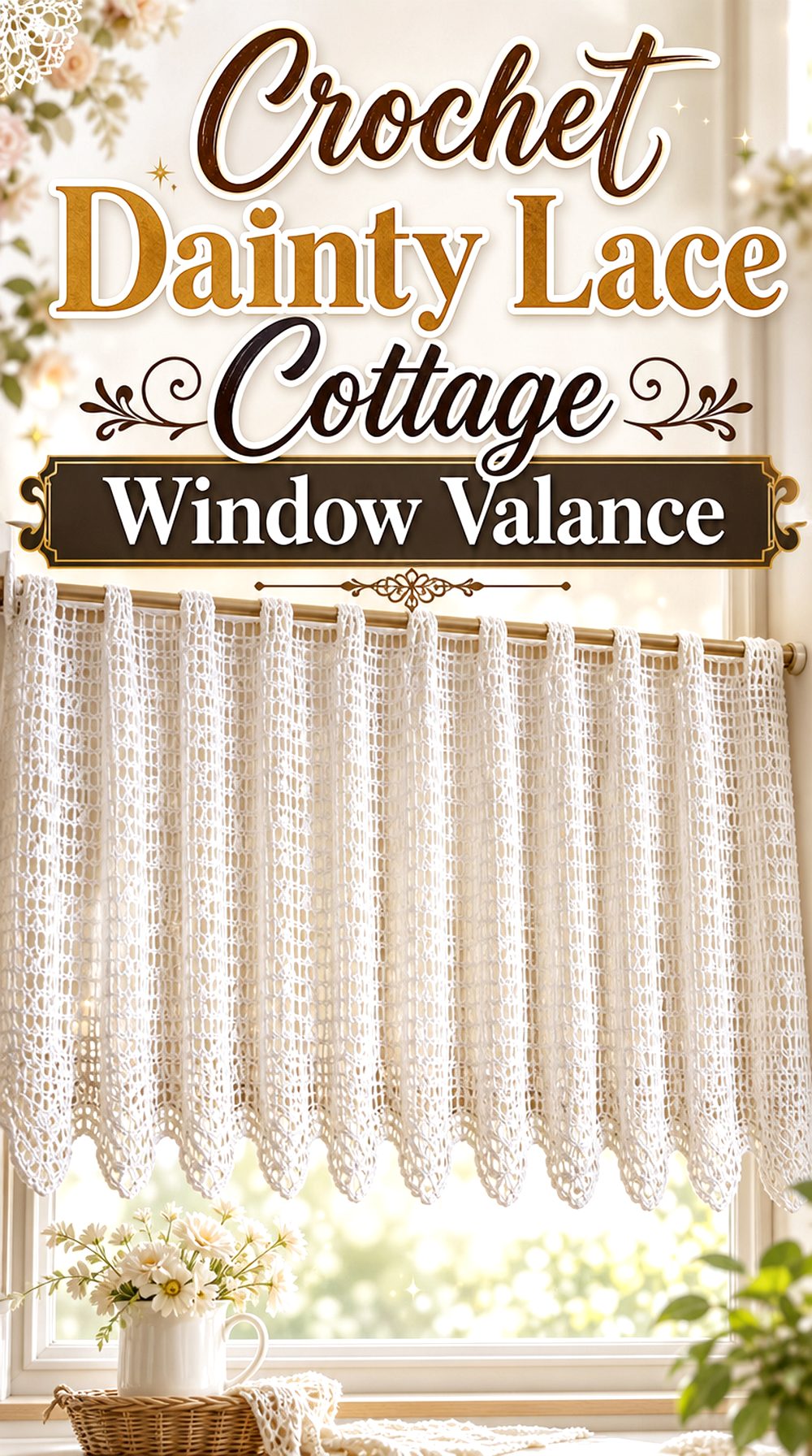
Tall openwork repeats give this Crochet lace valance a graceful, flowing surface. Fine chain spaces and grouped tall stitches create a regular pattern across the main panel, followed by a more decorative lower section that widens into lace points. The result suits a pale cottage kitchen, quiet reading corner, or window above a vintage dresser. Shorten the central repeat for valance proportions, and block the bottom border with care so every opening and point appears clear against the daylight. Tutorial
Crochet Spring Garden Filet Window Valance
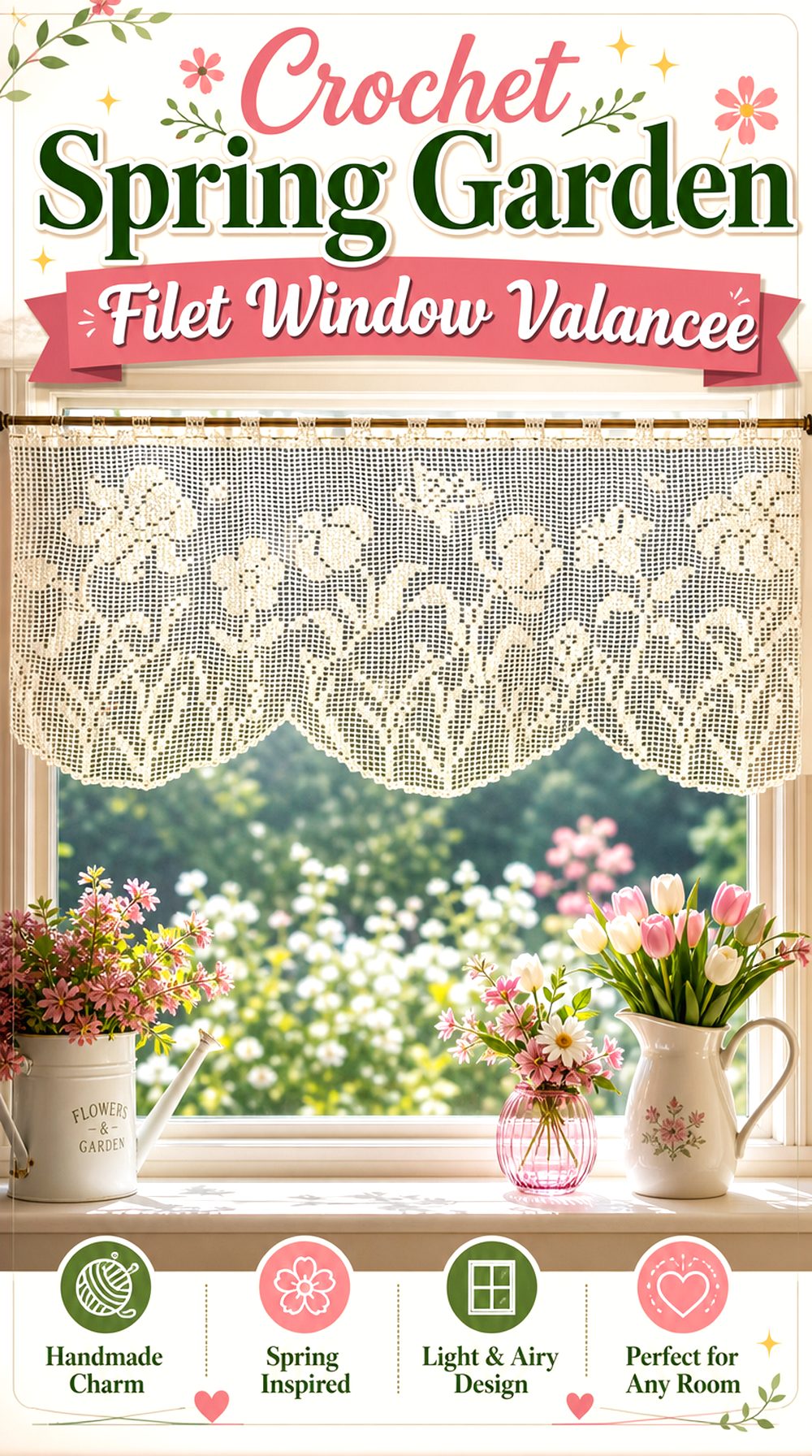
An iris, a bee, and a butterfly appear across this Crochet filet valance like a tiny spring garden. Solid stitched areas shape the pictures against an open mesh ground, while a scalloped lower edge develops alongside the main panel. The storytelling design is especially charming in a breakfast nook, greenhouse, or cottage kitchen with floral china. Keep close track of each chart row so the small details remain sharp, and display it against a bright window where the insects and flowers can be seen clearly. Tutorial
Crochet Simple Grid Café Window Valance
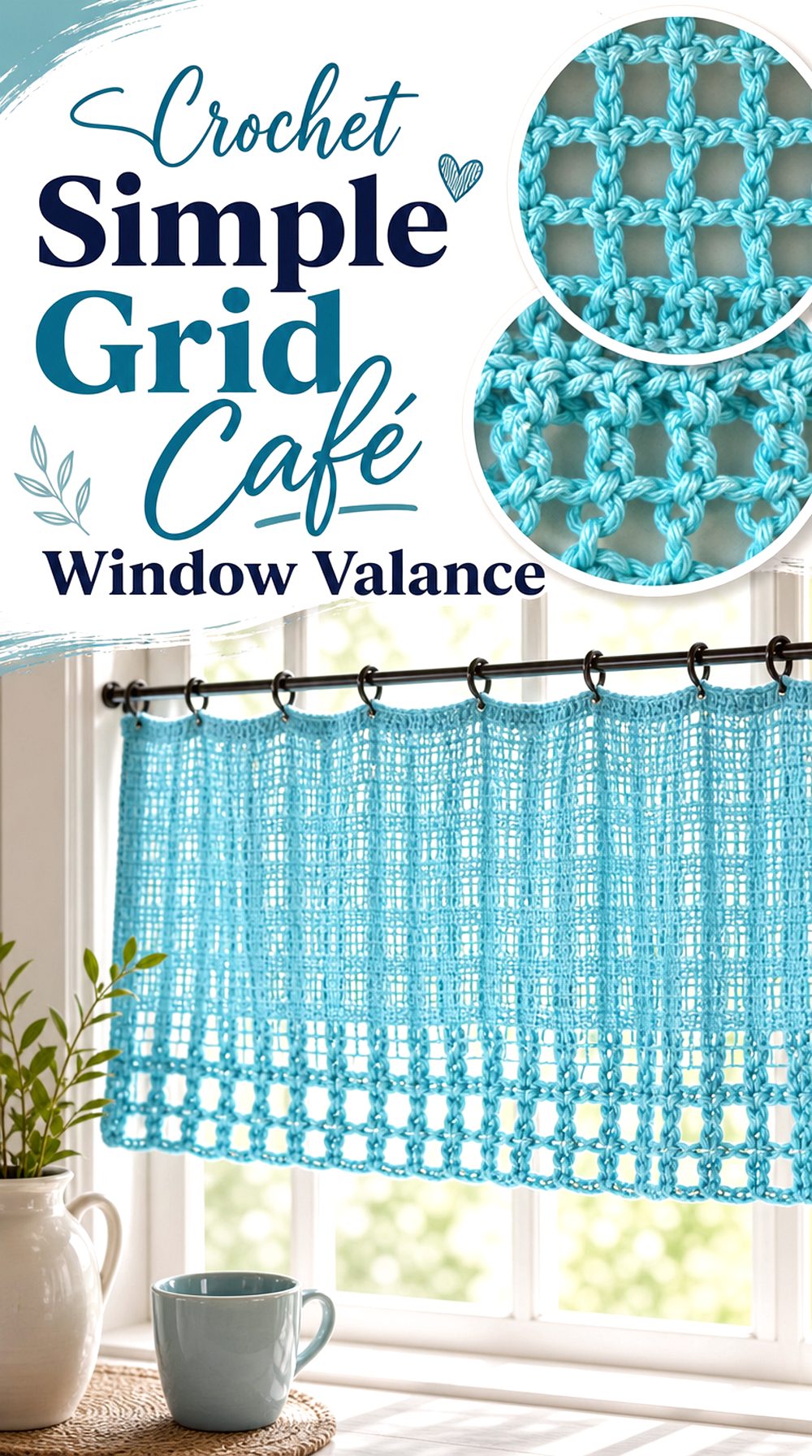
Simple Crochet blocks made with double crochet and chain spaces create a clean grid across this café-style valance. The straight rectangular shape is easy to adapt for a narrow cottage window, and a single-crochet border gives all four sides a tidy finish. One panel looks neat over a small sink window, while two matching panels can frame a wider opening. Use an even tension through the open spaces, then leave a clear top channel or loops so the fabric gathers gently rather than bunching around the rod. Tutorial
Conclusion
Start with the Crochet valance that best matches both your window and the stitches you already enjoy. A small café panel or simple motif row can be more satisfying than an oversized curtain. Save this collection for later, choose a calm colour plan, and let one manageable handmade detail bring cottage warmth to the room.
FAQs
1. What yarn works best for a Crochet cottage window valance?
Cotton or a cotton-rich blend usually gives a Crochet valance clear stitch definition and a steady drape. Lightweight yarn keeps lace open, while medium yarn suits chunkier flowers or granny squares.
2. How wide should a Crochet window valance be?
Measure the visible window width and decide how much gathering you prefer. For a flat Crochet valance, match that width closely; for soft folds, make the panel somewhat wider than the rod.
3. Can a full Crochet curtain pattern be shortened into a valance?
Several designs can be shortened by working fewer repeat rows or using one row of motifs. Check the pattern’s repeat structure first so the Crochet edging still finishes at the correct point.
4. How should I wash a handmade Crochet window valance?
Hand washing and gentle reshaping are safest for most Crochet window pieces. Support the wet fabric, avoid twisting it, and dry it flat before rehanging so lace points and motifs keep their shape.
5. Which Crochet valance styles are suitable for beginners?
Simple grids, granny-square rows, and repeated flower motifs are friendly starting points. Choose a Crochet tutorial with clear photos, make a small sample first, and check the width before continuing.